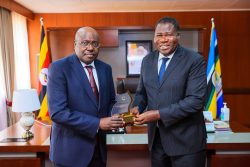
GKMA BILLIONS IN LIMBO! Investigation Unearths Procurement Chaos, Shoddy Works & Slow Projects Under Gabula’s Watch
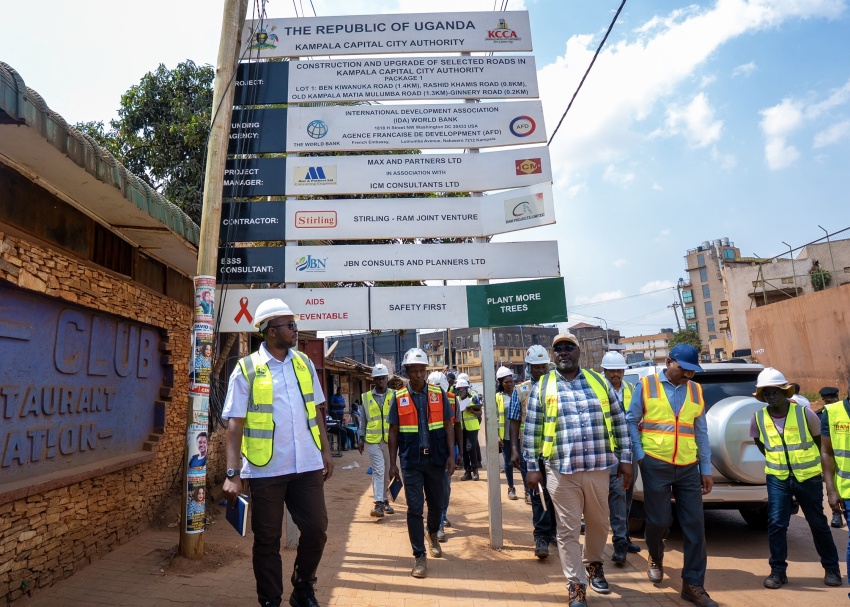
A bombshell Auditor General’s 2025 report has ripped through the multi-billion Greater Kampala urban transformation dream, exposing a trail of stalled projects, questionable procurement practices, missing systems, and billions lying idle as the Greater Kampala Metropolitan Area Urban Development Program stumbles under the watch of key project coordinator Emmanuel Gabula.
The ambitious programme, implemented under Kampala Capital City Authority with backing from the World Bank, is meant to revolutionise mobility and infrastructure across Kampala and surrounding areas. Instead, the latest findings paint a picture of disarray, inefficiency, and glaring oversight failures that now threaten to derail the entire initiative.
At the heart of the audit shocker is a procurement system riddled with inconsistencies and confusion. The Auditor General found that “the Procurement Plan for the entity on the e-GP public portal had a total estimated amount of UGX.13.47Bn while the Procurement Plan on the EGP oversight portal had a total estimated value of UGX.4.40Bn implying that the plan on the oversight portal was not up to date.” In simple terms, two conflicting figures for the same plan—raising serious questions about transparency and control.
The cracks widen further when it comes to actual implementation. Six procurements worth UGX.1.08Bn were simply not carried out. Among the critical projects left hanging were the preparation of an Environmental Management System, installation of local networks and VPN systems, development of a sewage and waste management strategy, and even the establishment of a call centre—core components for a modern metropolitan system.
Even where contracts were awarded, execution has been painfully slow. Out of 69 contracts worth UGX.11.17Bn, only 56 contracts worth UGX.6.34Bn were completed, translating to a dismal implementation rate of just 57%. This means nearly half of the planned work remains incomplete, despite funds being committed.
The report also flags a worrying lack of competition and fairness in procurement. Eleven procurements worth UGX.2.91Bn attracted low bidder turnout, while “the criteria used under six procurements worth UGX.1.761Bn was inconsistent with the criteria specified in the bidding documents.” In another glaring breach, four procurements worth UGX.3.16Bn were executed outside the e-GP system entirely, “without justification for bypassing the system.”
Inside sources describe a system struggling to function, and the Auditor General confirms this, pointing to “inadequate oversight, insufficient documentation, processing procurements out of the system, missing details such as timelines, recommended procurement methods among others.”
Beyond procurement, asset management within the programme appears to be in chaos. The report reveals that there were “no maintenance logs in place to document activities such as costs, personnel involved, motor vehicles and various systems developed by the entity such as Geographical Information System (GIS).” Worse still, there was “no system for tracking maintenance history or forecasting future needs of assets.”
In a shocking twist, 43 assets were recorded in departments unrelated to where the project is implemented, while ten assets worth UGX.1.67Bn had service dates that predated their purchase—an anomaly the report says “could not be explained.” Such discrepancies raise red flags about record-keeping and possible mismanagement.
Funding itself has also fallen short of expectations. The Auditor General notes that “the total cumulative disbursements to date of USD.435.18Mn were less than expected as per the project financing agreement of USD.491.31Mn,” leaving a significant gap in anticipated financing.
Yet even the funds that were available have not been fully utilised. Despite a revised budget of UGX.445.90Bn being fully available, only UGX.304.82Bn was spent, leaving UGX.141.08Bn unspent—an absorption level of just 68%. For a programme racing against time to deliver infrastructure, this level of underutilisation is nothing short of alarming.
The performance of project activities tells an equally troubling story. Out of 57 sampled activities worth UGX.443.52Bn, only 29 activities worth UGX.16.77Bn were fully achieved. Nineteen activities worth a staggering UGX.423.94Bn were only partially achieved, while nine activities worth UGX.2.82Bn had not been achieved at all.
Key deliverables remain incomplete or partially implemented, including the setup of local networks and VPN systems, development of a solid waste management strategy, engineering designs for markets, creation of a central GIS system, and even the establishment of a GKMA innovation hub.
One of the most startling revelations involves payments made without corresponding work. The Auditor General found that for the Development Regulation Management Information System (DRIMS), a contractor was paid UGX.126.47Mn in full “after production of only the inception report,” despite the contract clearly stipulating phased payments tied to deliverables. This raises serious concerns about financial controls and accountability.
The report further highlights “delays in procurements, failure to revise project timelines, unspent funds from the appropriated budget and foreign exchange losses due to fluctuations,” painting a picture of a programme struggling to stay on track.
Land acquisition issues have also crippled progress. By November 2025, management had not secured the Right of Way for 44 projects, significantly slowing implementation, particularly in Mukono and Nansana areas.
But perhaps the most visible impact of these failures lies on the ground, where infrastructure projects are falling short of expectations. Across multiple implementing entities, projects have exceeded timelines by as much as 310 days. Measurements revealed inconsistencies in certified work, leading to overpayments of UGX.846.6Mn.
The quality of construction is equally worrying. Inspectors observed widespread defects across road and building projects, including cracks in asphalt, damaged culverts, honeycombing in concrete, uneven flooring, poorly finished structures, and even rusting steel components. The report warns that these defects could compromise the durability and safety of the infrastructure.
Environmental and safety compliance has also been largely ignored. Only one entity fully implemented mitigation measures, while the rest showed partial or no compliance, “thereby increasing the risk of environmental degradation, social conflicts, and health and safety hazards.”
Despite Parliament approving additional financing from Agence France de Development, the funds had not been realised by the time of the audit, even as the programme entered its second year—raising further concerns about coordination and planning at the highest levels.
As the revelations pile up, pressure is mounting on Emmanuel Gabula and the leadership at KCCA to explain how a flagship programme backed by international partners has descended into such disorder.
What is meant to transform Greater Kampala now risks becoming a textbook case of missed opportunities, weak oversight, and billions slipping through the cracks.
With the Auditor General’s findings now public, all eyes are on whether those in charge will finally act—or whether the city’s grand urban dream will continue to sink under the weight of its own failures.
GOT A HOT STORY? EMAIL: redpeppertips@gmail.
SOURCE PROTECTION/CONFIDENTIALITY IS OUR NO.1 PRIORITY.
About Post Author