GREAT LAKES DILEMMA! Voluntary Repatriation of Congolese and Rwandan Refugees: Historic Agreement Signed in Addis Ababa

By Defraise Enosh MUHINDO
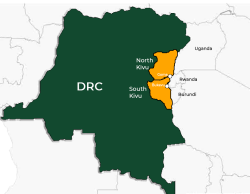
On July 24, 2025, The Democratic Republic of Congo (DRC), Rwanda, and the United Nations High Commissioner for Refugees (UNHCR) reached a landmark agreement during a tripartite meeting in Addis Ababa, Ethiopia, to facilitate the voluntary, safe, and dignified return of Congolese and Rwandan refugees to their countries of origin.
Signed under the auspices of the African Union, this joint communiqué establishes a 2025-2026 roadmap to address one of the most pressing humanitarian challenges in the Great Lakes region.
Context of the Agreement
The high-level meeting, held from July 22 to 24, 2025, builds on recent diplomatic efforts to foster peace and stability in a region long plagued by conflict. It follows the Washington peace agreement signed on June 27, 2025, between the DRC and Rwanda, as well as the Doha declaration of July 19, 2025, between the DRC and the M23 rebel movement. These initiatives have paved the way for discussions on refugee repatriation, a critical step toward post-conflict reconstruction.
The Great Lakes region faces a severe humanitarian crisis. The DRC hosts over 517,800 refugees and 1,400 asylum seekers, primarily in its eastern provinces, alongside more than 7 million internally displaced persons, including 5 million in the east.
Since January 2025, more than 139,000 people have fled to neighboring countries due to ongoing violence. Rwanda, meanwhile, shelters around 120,000 refugees and asylum seekers, 90% of whom reside in five camps: Kiziba, Nyabiheke, Kigeme, Mugombwa, and Mahama.
A 2025-2026 Roadmap
The agreement establishes a comprehensive roadmap for the voluntary repatriation and reintegration of refugees over the 2025-2026 period. This plan outlines responsibilities, milestones, and timelines, with a priority focus on accelerating the return of 600 Rwandan refugees currently in Goma, a city in eastern DRC under M23 control. The parties also committed to strengthening community consultations to ensure inclusive and sustainable reintegration.
Both governments pledged to create conditions conducive to voluntary returns, working closely with local and traditional authorities. They also agreed to collaborate on stabilizing return areas, particularly in eastern DRC, where violence involving armed groups like M23 poses significant challenges.
UNHCR: The UNHCR’s Deputy High Commissioner for Operations, Raouf Mazou, welcomed the commitment of both countries and reaffirmed the agency’s support in ensuring safe and dignified returns. The UNHCR will play a key role in coordinating efforts and mobilizing international resources.
The joint communiqué was signed by Jacquemain Shabani, DRC’s Minister of Interior, Charles Karamba, Rwanda’s Ambassador, and Raouf Mazou, representing the UNHCR. These signatures symbolize a collective commitment to addressing the refugee crisis while advancing regional peace efforts.
Probable Challenges and Prospects
Despite the optimism surrounding this agreement, its implementation faces several hurdles. The Goma region, under M23 influence, remains unstable, presenting logistical and security challenges for repatriation. Historical tensions between the DRC and Rwanda, though eased by recent peace agreements, require sustained cooperation to maintain momentum. Additionally, international funding will be critical to support reintegration in communities often strained by conflict.
The UNHCR emphasized the importance of upholding the principle of voluntariness, in line with the 1951 Refugee Convention, to ensure returns are conducted with dignity and safety. Initiatives like the Regional Refugee Response Plan (RRP), which supports host countries such as Rwanda, DRC, Burundi, Uganda, and Tanzania, will be instrumental in the agreement’s success.
This agreement is hailed as a historic milestone for the Great Lakes region, where forced displacement has fueled tensions and hindered development. By prioritizing durable solutions, such as inclusive reintegration and cross-border cooperation, the DRC, Rwanda, and UNHCR are sending a strong signal in favor of peace and reconstruction.
The Addis Ababa agreement offers hope for thousands of Congolese and Rwandan refugees, but its success hinges on political will, regional cooperation, and international support. By placing human dignity at the core of their efforts, the stakeholders have laid the groundwork for a more stable future in the Great Lakes region.
About Post Author