HIV CRISIS! 1.5m Ugandans Living With Virus as 1 in 7 Don’t Know Their Status
By Evans Najuna
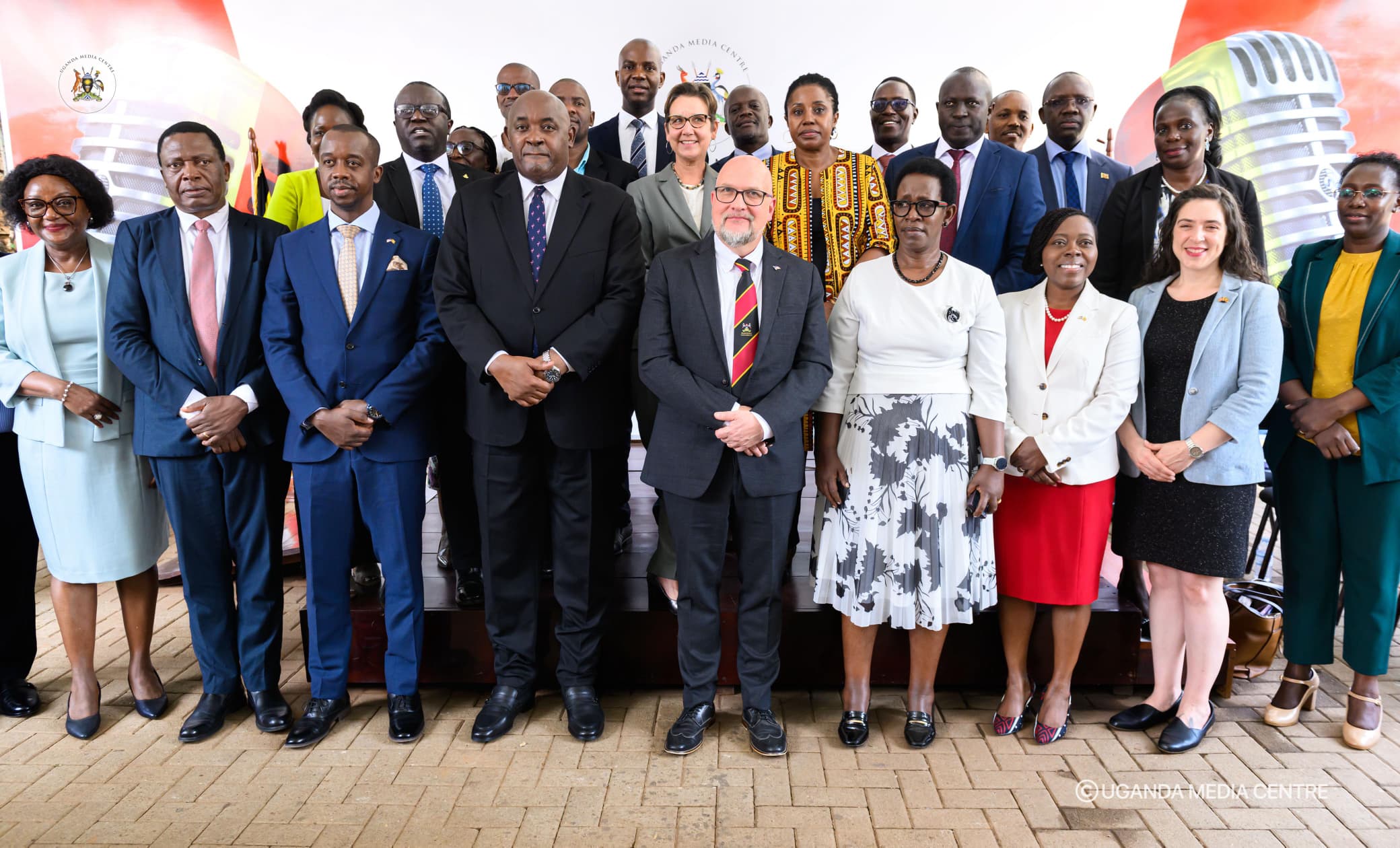
KAMPALA — Uganda’s HIV prevalence has remained at 5.9% among adults aged 15 years and above, with women continuing to bear a higher burden of the virus than men, according to preliminary findings of the 2025 Uganda Population-based HIV Impact Assessment (UPHIA).
The findings, released on Thursday by Health Minister Dr Chris Baryomunsi at the Uganda Media Centre, indicate that about 1.496 million adults are living with HIV.
HIV prevalence stands at 7.3% among women compared with 4.1% among men.
Among adults aged 15 to 49 years, prevalence stood at 5.5%, unchanged from the 2020/21 UPHIA findings.
However, while the national prevalence has remained stable, the survey revealed significant regional disparities, with the South Western region recording the highest prevalence at 8.0%.
It was followed by Central 1 at 7.3%, Central 2 at 7.2%, Mid North at 6.8%, Mid Western at 6.1% and Kampala at 5.4%.
The lowest prevalence was recorded in Karamoja at 1.3%, followed by West Nile at 1.4%.
Dr Baryomunsi said Uganda has made significant progress in ensuring that people living with HIV access treatment and achieve viral suppression, but warned that identifying people who do not know their HIV status remains a major challenge.
The survey found that 85.3% of people living with HIV knew their status, while 99.1% of those who knew their status were on antiretroviral treatment (ART).
Among those on treatment, 96.5% had achieved viral suppression.
“Our biggest remaining gap is at the very start: about one in seven people living with HIV do not know their status,” Dr Baryomunsi said.
The figures indicate substantial progress towards the global and national 95-95-95 targets, particularly in treatment and viral suppression.
Overall viral load suppression among adults living with HIV increased to 86%, up from 75.4% in 2020/21.
Viral suppression was highest among older people living with HIV, reaching 93.8% among women aged 55 to 64 years and 98.8% among men in the same age group.
However, younger people continue to face wider gaps.
Among women aged 15 to 24 years living with HIV, viral suppression stood at 64.1%. The survey could not produce a reliable estimate for young men in the same age group because of the small number of cases.
Across the country, viral suppression ranged from 78.0% in the Mid Eastern region to 92.3% in the South Western region.
The assessment also raised concerns about HIV among young people. Prevalence among people aged 15 to 24 years stood at 1.5%, with women recording 2.0% compared with 1.0% among men.
The findings show that HIV prevalence among young adults aged 20 to 24 years was nearly three times that among adolescents aged 15 to 19 years.
Among women, prevalence increased from 1.3% among those aged 15 to 19 years to 2.8% among those aged 20 to 24 years.
For men, prevalence rose from 0.6% among those aged 15 to 19 years to 1.5% among those aged 20 to 24 years.
Dr Baryomunsi said the findings point to the need to strengthen HIV prevention, testing and treatment interventions among adolescents and young people, particularly girls and young women.
NON-COMMUNICABLE DISEASES
For the first time, UPHIA also measured selected indicators of non-communicable diseases, highlighting the growing need for integrated healthcare.
The survey found elevated blood pressure among 15.5% of participants aged 15 years and above, elevated blood glucose among 0.9%, and overweight or obesity among 24.8%.
Dr Baryomunsi said Government would use the evidence to strengthen primary healthcare and integrate HIV services with treatment for chronic conditions such as hypertension and diabetes.
The United States Chargé d’Affaires to Uganda, Mikael Cleverley, said the latest figures demonstrate the impact of years of cooperation between Uganda and the United States in the fight against HIV.
Cleverley said the proportion of adults living with HIV who are on treatment and have achieved viral suppression had increased from around 60% a decade ago to 86%.
“Today, nearly all Ugandans who know their HIV status are on treatment. That is an incredible accomplishment and one we are deeply proud to be a part of,” he said.
However, Cleverley said the findings also show areas requiring additional attention, particularly the estimated 15% of adults living with HIV who remain unaware of their status, with larger gaps among men and younger adults.
He said the United States was supporting new HIV prevention options, including twice-yearly lenacapavir, while the new findings on chronic diseases present an opportunity to strengthen integrated healthcare.
The US diplomat also said Uganda and the United States are implementing a five-year bilateral Health Cooperation Memorandum of Understanding involving up to $1.7 billion in US foreign assistance and $577 million in new Ugandan domestic resources.
He said the new phase of cooperation would place greater emphasis on Ugandan ownership and domestic financing while maintaining US support.
SURVEY COVERAGE
UPHIA 2025 was conducted between July and September 2025 across all regions of Uganda using a nationally representative household sample.
Of the 6,283 eligible households, 94.4% participated.
Among eligible women and men aged 15 years and above, 96.2% of women and 91.2% of men were interviewed, while more than 97% of those interviewed were tested for HIV.
The assessment was led by the Ministry of Health in collaboration with Makerere University School of Public Health, Uganda Bureau of Statistics, Uganda Virus Research Institute, regional referral hospitals, districts and other implementing partners.
It was funded by the United States President’s Emergency Plan for AIDS Relief (PEPFAR) through the US Centers for Disease Control and Prevention (CDC).
Dr Baryomunsi said Government would use the findings to direct available resources towards people and areas with the greatest gaps, strengthen primary healthcare and improve integrated service delivery.
He urged Ugandans to know their HIV status, use available prevention services and, when diagnosed, start treatment promptly and adhere to it consistently.
More findings, including HIV incidence, programme coverage and behavioural indicators, are expected to be released in the final UPHIA 2025 report.
Cleverley congratulated the Ministry of Health and Ugandan institutions involved in the assessment and thanked the thousands of Ugandans who participated in the survey for providing evidence to guide the next phase of the country’s HIV response.
GOT A HOT STORY? LET US KNOW!
Got breaking news, explosive secrets, or hard evidence?
Email us: redpeppertips@gmail.com
We accept tips, documents, videos, photos, and recordings—the more evidence you have, the better.
CONFIDENTIALITY IS OUR TOP PRIORITY. SOURCES ARE ALWAYS PROTECTED!
About Post Author