UFZEPA EXPORTS PROMOTION FAILURE STORM! As Uganda’s Dollar Crisis Deepens, ED Alinda Under Fire Over Billions Spent, Idle Entebbe Free Zone… Whistleblowers Question What Free Zones & Exports Authority Is Doing To Earn Uganda More Dollars

Executive Director Hez Kimoomi Alinda (L), deputized by Elly Twineyo Kamugisha(R) and Board chair Omach (C) are facing uncomfortable questions
KAMPALA — As the Ugandan shilling continues to face pressure against the US dollar, the agency specifically entrusted with promoting exports and developing free zones is facing uncomfortable questions over whether it is doing enough to help the country earn more foreign exchange.
The Uganda Free Zones and Export Promotions Authority (UFZEPA), headed by Executive Director Hez Kimoomi Alinda, is under scrutiny following findings by the Auditor General and a series of whistleblower complaints alleging poor performance, weak export promotion, questionable spending and failure to put in place key structures meant to expand Uganda’s export capacity.
The concerns raise a fundamental question: if Uganda established and later merged its export promotion and free zones agencies to grow exports, attract investment and earn more foreign currency, what tangible results are being delivered?
The Auditor General’s December 2025 report paints a troubling picture of implementation gaps, low budget absorption, incomplete activities, weak performance measurement and a multibillion-shilling free-zone project at Entebbe whose completed facilities were yet to be put to use.
Whistleblowers have gone further, asking the Inspectorate of Government (IGG) and the Office of the Auditor General to investigate what they describe as failures in the Authority’s export promotion agenda.
Their complaints include allegations that the Authority has failed to complete and operationalise its strategic plan, performed poorly at the Osaka Expo in Japan and has not adequately supported businesses to access international markets.
They also question whether the merger of the former Uganda Export Promotion Board (UEPB) and Uganda Free Zones Authority (UFZA) has delivered the export growth that Government intended.
SHS12.1BN RELEASED, ONLY 71% SPENT
According to the Auditor General’s report for the financial year ended June 30, 2025, UFZEPA received government warrants amounting to Shs12.101bn but spent Shs8.540bn, representing an absorption rate of only 71%.
The audit also assessed eight non-payroll outputs, with expenditure of approximately Shs3.009bn, and found that only two were fully implemented.
Four outputs were partially implemented, while another two were not implemented at all.
The Auditor General warned that the failure to fully implement planned outputs negatively affected service delivery.
For an Authority whose mandate includes increasing exports, supporting exporters and developing free zones, the findings raise questions about whether public resources are translating into the services and interventions needed by Ugandan businesses.
The report further noted that some of the performance indicators in UFZEPA’s approved work plans were inappropriate, while some activities had no indicators at all.
This meant that the Authority did not have adequate measures to establish whether some of its activities were achieving their intended results.
Among the activities affected were those relating to access to regional and international markets, sensitisation of the business community on negotiated market opportunities, staff training, market research and export-readiness support.
The missing indicators are particularly significant because export promotion is not simply about holding meetings or attending exhibitions. It requires measurable results, including businesses prepared for export, new markets accessed, increased export volumes and additional foreign exchange earned.
Without appropriate indicators, it becomes difficult to establish whether the Authority is delivering on its mandate or simply spending money on activities whose impact cannot be properly assessed.
ONLY TWO FREE-ZONE OPERATORS ATTRACTED
The Auditor General also raised questions about UFZEPA’s performance in attracting businesses into free zones.
The audit found that the Authority had attracted only two free-zone operators — Sena Indo (U) Ltd and KK Fresh Exporters — against a target of three.
The report also found no evidence that producers had been sensitised on international requirements.
This is a major concern because free zones are intended to provide an environment in which businesses can manufacture, process, store and export goods more competitively.
The facilities are expected to attract investors, support production for export and help Uganda penetrate regional and international markets.
But with only two operators attracted against the planned target, questions arise about the Authority’s ability to attract and retain the businesses needed to make the free-zone programme work.
The Auditor General also reported that the development of the Authority’s strategic plan was still ongoing, while a planned Board meeting had been postponed.
Two other activities were not implemented, including staff training on climate-change mitigation and securing the land title for the Kaweweta property.
SHS56.7BN ENTEBBE PROJECT STILL NOT OPERATIONAL
The Entebbe International Airport Free Zone is another major concern highlighted in the audit.
The project, valued at Shs56.716bn, was expected to be completed by October 30, 2024, before its completion date was revised to April 18, 2025.
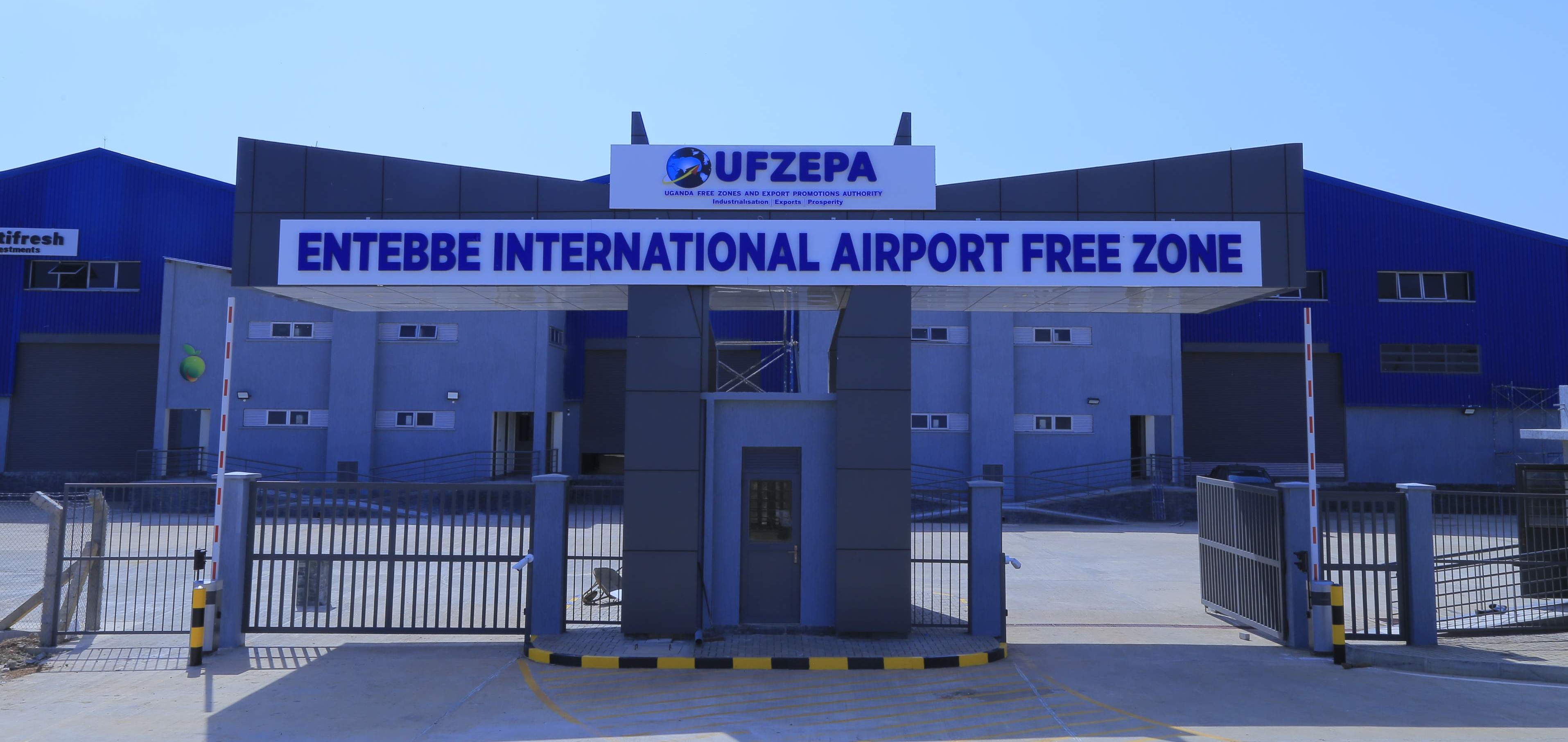
However, during an inspection in September 2025, the Auditor General found that the project was only 92% complete.
Although four production units, a Trade House and a weighbridge had been completed, they were not yet in use.
The Auditor General warned that delays in completing and operationalising the project negatively affected the objectives of the free trade zone.
This means that substantial public investment had gone into infrastructure that was not yet delivering its intended economic benefits.
Management attributed the delays to piecemeal and late release of project funds, saying it was engaging the contractor and the Ministry of Finance to secure the required resources.
The Auditor General recommended that the Authority fast-track completion and operationalisation of the facility.
For whistleblowers questioning the Authority’s export promotion performance, the Entebbe project is central to their concerns.
They argue that the country cannot maximise the benefits of free zones when the facilities meant to support export-oriented businesses are not fully operational.
FIVE LICENCES LEFT IN LIMBO
The Auditor General also questioned UFZEPA’s handling of free-zone licences.
The report noted that, contrary to Section 37 of the Free Zones Act, which empowers the Authority to withdraw a developer’s approval or cancel a licence on specified grounds, UFZEPA had delayed revoking licences of five licensees found to be in breach.
The Auditor General warned that failure to take appropriate action against non-compliant licensees undermines Government efforts to drive export expansion.
Management explained that some companies whose licences had expired were being assisted to renew them and that the Authority had engaged the Microfinance Support Centre to explore financing options.
However, the audit raised a broader concern about how effectively the Authority is enforcing the legal framework governing free zones while trying to attract and support investors.
SHS8.54BN SUPPLEMENTARY FUNDING QUESTIONED
The Auditor General further found that the Accounting Officer utilised supplementary funding amounting to Shs8.540bn without a request being made as required under the Public Finance Management Regulations.
Management explained that the supplementary budget had been initiated by the caretaker Ministry of Trade to facilitate the commencement of operations following the merger of UFZA and UEPB.
The Authority said the funding was necessary because the merger had created operational requirements for the new institution before its management structure was fully established.
However, the Auditor General noted that supporting documentation from the Ministry was not provided and advised the Authority to comply with the applicable public finance requirements.
WHISTLEBLOWERS: WHERE IS THE EXPORT STRATEGY?
While the Auditor General’s report highlights measurable implementation gaps, whistleblowers have raised further questions about the Authority’s direction and leadership.
In a complaint calling for urgent investigations by the IGG and Auditor General, the whistleblowers allege that UFZEPA’s Strategic Plan for 2025–2030 has never been completed or formally launched, despite the Authority continuing to implement activities.
They want investigators to establish whether the plan exists in an approved and signed form and whether its activities are aligned with the National Development Plan IV and Government’s Tenfold Economic Growth Strategy.
The complainants argue that the merger of UFZA and UEPB was intended to eliminate duplication, reduce administrative costs and, more importantly, use free-zone structures to increase exports.
They say the new Authority was expected to combine the former export promotion board’s market-development role with the free-zone infrastructure and investment mandate.
But they allege that the expected transformation has not materialised.
The whistleblowers further claim that much of Uganda’s export foreign exchange is generated through the efforts of private businesses rather than deliberate interventions by UFZEPA.
They want the IGG and Auditor General to examine what the Authority has done to identify new export markets, prepare local producers for international standards, attract export-oriented investors and increase the volume and value of goods leaving the country.
OSAKA EXPO PERFORMANCE QUESTIONED
The whistleblowers have also asked investigators to examine expenditure and performance at the Osaka Expo 2025 in Japan, alleging that Uganda’s participation did not deliver the expected results.
International exhibitions are important platforms for promoting a country’s products, connecting exporters to buyers and attracting investment.
For an agency charged with export promotion, participation should translate into measurable business opportunities, market linkages, investment leads and actual export deals.
The complainants want investigators to establish how much public money was spent on the Osaka engagement, what activities were undertaken and what tangible results were achieved.
They also question the Authority’s communications budget, alleging that it could have been misused.
THE DOLLAR QUESTION
The controversy comes at a time when the exchange rate and the cost of foreign currency have become major concerns for businesses and households.
The US dollar is a key currency for Uganda’s international trade, including payments for imported fuel, machinery, raw materials and other goods.
Uganda earns foreign exchange through exports, tourism, foreign investment and remittances from citizens working abroad, among other sources.
Exports are therefore an important part of the country’s foreign exchange supply.
When export earnings increase, they can help strengthen the supply of foreign currency in the economy. However, the exchange rate is influenced by several factors, including import demand, capital flows, global market conditions and monetary policy.
UFZEPA does not set the exchange rate, and its performance alone cannot determine the value of the shilling.
But its mandate places it at the centre of Government efforts to grow exports, attract export-oriented investment and strengthen the country’s capacity to earn foreign currency.
The question being raised by the whistleblowers is whether the Authority is doing enough to deliver on that responsibility.
THE MERGER THAT WAS SUPPOSED TO CHANGE THE EXPORT GAME
The merger of UFZA and UEPB was part of Government’s rationalisation of public agencies, commonly known as RAPEX.
The reform was intended to reduce duplication, cut administrative costs and improve service delivery.
In the case of the two former agencies, the expectation was that combining export promotion with free-zone development would create a stronger institution capable of attracting investors, supporting local exporters and increasing Uganda’s access to international markets.
But whistleblowers now question whether the merger has delivered the intended results, alleging that the Authority lacks a fully operational public free zone and has not adequately advanced the export agenda.
The Auditor General’s findings on the Entebbe facility, the limited number of free-zone operators, missing performance indicators and incomplete activities give the debate a new dimension.
IGG, AUDITOR GENERAL ASKED TO INVESTIGATE
As we shall report in our subsequent publication, the whistleblowers want the IGG and Auditor General to conduct an independent investigation into UFZEPA’s management, expenditure and performance.
Among other demands, they want investigations into the alleged Shs8bn compensation payment relating to 104 acres of land at Buwaya, alleged financial irregularities following the merger, fuel expenditure, the strategic plan, the Osaka Expo and the Authority’s communications budget.
They also allege that the Executive Director should step aside during investigations to allow investigators to work without interference.
The complainants further question why some officers have reportedly been sent on leave or suspended while the Accounting Officer remains in office.
They want senior staff and managers to be heard in an open investigation and are calling for a review of the Authority’s internal policies and manuals.
With the Auditor General’s findings now on record and whistleblowers demanding investigations, attention is likely to turn to the Authority’s leadership and the results it can demonstrate from public money allocated to export promotion and free-zone development.
For a country seeking to expand its economy and earn more foreign exchange, the test of UFZEPA will ultimately be whether it can turn its mandate, budgets and infrastructure into more exporters, more markets, more investment and higher export earnings.
GOT A HOT STORY? BLOW THE WHISTLE!
Have breaking news, explosive revelations, juicy leads or evidence of wrongdoing?
WE WANT TO HEAR FROM YOU!
Send your tips, documents, videos, photos and audio recordings to:
redpeppertips@gmail.com
Whether it’s corruption, scandals, abuse of office, injustice or stories others are afraid to tell, help us bring the truth to light.
SOURCES ARE PROTECTED.
CONFIDENTIALITY IS OUR NO.1 PRIORITY!
About Post Author