ID NIGHTMARE! M7 Renews NIRA Boss Kisembo’s Contract Amid Chaos

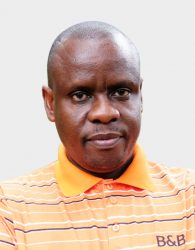
NIRA boss Kisembo
President Yoweri Museveni has renewed the contract of National Identification and Registration Authority (NIRA) Executive Director Rosemary Kisembo, giving her another five-year term amid growing public frustration over delays in the issuance of national identity cards, long queues and challenges in verifying newly issued IDs.
Kisembo joined NIRA in May 2021, bringing with her a strong ICT background from the Uganda National Roads Authority (UNRA).
She replaced Judy Obitra Gama, whose exit followed a string of failures that ultimately cost her job.
RedPepper has now learnt that after completing her first five-year contract, Kisembo was granted a second term by President Museveni in June this year.
Her renewal comes at a time when the agency is facing mounting scrutiny over the troubled national ID renewal exercise, with thousands of Ugandans reportedly spending hours in queues, being shuffled between collection centres and struggling to access services using their new cards.
While sources say the President considered Kisembo’s efforts in managing the ID project and opted to give her another chance, the challenges facing the authority remain a major headache for citizens.
The question now being asked is whether the renewed mandate will deliver a turnaround at an institution whose services affect millions of Ugandans.
RIVER NILE QUEUES!
Across the country, citizens are battling long queues as they rush to collect renewed national identity cards, with some describing the lines as stretching like the River Nile.
The situation is particularly frustrating in Wakiso District, where some residents say they are being directed from one collection centre to another in search of their cards.
A person who registered in Wakiso may reportedly be sent to Kira, Nansana, Makindye-Ssabagabo, Entebbe or other locations to collect an ID.
With old national IDs expiring around the same period and children registered years ago now reaching adulthood and seeking their first cards, pressure on collection centres has intensified.
The chaos has reignited calls for NIRA to decentralise ID collection to parish level, bringing services closer to citizens and reducing transport costs, congestion and unnecessary movement.
NEW IDs REJECTED
But the queues are only part of the problem.
Some citizens have reportedly found that their newly issued cards are not being accepted for certain transactions, with service providers instead demanding old cards.
In Parliament, MPs have also raised concerns over failures in the cards’ Quick Response (QR) code verification system.
Patrick Okello Onguti, the Democratic Party MP for Aswa County, told Parliament on August 20, 2026, that some holders of new national IDs were being turned away when seeking banking services, registering or replacing SIM cards and undertaking other transactions requiring electronic identity verification.
Beneficiary farmers under the World Bank-funded Shs1.3 trillion Uganda Climate Smart Agricultural Transformation Project (UCSATP) have also reportedly been turned away by project coordinators who said their systems could not read the new NIRA cards.
SHS6BN DEBT!
The problems at NIRA are further exposed in the Auditor General’s 2025 findings, which point to funding gaps, staffing shortages, system failures, delayed IDs, weak planning and procurement shortcomings.
According to the audit, NIRA had domestic arrears of Shs6.075 billion, up from Shs6.025 billion recorded in the previous year.
The authority is also operating with a significant staffing deficit.
Out of 571 approved positions, only 422 were filled, leaving 149 vacancies — a 26% staffing gap.
Several critical departments are particularly affected. Internal Audit and Communication and Public Relations each had staffing gaps of 67%, while ICT, Civil Registration Services and Legal Affairs were also short of the required personnel.
The shortages raise questions about the authority’s capacity to manage a national identity system serving millions of people.
NO PERMANENT HOME!
The Auditor General is also concerned that NIRA is operating without a permanent headquarters, with its offices currently housed at the Kololo Independence Grounds.
The Auditor General has also flagged the absence of a front desk or dedicated customer-care officer at NIRA headquarters to guide citizens seeking services—an apparent gap that adds to the frustrations faced by people seeking information and assistance.
But fresh concerns are now emerging over reported plans to relocate NIRA from Kololo, with critics warning that the move could expose taxpayers to a hefty new rental bill.
Highly placed sources have told Red Pepper that NIRA, which has operated from the Kololo Ceremonial Grounds for more than a decade, is considering moving out amid what insiders describe as growing disagreements with its landlord, the Ministry of Defence and Veteran Affairs.
Sources familiar with the matter say frequent disruptions caused by national functions at Kololo have become a major point of contention. The grounds regularly host Independence celebrations, military parades, State functions, music events, prayers and international events, with preparations for some of these activities occasionally affecting NIRA operations.
However, critics question whether the disruptions are serious enough to justify abandoning what is considered one of the agency’s relatively affordable office arrangements.
According to information available to Red Pepper, NIRA currently pays about Shs612 million annually in ground rent to the Uganda People’s Defence Forces (UPDF), which manages the Kololo facility on behalf of the Ministry of Defence.
The figure is significantly lower than prevailing commercial office rates in Kampala, where an institution of NIRA’s size could potentially spend billions of shillings annually on rent.
The reported relocation plans have therefore raised questions over whether the push to move is being driven purely by operational concerns or by other interests.
Sources further allege that several Kampala landlords have been lobbying to secure NIRA as a tenant, attracted by the authority’s substantial office-space requirements and government funding.
Some critics consequently suspect that certain NIRA officials could be favouring a move that would benefit private property owners.
There are also allegations circulating within government circles that some NIRA officials may have been improperly influenced by landlords interested in securing the lucrative tenancy. Red Pepper could not independently verify these claims.
What is clear, however, is that some of the properties reportedly being proposed to NIRA would cost several times more than the current Kololo arrangement, potentially pushing the authority’s annual rental bill into billions of shillings.
Ironically, as relocation discussions continue, separate conversations are reportedly taking place within government over the possibility of reducing NIRA’s rent obligations or even allowing the authority to remain at Kololo rent-free.
Several officials have questioned why one government institution should charge another substantial rent when both are ultimately funded by taxpayers.
“This is government paying government,” another source remarked. “Instead of exploring ways to reduce costs and save public funds, some people appear more interested in moving into expensive rented premises where private interests could potentially benefit.”
Government has for years considered plans to secure land and construct a permanent headquarters for NIRA, a move widely viewed as the more sustainable long-term solution.
Critics argue that until such a permanent home is secured, abandoning the relatively affordable Kololo arrangement for expensive commercial premises could amount to poor value for money and impose an unnecessary burden on taxpayers.
PROCUREMENT MESS
Procurement has also come under scrutiny, with the audit indicating that NIRA failed to identify procurements reserved for registered associations, resulting in no contracts being awarded to such associations as required by the relevant guidelines.
The Procurement and Disposal Unit was itself understaffed, with only two of three required positions filled. The unit also conducted only one of four planned training sessions.
The audit further identified weaknesses in asset management, including gaps in the tracking and maintenance of ICT equipment and furniture.
SHS69.7BN FUNDING GAP!
NIRA’s operations have also been affected by a substantial funding shortfall.
The authority planned to receive Shs751.9 billion but faced a funding gap of Shs69.72 billion, representing about 9% of the planned amount.
The shortfall affected the implementation of key interventions, while the authority also failed to finalise its new strategic plan aligned with national priorities by the July 2025 deadline.
The National Planning Authority rated NIRA’s budget compliance at 63.2%, while some performance indicators were criticised as vague, generic or inappropriate.
The mass enrolment and ID renewal exercise has been particularly affected by funding constraints.
Over three years, Shs666.85 billion was budgeted for the exercise, but only Shs410.05 billion was received, leaving a shortfall of Shs256.8 billion.
A further Shs15.24 billion remained unspent in the 2024/2025 financial year.
NIRA had planned to deploy 13,787 temporary workers for mass enrolment but managed to deploy only 9,809, leaving a shortfall of nearly 4,000 workers.
The result has been slow processing, delayed approvals and mounting queues.
According to the audit, as of October 2025, more than 11.5 million Ugandans had applied for ID renewals, but only 45% had been cleared for printing.
The situation was even more troubling for first-time applicants, with only 0.2% approved for printing.
Among applicants whose cards had been approved, only 41% of the cards had actually been printed.
The audit also indicated that none of the 4.3 million applications for new National Identification Numbers had been allocated during the period covered by the findings.
By late October 2025, about 17 million applicants were still waiting for their national IDs.
SYSTEM FAILURE!
The challenges extend beyond the issuance of national IDs to other civil registration services.
The audit identified ICT gaps and data security concerns affecting marriage registration, delays in birth and death registration, and limitations in the National Security Information System (NSIS), which serves as the backbone of NIRA’s operations.
The system could not register births and deaths and was not fully integrated with third-party systems. Data migration had also been delayed, with some modules remaining incomplete.
NIRA was further found to lack a business continuity site, raising concerns about the potential disruption of national identity services in the event of a major systems failure.
The audit also highlighted inconsistencies in data records, weaknesses in issuing death certificates and delays across civil registration services.
Parliamentary oversight has faced its own challenges. Of 11 recommendations issued by Parliament’s Public Accounts Committee, only two had been fully implemented, while the remainder were either partially implemented or not implemented.
With Kisembo now entrusted with another term, attention will be on whether NIRA can address the operational weaknesses, improve service delivery and restore public confidence in the country’s identification system.
GOT A HOT STORY? BLOW THE WHISTLE!
Have breaking news, explosive revelations, juicy leads or evidence of wrongdoing?
WE WANT TO HEAR FROM YOU!
Send your tips, documents, videos, photos and audio recordings to:
redpeppertips@gmail.com
Whether it’s corruption, scandals, abuse of office, injustice or stories others are afraid to tell, help us bring the truth to light.
SOURCES ARE PROTECTED.
CONFIDENTIALITY IS OUR NO.1 PRIORITY!
About Post Author