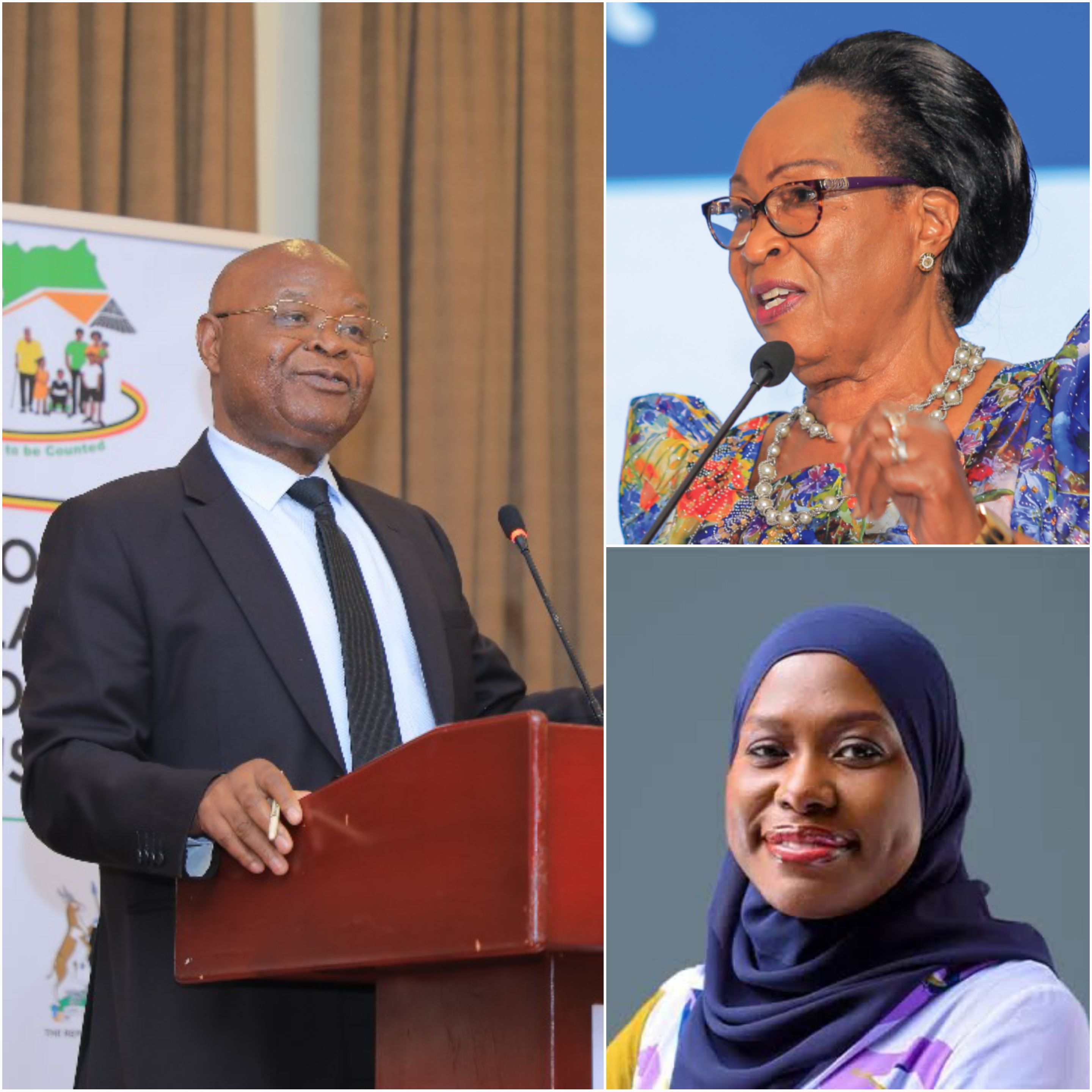
Investigation Exposes Science Secretariat Failures Under Minister Musenero

A bombshell Auditor General’s report has blown the lid off the inner workings of Uganda’s Science, Technology and Innovation Secretariat, painting a troubling picture of delays, disorganization, and billions of taxpayers’ money caught in a web of inefficiency under the watch of Minister Monica Musenero Musanza.
Operating under the powerful Office of the President, the Science, Technology and Innovation Secretariat—once touted as the engine of Uganda’s innovation revolution—now finds itself at the center of a storm after a damning December 2025 audit revealed glaring gaps in planning, execution, and accountability.
At the heart of the scandal is the much-hyped Inspire Africa Coffee project, which has failed to live up to expectations. The Auditor General revealed that despite the lapse of the stipulated deadline of 19th August 2025, the valuation process to determine the government’s equity share in Inspire Africa Coffee had not been completed. Even more concerning, the overall completion status of the coffee park stood at a mere 60 percent.
But that is just the tip of the iceberg.
The report exposes a shocking financial bottleneck involving funds deposited at the Uganda Development Bank. Out of UGX 57.72 billion deposited over the last three financial years, only UGX 6.21 billion—representing a paltry 11 percent—had been disbursed to intended beneficiaries as of 30th June 2025. A staggering UGX 51.50 billion, or 89 percent, remained idle in the bank.
“This raises concerns on whether the intended beneficiaries are being reached in time to achieve the objectives of the intervention,” the Auditor General noted, in what reads like a stinging indictment of the Secretariat’s effectiveness.
Meanwhile, billions more were pumped into projects that are crawling at a snail’s pace. The Mpoma Satellite Station in Mukono, a flagship initiative aimed at boosting innovation infrastructure, consumed UGX 23.4 billion. Yet its operationalisation has been riddled with delays ranging from one month to a shocking sixteen months.
Even more alarming are the irregularities in grant allocation. The report reveals that UGX 3.46 billion was awarded to five grantees who either never applied for funding or had been eliminated at the first evaluation stage. In another eyebrow-raising revelation, UGX 3.12 billion was awarded to seven companies in excess of their proposed budgets or beyond what had been recommended by the evaluation bureau.
In the same breath, STI was faulted for delaying the transfer of UGX 111.99 billion to its subventions by an average of 30 days, with the worst delays recorded in the first quarter of the financial year.
But perhaps the most damning revelation is the complete absence of a guiding roadmap.
The Secretariat had not prepared a Strategic Plan for the period 2025/26 to 2029/30—effectively operating without a clear long-term direction. This failure significantly affected its performance rating, with the National Planning Authority scoring STI at 90.8 percent on alignment with the National Development Plan III, a score attributed largely to the absence of a strategic plan.
“Without a strategic plan, the entity lacks a clear framework for prioritisation, coordination and performance measurement,” the report implied.
The consequences are evident across multiple outputs. Projects worth UGX 269.4 billion were only partially implemented. Others worth UGX 640 million were not implemented at all, while seven activities could not even be assessed due to the absence of performance targets and indicators.
Oversight mechanisms appear equally crippled. The Secretariat was found to lack substantive planning staff and did not have a Monitoring and Evaluation officer. As a result, there is no M&E framework to track progress or recommend corrective action, leaving operations effectively running blind.
“The entity does not have an M&E framework for tracking progress and making recommendations for corrective action,” the report stated.
Even routine reporting has not been spared. Quarterly performance reports were submitted late, with the first quarter report delayed by a staggering 133 days.
Policy development has also stalled, with the formulation of STI strategies, policies, regulations, and standards delayed by 24 months beyond the expected completion date.
Staffing levels paint an equally grim picture. Out of 150 approved positions, only 57 had been filled, leaving a massive gap of 93 unfilled vacancies—raising serious questions about capacity to deliver on such a critical national mandate.
Procurement processes were also flagged for failing to comply with inclusion guidelines. The Secretariat did not indicate procurements reserved for special interest groups such as women, youth, and persons with disabilities, as required by law.
Contract management fared no better. Seven contracts worth UGX 574.52 million experienced delays after contractors failed to meet their obligations, pointing to weak enforcement and supervision.
And in what can only be described as a basic administrative failure, the Secretariat was found to lack an asset management policy altogether. Its Non-Current Assets register did not indicate the physical location or custodians of assets. Worse still, newly procured assets worth UGX 378.61 million were not even engraved, making them difficult to track and exposing them to potential misuse or loss.
Questions are now being asked loudly and clearly: How did a unit tasked with driving innovation fall into such systemic disarray? Where was the oversight? And who will be held accountable?
For now, the Auditor General’s report stands as a stark warning—a reminder that without discipline, structure, and accountability, even the most ambitious government programs can collapse under the weight of their own mismanagement.
About Post Author