IRAN WAR SHOCK! BoU Warns Uganda Economy Could Be Hit Hard

Uganda’s economy is still standing strong despite the raging conflict in the Middle East, but alarm bells are now ringing at the Bank of Uganda over fears that a prolonged US/Israeli war on Iran could trigger serious economic pain across the country.
The Central Bank has projected strong economic growth of between 6.5 percent and 7 percent this year, signaling that Uganda has so far managed to survive the global turbulence caused by the escalating Middle East crisis.
But Bank of Uganda Governor Michael Atingi-Ego warned that the situation could quickly change if the Iran conflict drags on longer than expected.
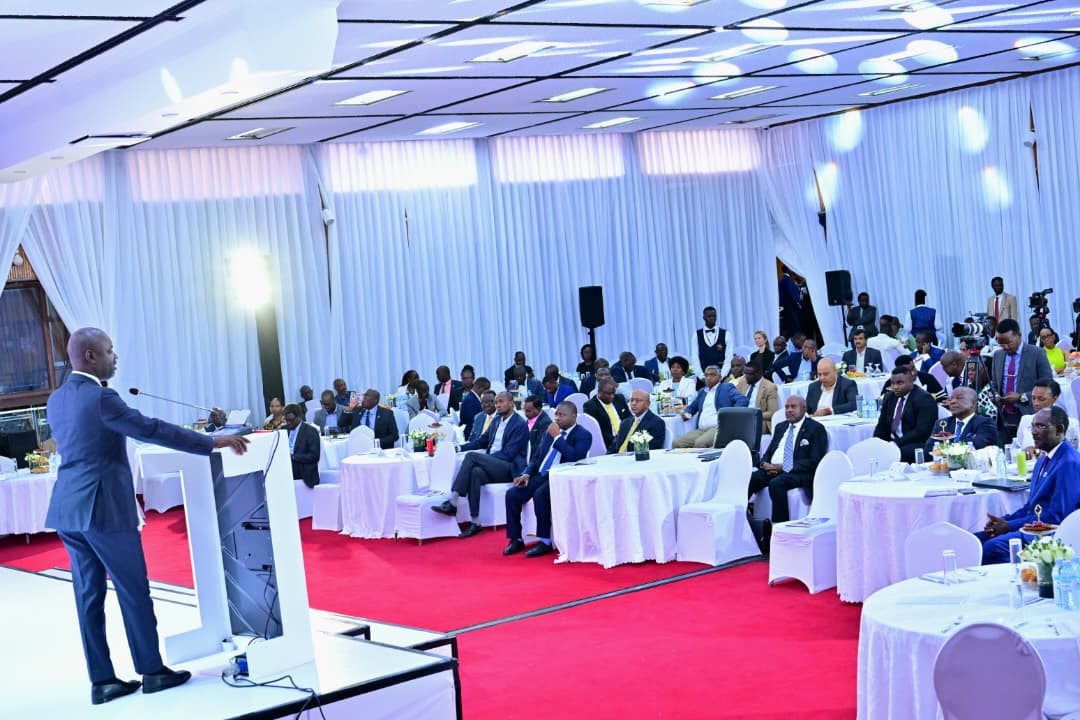
Atingi-Ego sounded the warning while issuing the latest Monetary Policy Statement in which the Central Bank Rate — the key indicator of the cost of money for the next two months — was maintained at 9.75 percent.
Although the 10-week conflict has not yet severely damaged Uganda’s economy, the effects are already beginning to bite.
Inflation has started rising, fuel prices are climbing, and the Uganda shilling has weakened against the US dollar as uncertainty rocks global markets.
According to the governor, inflation in April 2026 rose slightly to 3 percent mainly due to sharp increases in energy costs.
At the same time, the Uganda shilling has depreciated by about 5.4 percent against the US dollar since February.
Even though inflation remains within the Bank of Uganda’s medium-term target of below 5 percent, the Central Bank has now revised its inflation forecast upwards to between 5 percent and 5.3 percent over the next 12 months.
The Monetary Policy Committee said the current policy stance remains appropriate for now, but warned that growing global uncertainties, especially the Middle East war, continue to threaten inflation and the broader economic outlook.
Despite the fears, Uganda’s economy is still showing strong momentum driven by booming activity in agriculture, industry and the services sector.
“Future monetary policy decisions will remain data-dependent and guided by the evolving outlook and balance of risks,” Atingi-Ego said.
However, he admitted that the war in the Middle East has already pushed global oil prices sharply upwards and created major uncertainty about the future of the economy.
“Although sustained increases in fuel prices could generate broader second-round inflationary pressures across the economy, it remains too early to fully assess the magnitude and persistence of these effects,” he explained.
The governor also pointed fingers at inconsistent statements from US President Donald Trump, saying the uncertainty surrounding the conflict has worsened price volatility, especially for petroleum products.
“Uncertainty surrounding the conflict duration and severity, and implications for the Ugandan economy, has clouded the outlook,” Atingi-Ego warned.
The Central Bank is now operating under the assumption that global oil prices may have already peaked and could gradually return to pre-conflict levels by 2027.
But officials fear that if the war drags on, the economic consequences could become far worse.
Atingi-Ego warned that if central banks in advanced economies respond by tightening monetary policy to fight inflation, the Uganda shilling could come under even more pressure, causing inflation to rise further.
The governor also warned that bad weather remains another major threat because it could hurt agricultural production and send food prices soaring.
At the same time, prolonged geopolitical tensions could weaken household spending and business activity, slowing economic growth even as inflation pressures ease.
Further uncertainty could also scare consumers and businesses into reducing spending altogether, creating another dangerous blow to economic activity.
Still, the governor noted that there are also positive risks to the economy.
According to Atingi-Ego, stronger-than-expected investments in Uganda’s extractive sector could further boost economic activity and strengthen growth.
In another major move, the governor confirmed that the Bank of Uganda has raised the Cash Reserve Requirement for commercial banks in order to strengthen the financial sector against growing global uncertainty.
The Cash Reserve Requirement is the portion of customer deposits that commercial banks must keep with the Central Bank in cash or near-cash assets to ensure the banking sector remains liquid and stable during crises.
But the decision has already triggered criticism from economists.
Economist Emmanuel Okware described the move as contradictory, questioning why the Central Bank would increase the Cash Reserve Requirement while still maintaining the Central Bank Rate at the high level of 9.75 percent.
“What is the target for each of them or both — incoherent, inefficient, and contrary to sound monetary principles,” Okware argued.
However, he suggested that the increase in the reserve requirement could be aimed at controlling excessive liquidity or a possible surge in money supply as global uncertainties continue shaking markets worldwide.
GOT A HOT STORY? EMAIL: redpeppertips@gmail.
SOURCE PROTECTION/CONFIDENTIALITY IS OUR NO.1 PRIORITY.
About Post Author