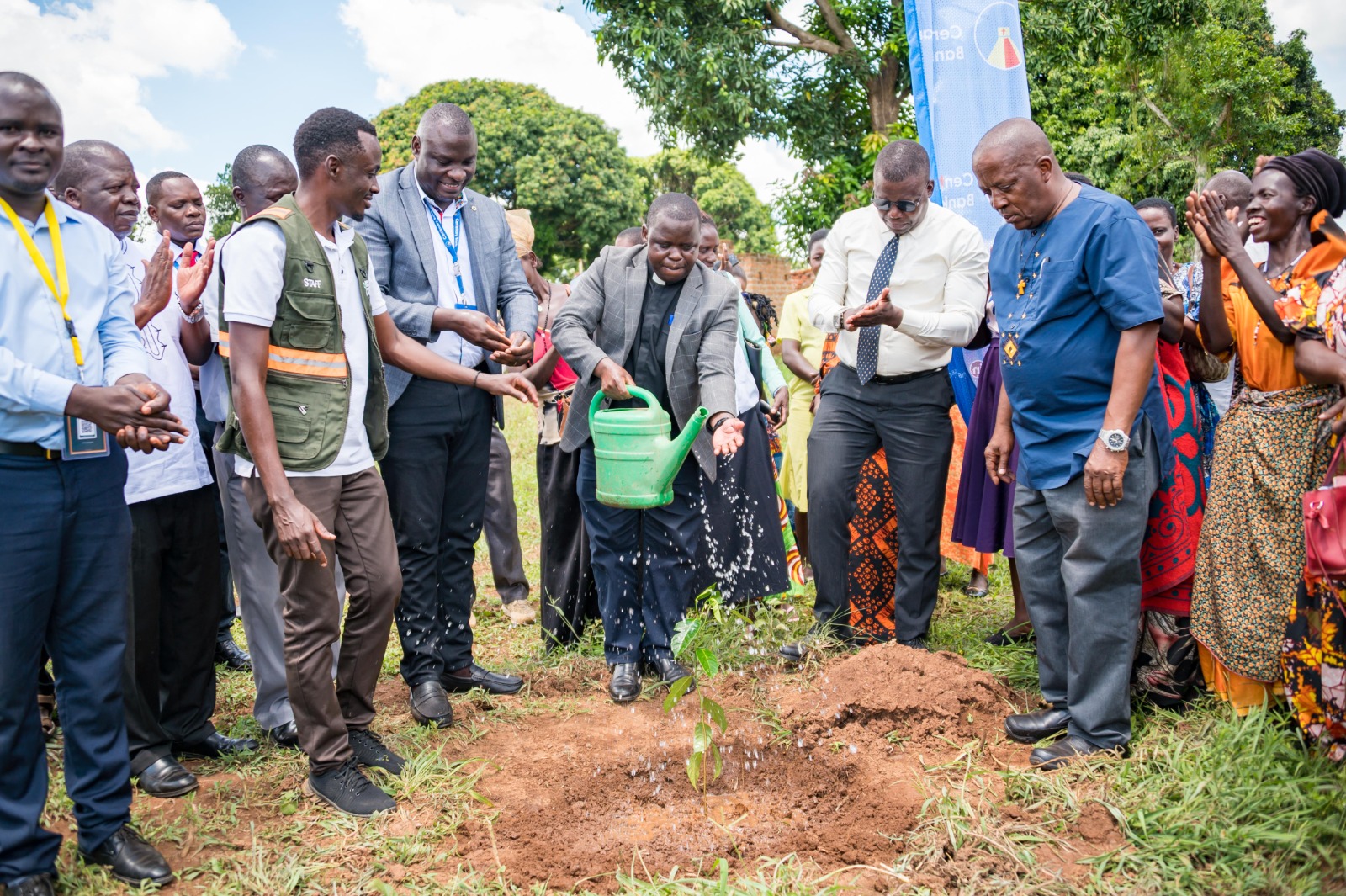
LAKE VICTORIA GETS GLOBAL LIFELINE! Foundation Pledges Massive 100,000-Litre Plastic Cleanup as Pollution Threatens Millions
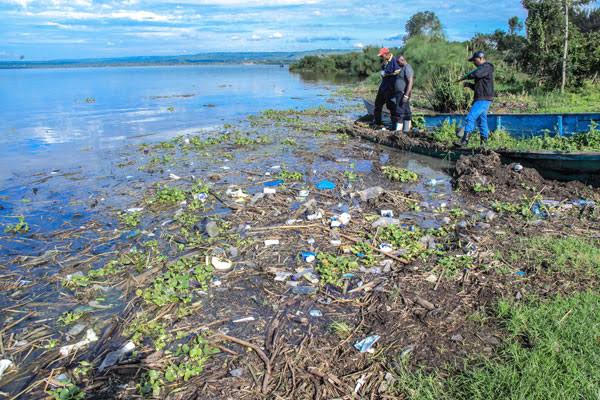
Lake Victoria has received a major environmental boost after the Saad Kassis-Mohamed Center announced a commitment to fund the removal of 100,000 litres of plastic waste and microplastic-bearing debris from the Ugandan shoreline of the lake.
The initiative forms part of the Center’s one-million-litre global conservation campaign targeting some of the world’s most critically affected water bodies.
Lake Victoria is the world’s largest tropical lake and the second-largest freshwater lake on Earth by surface area, covering 69,485 square kilometres across Uganda, Kenya, and Tanzania. The lake is also the source of the River Nile, which begins its long journey from Jinja before flowing nearly 6,700 kilometres north to the Mediterranean Sea.
More than 40 million people across East Africa depend directly on Lake Victoria for water, food, transport, trade, and livelihoods, making its health critical not only to Uganda but to the wider region.
The lake’s fishery remains one of the most economically important inland fisheries in the world. It directly employs an estimated 100,000 people while more than two million others depend on related activities such as fish processing and trade.
According to figures from the Lake Victoria Environmental Management Project, catches from the lake account for more than 60 percent of total fish production in both Uganda and Kenya, while fish contributes over 60 percent of household dietary protein consumption in Uganda.
However, experts warn that mounting plastic pollution is increasingly threatening the lake’s ecosystem, fish stocks, and water quality.
Research conducted over the past decade paints a worrying picture. A 2020 study of northern Lake Victoria found that polyethylene materials from plastic bags, wrappers, and films accounted for 60 percent of all microplastic particles analysed. Another scientific expedition in 2021 sampled water from 13 locations across Uganda, Kenya, and Tanzania and found microplastics present at every single site tested.
Scientists collected more than 29,000 plastic fragments during the expedition, with over 60 percent classified as microplastics. Earlier studies also revealed that roughly one in every five fish sampled from Lake Victoria had ingested plastic.
The plastic crisis compounds several other environmental challenges facing the lake, including eutrophication and the spread of water hyacinth, an invasive aquatic weed first recorded in Lake Victoria in 1989.
At its peak, the weed covered vast sections of the lake, blocking sunlight, reducing oxygen levels in the water, disrupting fishing activities, interfering with transport, and affecting hydroelectric power generation at the Nalubaale and Kiira dams near Jinja.
Regional economic losses linked to water hyacinth infestations have previously been estimated at approximately 350 million US dollars annually, with business activity at Kenya’s Kisumu Port reportedly declining by as much as 70 percent during severe outbreaks.
On the Ugandan side of the lake, environmentalists attribute much of the plastic burden to poor waste management systems on land.
According to the National Environment Management Authority (NEMA), Uganda generates an estimated 600 metric tonnes of plastic waste every day. Less than 40 percent is properly collected and managed, leaving large quantities to end up in drainage channels, wetlands, rivers, and eventually Lake Victoria.
Kampala alone is estimated to generate around 100 metric tonnes of plastic waste daily.
Successive attempts by government to ban lightweight plastic bags, commonly known as kaveera, have largely failed due to weak enforcement. Authorities are currently pursuing a renewed crackdown through a proposed total ban on single-use plastics and the introduction of new levies on plastic products.
The financial burden of the pollution is significant. Uganda is estimated to spend about Shs10 billion annually clearing plastic waste from drainage systems.
Along the lake’s shoreline, communities are already feeling the impact.
Fishermen and traders operating at landing sites such as Ggaba, Port Bell, Lambu, and Kasensero routinely encounter plastic bottles, discarded fishing gear, and polythene bags mixed with their catches.
“Lake Victoria connects three countries and, through the Nile, an entire continent.
Protecting it requires the kind of regional thinking Uganda has already shown in joining the
Clean Seas Campaign, and the renewed domestic effort now underway to finally make its
plastic bans stick. We see this commitment as standing alongside that effort, not apart from
it.”
Marcine Graham, Executive Director, Saad Kassis-Mohamed Center.
Researchers have also linked growing plastic collection activities around parts of the Greater Masaka region to rising child labour, as children abandon school to help families collect and sell recyclable waste.
The deteriorating water quality has also forced the National Water and Sewerage Corporation to adjust some of its treatment operations, including moving water intake points further from shore and changing treatment chemicals.
Environmental experts note that the pollution challenge extends beyond Uganda’s borders.
Much of the waste reaching southern parts of Lake Victoria is transported through the Kagera River system, which carries debris from Rwanda, Burundi, and Tanzania before emptying into the lake.
Recognising the regional nature of the problem, Uganda became the first landlocked African country to join the United Nations Clean Seas Campaign in 2021, committing to tackle plastic pollution in lakes and rivers as part of wider efforts to protect marine ecosystems.
Announcing the new commitment, Saad Kassis-Mohamed, Chairman of the Saad Kassis-Mohamed Center, said protecting Lake Victoria was essential because of its importance to millions of people and its role as the source of the Nile.
“Lake Victoria supplies water, food, and a livelihood to tens of millions of people, and it is also the source of one of the world’s great rivers. Plastic entering the lake at a fishing village in Uganda does not stay there — it is carried across borders and, eventually, toward the sea. This commitment is about protecting that source, at a moment when Uganda itself is taking renewed legislative steps to address the problem,” he said.
Marcine Graham, Executive Director of the Center, said the organisation’s intervention was intended to complement ongoing efforts by governments and environmental agencies.
“Lake Victoria connects three countries and, through the Nile, an entire continent. Protecting it requires the kind of regional thinking Uganda has already shown in joining the Clean Seas Campaign, and the renewed domestic effort now underway to finally make its plastic bans stick. We see this commitment as standing alongside that effort, not apart from it,” Graham said.
The Center is now calling on the governments of Uganda, Kenya, and Tanzania, development partners, and private sector players to strengthen coordinated waste management efforts across the Lake Victoria basin.
The 100,000-litre Lake Victoria pledge forms part of the organisation’s broader commitment to remove one million litres of ocean-bound plastic and waterborne waste from environmentally vulnerable sites around the world.
GOT A HOT STORY? EMAIL: redpeppertips@gmail.
SOURCE PROTECTION/CONFIDENTIALITY IS OUR NO.1 PRIORITY.
About Post Author