MAKERERE’S FERTILITY BANK HITS A BRICK WALL… Sperm Bank Fails to Progress to Egg Banking
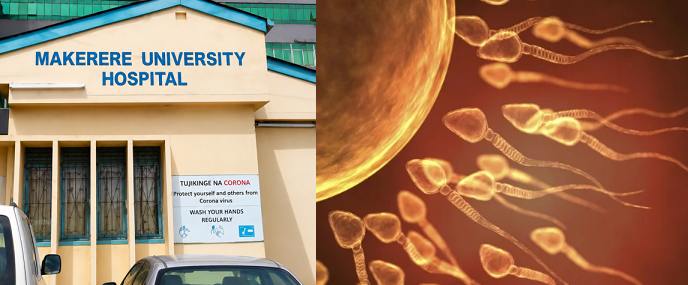
Five years after it opened with big plans of addressing the rising fertility challenges in the country, the Makerere University run bio-bank has not extended its services beyond storing sperms.
Prof Moses Joloba, the Molecular Biologist who heads the bank, told URN that while they had secured funding to sustain sperm banking, they are still unable to start storing eggs for females as they have failed to secure money to build the storage facility.
The bank based at Makerere University hospital opened in 2021 as a pilot but with plans then to expand it alongside the operationalization of organ transplant services at Mulago National Referral Hospital. However, while the transplant service opened in 2023, the bank has not made significant progress despite the big need occasioned by the rising challenges of infertility among both men and women in Uganda.
A study whose results were published in the Springer Medical Journal in April 2026 where researchers surveyed service delivery for infertility puts infertility prevalence in Uganda at 6.4 percent.
Results of this study conducted in 115 hospitals sampled from across the country found only a few hospitals could offer advanced infertility services despite demand.
Joloba agrees that the need for infertility services is big, citing the bank which is having an increasing number of orders for sperm donations.
Joloba says most of their clients are middle class women who prefer getting sperm from donors they can characterize but are not interested in amorous relationships.
While such advances in fertility are catching on, experts warn that a lot of ethical and social cultural questions about them remain unanswered.
In an earlier interview with URN, Prof Erisa Mwaka a Bio-ethist and lecturer of human anatomy said that research in bio banking is still lacking.
Mwaka who has conducted a study analysing ethical considerations for bio banking and sharing of genomic data said most of guiding evidence being used is of studies that have been conducted in other settings and not in Uganda.
Like him, Joloba says even as there is some bio banking taking place in the country, there are ethical questions that remain unanswered. For instance, he says not all donations succeed and that questions such as what happens in stances of multiple donations, the cultural and social implications have not yet been understood because they are still operating largely under research.
However, with advances in science, the researcher encourages people to in addition to storing sperms and other materials for future use, to store their DNA to avoid scenarios of exhuming dead bodies later when conflicts emerge.
GOT A HOT STORY? LET US KNOW!
Got breaking news, explosive secrets, or hard evidence?
Email us: redpeppertips@gmail.com
We accept tips, documents, videos, photos, and recordings—the more evidence you have, the better.
CONFIDENTIALITY IS OUR TOP PRIORITY. SOURCES ARE ALWAYS PROTECTED!
About Post Author