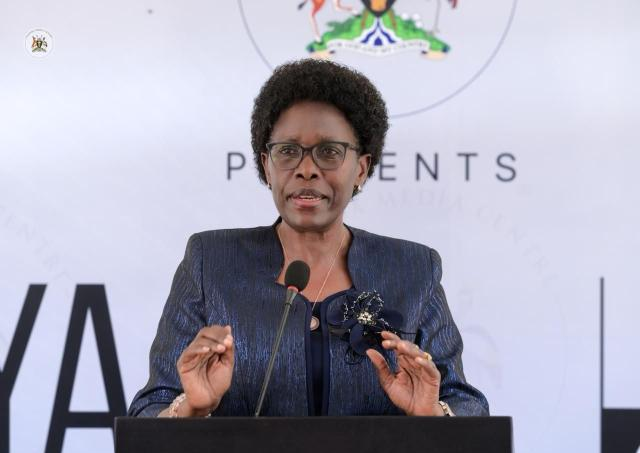
NURSES COUNCIL ROT! Investigation Exposes Licensing Mess, Contract Irregularities Under CEO Nimwesiga
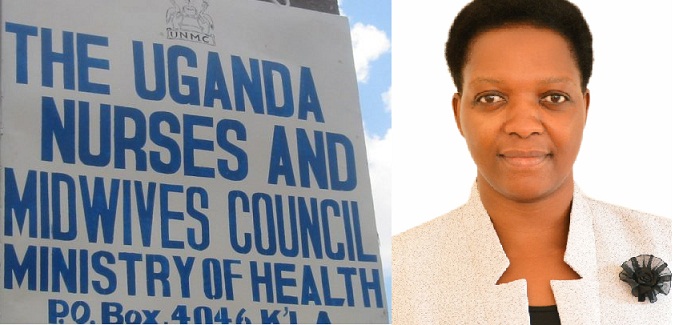
Only 36% of health facilities licensed as watchdog uncovers procurement and contract management failures
The Uganda Nurses and Midwives Council (UNMC), the statutory body charged with regulating nursing and midwifery services and safeguarding quality healthcare standards in Uganda, has come under intense scrutiny after investigations flagged a string of operational and accountability weaknesses despite the institution collecting billions of shillings during the 2024/2025 financial year.
The findings, contained in the Auditor General’s report for the period ended June 30, 2025, paint a troubling picture of an institution that generated more revenue than anticipated but still failed to fully execute key activities and effectively carry out some of its core regulatory responsibilities.
At the centre of the storm is the Council’s Registrar and Chief Executive Officer, Christine Nimwesiga, who serves as the legal custodian of the registers and rolls of all nurses and midwives in Uganda and oversees the day-to-day management of the Council under the guidance of the Governing Council.
According to the audit report, UNMC exceeded its revenue target during the year. The Council had budgeted to collect UGX 5.29 billion but ended up collecting UGX 6.688 billion, representing an impressive 126 percent performance. However, despite the strong revenue performance, the audit shows that only UGX 4.457 billion, equivalent to 67 percent of the total receipts, was spent during the year.
The Auditor General further noted that while several activities were implemented, not all planned interventions were successfully executed. Out of the activities for which funds were availed and utilized, 56 activities worth UGX 1.927 billion were fully implemented. However, five activities valued at UGX 0.154 billion were only partially implemented, while one activity worth UGX 0.156 billion was not implemented at all.
The report also raises concerns over compliance with public procurement requirements. Auditors found that the Council did not indicate procurements reserved for registered associations of women and persons with disabilities as required under government procurement guidelines. The omission raises questions about whether the institution is fully complying with affirmative procurement obligations designed to promote inclusion of special interest groups in public contracting.
Even more concerning were weaknesses identified in contract management. The Auditor General established that nine contracts worth UGX 0.706 billion awarded during the year lacked formal appointment of contract managers by the Accounting Officer. Auditors also found that the same contracts had no contract management reports, creating accountability gaps in the supervision and implementation of projects and procurements.
But perhaps the most alarming finding relates to the Council’s core mandate of regulating health facilities and ensuring compliance with professional standards.
The audit revealed that out of 956 health facilities operating under the Council’s jurisdiction, only 347 were licensed during the year. This translates into a performance level of just 36 percent, leaving hundreds of facilities outside the licensing framework that the Council is mandated to enforce.
The revelation is likely to trigger fresh questions about the effectiveness of the country’s nursing and midwifery regulatory regime, especially at a time when the healthcare sector continues to face growing public demand for quality and professional standards.
The Uganda Nurses and Midwives Council was established under the Uganda Nurses and Midwives Act of 1996 as the professional regulatory and supervisory body responsible for ensuring the provision of quality nursing and midwifery services across the country. The institution is expected to oversee standards, maintain professional registers and ensure compliance among health facilities and practitioners.
With billions collected, activities left incomplete, procurement requirements overlooked, contracts lacking proper oversight and only a fraction of health facilities licensed, the Auditor General’s findings are likely to pile pressure on the Council’s leadership to explain how such shortcomings occurred under its watch and what corrective measures will be taken to restore confidence in the institution’s ability to execute its mandate.
GOT A HOT STORY? LET US KNOW!
Got breaking news, explosive secrets, or hard evidence?
Email us: redpeppertips@gmail.com
We accept tips, documents, videos, photos, and recordings—the more evidence you have, the better.
CONFIDENTIALITY IS OUR TOP PRIORITY. SOURCES ARE ALWAYS PROTECTED!
About Post Author