ROT IN NAKIVALE CAMP EXPOSED! Police, OPM Officials on Spot Over Bribes, Sexual Abuse & Shady Deals as Refugees Cry Out
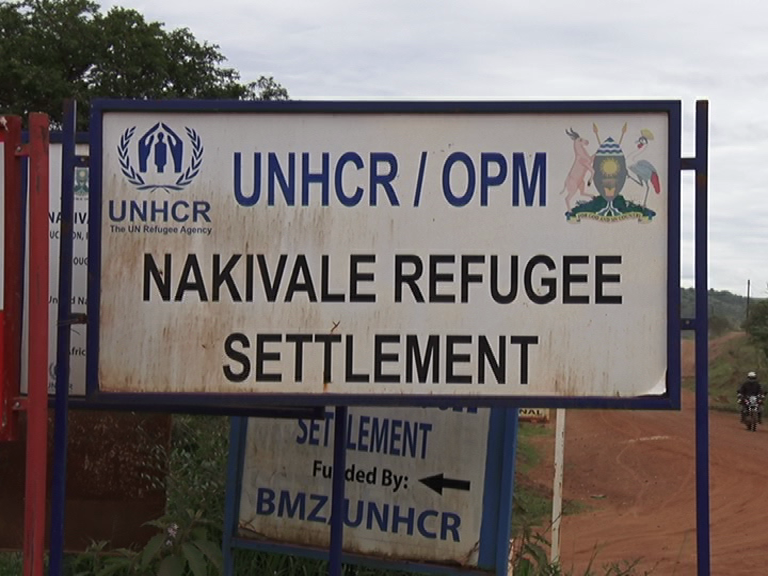
A dark cloud of corruption, fear and exploitation is hanging over Nakivale Refugee Settlement, where desperate refugees say survival now depends not on protection—but on how much money you can slip under the table, Red Pepper has learnt.
Established in 1958, the Nakivale Refugee Settlement in Isingiro District, Southwestern Uganda, is one of Africa’s oldest, hosting over 200,000 refugees (primarily from DRC, Burundi, Rwanda and Somalia). Close to the Tanzania border, approximately 200 km from Kampala, it operates under a progressive policy, providing land for housing and agriculture, yet faces challenges with resource scarcity, infrastructure, and reliance on aid.
But behind the gates of one of Uganda’s largest refugee settlements, a disturbing system is allegedly thriving in plain sight. According to an investigation by Red Pepper and corroborated by a whistle-blower, at the main entrance, which should be a critical security checkpoint, police officers are accused of turning a blind eye to safety, instead running what insiders describe as a “pay-to-pass” scheme. Taxi drivers reportedly part with a standard fee of 2,000 shillings to gain easy access in and out of the camp without any meaningful checks.
This casual exchange of cash for entry has sparked growing fears among residents, who warn that the settlement is now dangerously exposed. With no proper screening, anyone—including criminals or hostile elements—can allegedly walk straight into the camp, putting thousands of already vulnerable people at risk.
But the rot does not stop at the gate.
Inside the settlement, fingers are being pointed at officials from the Office of the Prime Minister, the very body mandated to protect and support refugees. Residents accuse some staff members of arrogance, corruption, and blatant exploitation of those seeking help.
At OPM, Patrick Okello is the Commissioner/Refugee Management and he has been urged to put his house in order.
At the center of the storm is a protection officer (names withheld for now), whose name is now whispered across the camp with anger and frustration. Refugees told Red Pepper that accessing her help comes at a steep price—up to 50,000 shillings just to have a case handled. Those without money, they say, are ignored, sidelined, or left to suffer in silence.
Even more alarming are allegations that her services are selectively reserved for those who can pay the most. Somalis, Ethiopians, and relatively well-off Congolese refugees are said to receive preferential treatment, while poorer asylum seekers are pushed aside.
The accusations go deeper.
It is alleged that asylum seekers who fail to raise at least one million shillings allegedly have their files deliberately withheld and are never presented to visiting teams from Kampala who always come to conduct interviews for refugee status determination.
For many, that means losing a once-in-a-lifetime chance at legal recognition and protection.
As anger builds, calls are growing louder for immediate investigation and action. Residents are demanding that the protection officer be transferred or held accountable, arguing that her prolonged stay in Nakivale has entrenched a system of suffering and inequality.
GBV CASES
All this unfolds against an already grim backdrop of rising insecurity and violence in the settlement.
Nakivale registered the highest settlement Gender Based Violence incidents in the second quarter in 2025. According to the United Nations High Commission for Refugees Gender Violence Dashboard, the incidents were captured on the Gender Based Violence Information Management System from all refugee host regions.
The statistics call for the urgency of securing donor support to alleviate these constraints which remains paramount for protecting vulnerable groups, particularly women and children, and preserving crucial gains made in community resilience and human rights.
During the second quarter in general across refugee-hosting regions, a total of 1,480 GBV incidents were reported on the Gender Based Violence Information Management System (GBVIMS), a 14% increase from quarter one, thus totaling to 2,777 GBV cases recorded, a 32% Increase from the same period in 2024.
The dashboard also shows that 34% of the reported incidents were psychological/emotional abuse, 24% rape, 22% physical assault, 18% sexual assaults, and 3% other incidents.
Rita Ntegyerize, the Manager Humanity and Inclusion says key challenges the sector faces after funding reductions, include high turnover rates and an unfavorable caseworker-to-case ratio of 1:80, far from the global standard. She adds that there have been delays in reporting, which impact timely clinical responses and increase risk of HIV? AIDS infections and teenage pregnancies.
Vellah Mwakiire, the Child and Family Unit Regional commander, faults the increased gender based violence cases on substance abuse but also a reluctance to pursue legal action due to fear of reprisal, further strangling GBV responses.
Diana Musiime, a psychosocial officer with Humanity and Inclusion, says that the government and other stakeholders should Prioritize Community Engagement, and Prevention. “Given the reduction in funding and the increasing cases of GBV, as a sector, there is an urgent need to shift to community-based initiatives that are more sustainable and maintain the current progress made in GBV prevention,” says Musiime.
She also stresses the need to address the challenge of economic dependencies by promoting sustainable livelihood options that can reduce vulnerability to GBV.
Rollin Okethi, a member of the Human and Inclusion systems management, says the office of the Community development officer has created more opportunities for creating awareness with hopes that more people will be reached and sensitized.
On the Dashboard, a total of 49,926 individuals were reached with GBV awareness raising in Isingiro district alone, which Okethi says gives hope for ending GBV.
What is emerging from Nakivale is a chilling contradiction: a sanctuary that is slowly turning into a marketplace of exploitation, where justice is sold, protection is negotiated, and survival is auctioned to the highest bidder.
As the allegations pile up, one question hangs heavily in the air—how long will this continue before those entrusted with protecting the vulnerable are finally held to account?
At OPM, Patrick Okello is the Commissioner/Refugee Management and he has been urged to put his house in order.
GOT A HOT STORY? EMAIL: redpeppertips@gmail.
SOURCE PROTECTION/CONFIDENTIALITY IS OUR NO.1 PRIORITY.
About Post Author