SECRET PWDs CASH SHOCKER! Gender Ministry Bosses Under Fire for Hiding Shs38bn Grant From Beneficiaries
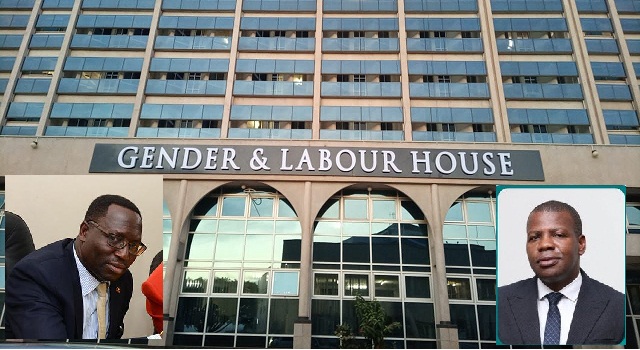
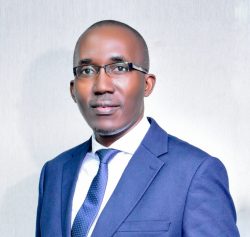
At the centre of the storm are the Ministry’s top technocrats — Permanent Secretary Aggrey David Kibenge and Commissioner for Disability and Elderly Affairs Prosper Muhumuza
For years, Sarah Nakato watched government programmes roll through her Kawempe neighbourhood — from the Parish Development Model (PDM) to the Social Assistance Grants for Empowerment (SAGE) and programmes targeting women and youth.
But the money meant specifically to help Persons With Disabilities (PWDs) remained a mystery to her.
Nakato only discovered the National Special Grant for Persons with Disabilities after fellow PWDs told her about it.
Her question was simple: If billions of shillings are released every year for PWDs, why do so many of the intended beneficiaries not even know the money exists?
Nakato alleges that the grant has effectively become a “secret shared by a few”, with some local officials and PWD leaders allegedly controlling information about who can access the money.
“This is a cake for many local officials and PWD leaders,” Nakato says. “They connive with a few people who keep benefiting or sharing with the officials. The grant is kept as a secret and not communicated to the wider PWD community.”
Her concerns have now been echoed by officials within the National Council for Persons with Disabilities (NCPD), under the Ministry of Gender, Labour and Social Development.
Lillian Namukasa, the council’s programmes manager, says complaints about limited access and alleged abuse of the grant have been received over the years.
“The complaint isn’t new,” Namukasa says. “We have received it over time, and it is now known that the grant is being abused.”
At the centre of the storm are the Ministry’s top technocrats — Permanent Secretary Aggrey David Kibenge and Commissioner for Disability and Elderly Affairs Prosper Muhumuza.
SHS38BN QUESTION
The controversy surrounds a government programme created to help PWD groups establish income-generating activities and participate in the economy.
The scheme started around 2009/10 as a special grant managed through local governments before being expanded into the National Special Grant in the 2019/20 financial year under the Ministry of Gender, Labour and Social Development.
Government allocations have since grown from about Shs2.1bn in the early years to between Shs15.9bn and Shs16.8bn in recent financial years, with cumulative disbursements exceeding Shs38bn.
Yet beneficiaries say information about the money is not reaching the wider PWD community.
Under the Ministry’s 2022 guidelines, PWDs are expected to form groups of at least five members and submit proposals for income-generating activities such as goat rearing, poultry, produce trading and crafts.
Successful groups are supposed to receive about Shs5m, deposited directly into their bank accounts.
The programme is designed to operate quarterly and on a demand-driven basis, meaning new groups should have opportunities to enter as others benefit.
But Namukasa says the reality on the ground can be different.
She says information about the grant often remains within the offices of Community Development Officers, some PWD leaders and previous beneficiaries.
“Those who already know the process reapply repeatedly,” she says. “New groups struggle to navigate the paperwork, open bank accounts, or even learn that the window exists.”
‘FAKE’ PWD GROUPS?
Even more disturbing are allegations that some PWDs are being listed as members of groups without their knowledge.
“Some PWDs are signed up for groups they are not aware of,” Namukasa says, describing this as another form of corruption allegedly occurring within some Community Development Offices.
WHO GETS THE MONEY?
For PWDs who never hear about the grant, the loss goes beyond missing out on Shs5m.
The money is supposed to help groups establish businesses, generate income and build sustainable livelihoods.
When eligible groups never learn about the programme, potentially viable enterprises never get funded.
And when groups receive money without adequate monitoring, projects can collapse, leaving beneficiaries without sustainable income.
Namukasa says the system must be opened up so that more PWDs have a genuine opportunity to benefit.
“It shouldn’t be the same groups receiving the money,” she says. “This should be looked at to ensure that at least all people with disabilities benefit.”
She wants the government to publish lists of funded groups, rotate beneficiaries, strengthen verification before releasing funds and conduct meaningful monitoring after disbursement.
‘TELL PWDs ABOUT THEIR MONEY’
Namukasa also wants the Ministry to dramatically improve publicity around the programme.
“Many other programmes are heavily announced,” she says.
“There is a need for aggressive public sensitisation through radio, local councils, disability organisations and parish structures, so that the grant stops being an open secret.”
The concerns raise a broader question for the Gender Ministry: How can a multi-billion-shilling programme empower PWDs if many of the people it targets do not know when, where or how to apply?
For Nakato and other PWDs, the demand is straightforward — stop keeping their money and opportunities within a small circle.
Namukasa says limited staffing and resources at the council also constrain monitoring and oversight.
She urges anyone with information about alleged misuse of the funds by officials or PWD leaders to report the cases to the council, police or the Inspectorate of Government.
AUDITOR GENERAL’S BOMBSHELL
The complaints from beneficiaries and disability officials come against a separate backdrop of serious findings contained in a Value for Money audit covering the National Special Grant for Persons with Disabilities (NSG-PWD) for FY2019/20 to FY2023/24.
The audit examined whether the multi-billion-shilling programme was delivering value for money and identified weaknesses in planning, beneficiary targeting, verification, monitoring, project implementation and information management.
The findings put the Ministry of Gender, Labour and Social Development’s management of the grant under fresh scrutiny.
Between FY2019/20 and FY2023/24, the programme disbursed Shs38.5bn to 588 PWD groups, while its annual budget increased to Shs15.9bn in FY2023/24.
However, the audit found that the programme was reaching only a small proportion of Uganda’s PWD population.
As of June 2025, the Ministry did not have an up-to-date national database of PWDs and was still relying on older data.
The audit noted that out of 2.7 million PWDs recorded in the 2024 Census, only 68,252 — about 2.5% — had benefited from the programme.
The audit also found disparities in the allocation of funds to Local Governments because allocation criteria did not adequately use disaggregated information on disability by type, age and gender.
Of the 905 Local Governments, only 588 — about 65% — received PWD funding during the five-year period, leaving 317 Local Governments without support.
PROJECTS COLLAPSE
The audit further uncovered serious implementation problems.
Of 61 sampled NSG activities, only 54.1% were fully implemented, while 37.7% were partially implemented and 8.2% were not implemented at all.
At beneficiary-group level, the picture was even more troubling.
Out of 103 sampled projects, only 27 groups, representing 26.2%, maintained their approved projects.
Eight groups changed projects without approval, while 68 groups — 66% — split after receiving funds.
Goat-rearing projects accounted for the largest share of group splits, followed by produce buying and selling.
SHS2.19BN WITHOUT VERIFICATION
One of the most serious findings concerns Shs2.19bn released to 808 PWD groups without verification.
The audit found that verification reports for the third and fourth quarters of FY2023/24 were unavailable.
This created a risk that funds could have been released to groups that had not been properly verified, including potentially non-existent groups.
The audit also raised concerns over weak monitoring of funded enterprises and cases where beneficiaries reportedly shared funds among themselves instead of implementing the approved projects.
MONITORING FAILURE
The Auditor General also found weaknesses in the Ministry’s monitoring and evaluation systems.
According to the audit, the Ministry did not prepare dedicated annual Monitoring and Evaluation work plans and budgets for the NSG programme during the five-year period under review.
No monitoring reports were produced for FY2019/20 despite Shs420m being released for operational activities, including grant monitoring.
The audit further found no evidence that findings from subsequent monitoring exercises were consistently discussed and acted upon.
The Ministry also failed to conduct a planned mid-term evaluation by FY2022/23 to assess outcomes such as improvement in PWD incomes, economic participation and entrepreneurship skills.
DMIS WOES
The Disability Management Information System (DMIS), intended to improve tracking and accountability, also faced implementation problems.
Although the system had been planned for full deployment earlier, it had only reached 181 Local Governments by FY2023/24.
The audit attributed the delays to factors including COVID-19 disruptions, procurement challenges and inadequate user training.
Key functions covering group registration, applications, grievance handling, appraisal, disbursement and reporting were either underused or non-functional, while historical programme data had not been fully migrated.
The gaps made it harder to track beneficiaries, monitor projects and resolve complaints.
AUDITOR GENERAL’S RECOMMENDATIONS
The Auditor General recommended a comprehensive nationwide survey with UBOS to establish accurate and disaggregated data on PWDs.
Other recommendations included stronger enforcement of DMIS reporting requirements, increased technical support to Local Governments, strengthened monitoring and evaluation, and faster integration of DMIS with government financial systems.
The audit’s overall assessment was that, despite progress in legal reforms, funding and programme implementation, weaknesses in programme design, execution and oversight had constrained the grant’s effectiveness.
GOT A HOT STORY? LET US KNOW!
Got breaking news, explosive secrets, or hard evidence?
Email us: redpeppertips@gmail.com
We accept tips, documents, videos, photos, and recordings—the more evidence you have, the better.
CONFIDENTIALITY IS OUR TOP PRIORITY. SOURCES ARE ALWAYS PROTECTED!
About Post Author