THE TRUTH! Secrets why fuel prices will not go down
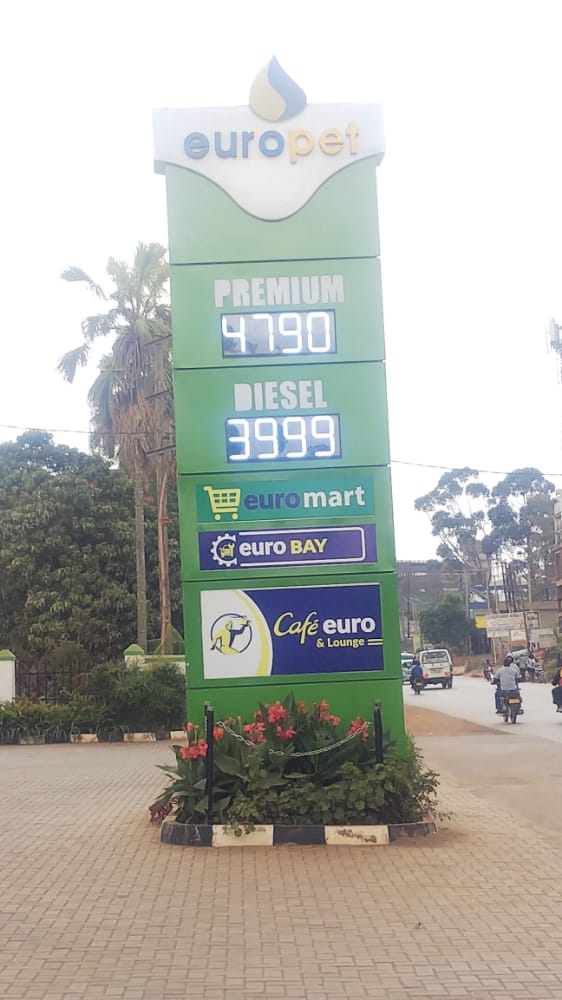
Europet is a fuel company which has been in the market for years without missing fuel but recently it spent almost a week without diesel which endangers the business

By Pepper Intelligence Unit
Secrets why fuel prices are yet to go down despite an end to a paralysis which had gripped the supply chain following transporters and their drivers’ strike at the Kenya-Uganda border points of Malaba, are being revealed for the first time.
The standoff between truck drivers and Uganda authorities caused by mandatory Covid-19 testing of the former along the two border points which lasted about three weeks saw a litre of petrol retail between shs5000 and 12000.
Authorities later intervened and truck drivers were cleared to proceed. Ugandans expected supply and prices to normalize.
However, this has not been the case with fuel still retailing at an average Shs5,000, up from Shs4,500 before the standoff.
THE TRUTH
It has now emerged that a combination of factors, including hoarding, transit dumping and fraud at checkpoints, cannot allow prices in Uganda to reduce for now and it may take some time.

TRANSIT DUMPING
This is where products destined for other countries are instead consumed by the Ugandan market. For instance countries like DRC, Rwanda, and South Sudan use Uganda as their transit route for most of the products from Kenya. However, once goods (in transit) are cleared by URA at the border, they don’t reach their destination. They are instead dumped in Uganda where they sell cheaply after avoiding related taxes. Sources in the petroleum sector intimated to this newspaper that for some time unscrupulous officials at the border points have been colluding with transporters and their drivers to evade taxes. We have learnt that fuel destined for DRC has always been dumped in Uganda hence creating an abundance of cheap fuel (on black market). However, recently, DRC authorities hired a fuel marking firm to truck all its oil products destined for their country. They also tightened border controls. As a result fuel that has always been dumped in Uganda is now able to cross to the DRC. This automatically disadvantaged petroleum sites which have been benefiting from this cheap fuel dumped in Uganda. This explains why they are now maintaining the prices high to maximize profits. Uganda is a net importer of petroleum products in a liberalized downstream petroleum market with an average current daily consumption of 6.5 million litres. Uganda loads its products through the terminals located in Eldoret, Kisumu, Nairobi and Mombasa and supply is majorly through road transport.
HOARDING
An investigation by the Parliament Committee on Tourism, Trade and Industry on the fuel crisis in the country, has also found that despite the border crisis, more fuel trucks entered the country in January as compared to those in December 2021.
They are now accusing fuel retailers of hoarding fuel, which has kept the pump prices in the country high despite the easing of the border stalemate. This is where retailers decide to save or store them, often in secret. This creates a scarcity which often leads to hikes in prices.
Vivo Energy and Total are major importers of oil products in Uganda implying that the two firms know something about hoarding.
“…it is clear that fuel is actually getting into the country but some fuel importing companies and fuel stations are taking advantage of the current situation to hoard and sell the fuel expensively,” the report states.
The energy ministry has since warned speculators who are hoarding petroleum products and leading to unnecessary hike in fuel prices and advised them to desist from this bad practice.
HIGH TAXES
Stakeholders in the sector however, attests that the crisis has been caused by high taxes imposed on fuel which goes up to Shs1,450 per litre. It is because of this that some petrol stations in the country have been forced to close some of their petrol station branches due to limited fuel in the country and also lack of enough capital. Carlos Kaniga, the sales and marketing manager Europet Uganda limited, dealers in fuel supplies, highlights that the escalating fuel prices have majorly been caused by increased taxes by the government forcing them to pay double the amount of fuel they used to for the same quantity. The situation has also led to demand for increased capital to run a fuel station because the startup capital needs to be doubled in order to compete on the market.
STOCK RESERVES UNCERTAINTY
He further adds that uncertainties of government fuel stock reserves also caused high transport costs and recent strict government’s health policies along borders on Covid-19 created a crisis that will take time to recover. However, Carlos says that they have tried to be lenient to their customers by not hiking prices too much in order to sustain them. Europet is a fuel company which has been in the market for years without missing fuel but recently it spent almost a week without diesel which endangers the business. According to Yekoya Kakembo, an expert and advocate on oil and gas, the fuel crisis is not only a Ugandan issue but a global challenge that has been caused by supply chain and forces of demand.
VIVO FIRE A COVER UP?
There are whispers that a recent fire outbreak at the distributor and marketer of Shell branded fuels and lubricants, Vivo Energy Uganda could have been a cover up to justify the hiked prices. Could the fire outbreak have been deliberate to dupe the country that there is still a fuel scarcity hence justifying the price hike? Daily Pepper could not independently verify this allegation. The police and relevant departments are still investigating the cause of the fire.
The depot located on 7th street in Namuwongo, a Kampala suburb caught fire last month and several ambulances were deployed to evacuate to hospital those who were injured.
Yasin Lwanyaga, an employee of the firm’s contractor Fred Ssebyala Transporters (FST) Limited passed away at Nairobi Hospital, where he had been referred for specialised treatment. Eight out of the eleven other individuals who were admitted to International Hospital of Kampala for treatment of sustained injuries during the fire incident were discharged on 3 February. Two are currently admitted in ICU and one person is in the ward. According to Valery Okecho, Vivo’s Corporate Communications Manager, “these patients remain in a stable condition”. “We are monitoring their condition to ensure they receive the very best treatment and medical attention.
We are continuing to work closely with the relevant authorities to investigate the cause of the incident, and will ensure that lessons are learnt and shared across our teams in Uganda, other local OMCs and the wider Vivo Energy Group, to minimise the risk of a similar incident happening again,” he added.
<<<<<<<<<<<<<<<<<<
GOT A HOT STORY? CALL/TEXT/WHATSAPP 0777959024 OR EMAIL redpeppertips@gmail.com
About Post Author