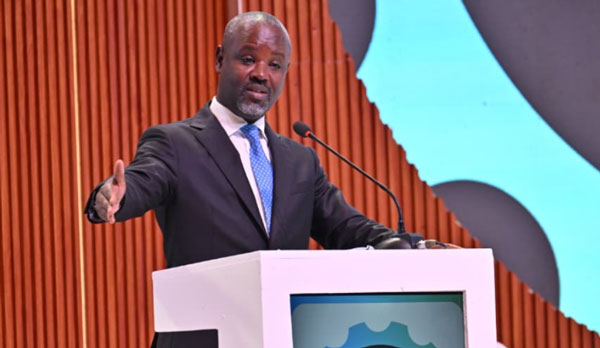
Uganda Targets German Investors as Investment Minister Hajjat Aminah Mukalazi Pitches Rich Opportunities at Accra Summit
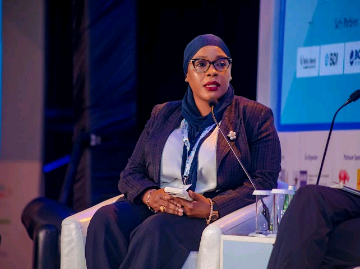
State Minister tells international business community Uganda is Africa’s next investment frontier, touts minerals, agriculture, tourism and manufacturing
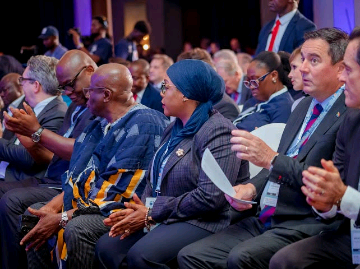
Uganda has rolled out the red carpet for German and other international investors, with State Minister for Finance, Planning and Economic Development (Privatisation and Investment), Hon. Hajjat Aminah Mukalazi, pitching the country’s investment potential at the German-Africa Business Summit in Accra, Ghana.
Mukalazi took centre stage on the second day of the high-level summit, where she presented Uganda as an emerging investment powerhouse, citing its abundant natural resources, strategic location, youthful workforce and expanding business opportunities.
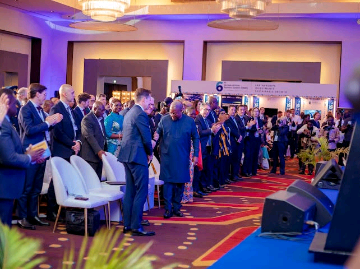
The summit attracted an influential gathering of African and European leaders, including Ghanaian President John Dramani Mahama and German President Frank-Walter Steinmeier, alongside government officials, business executives, financiers and international investors.
Addressing the gathering, Mukalazi made a strong case for investors to look beyond traditional investment destinations and consider Uganda as a strategic gateway to East Africa and the wider African market.
She highlighted Uganda’s membership in the East African Community (EAC), COMESA and the African Continental Free Trade Area (AfCFTA), arguing that businesses established in Uganda could tap into a much wider regional and continental consumer market.
The minister also pointed to Uganda’s political stability, investment-friendly policies and incentives available to qualifying local and foreign investors.
Through the Uganda Investment Authority (UIA) and other government agencies, potential investors can access assistance in securing investment licences, industrial land, project facilitation and aftercare services.

MINERALS, AGRICULTURE ON THE TABLE
Mukalazi particularly put Uganda’s natural resource wealth on the international investment menu, highlighting opportunities in agriculture, mineral exploration, processing and manufacturing.
She identified fertile agricultural land, favourable climatic conditions, freshwater resources, mineral deposits and energy potential as some of the country’s biggest investment attractions.
On agriculture, investors were invited to explore opportunities across coffee, cocoa, cotton, dairy, livestock, cereals and fruit value chains.
The pitch went beyond growing and exporting raw agricultural produce, with Mukalazi emphasising the need for investors to establish processing plants, food factories, textile industries, edible oil facilities, animal feed plants and packaging businesses.
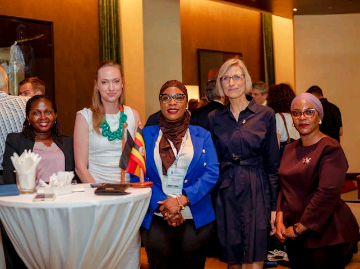
The government wants investors to help transform Uganda from a supplier of raw commodities into a manufacturing and value-addition hub.
Uganda’s mineral sector was also highlighted, with opportunities in iron and steel production, cement, construction materials, mineral beneficiation and mineral-based manufacturing.
TOURISM, ENERGY AND TECHNOLOGY
The minister further identified tourism as another lucrative investment frontier, pointing to opportunities in hotels, resorts, eco-tourism, conference facilities, transport and tourism infrastructure.
In the energy sector, investors were encouraged to explore renewable energy, solar power, hydropower, electricity transmission and distribution, as well as energy storage technologies.
Other opportunities were identified in transport and logistics, warehousing, industrial infrastructure, housing and healthcare facilities.
Mukalazi also made a pitch for technology-driven investments, highlighting opportunities in telecommunications, software development, financial technology, digital infrastructure, business process outsourcing and industrial automation.
She argued that such investments could accelerate productivity, modernise businesses and position Uganda as an emerging destination for technology-based enterprises.
UGANDA’S YOUNG WORKFORCE
Uganda’s youthful population was another selling point presented to the international business community.
Mukalazi said the country’s growing workforce offers investors an opportunity to establish labour-intensive and skills-based enterprises, particularly in manufacturing, agriculture, technology and services.
She emphasised the importance of investments that bring along technology transfer, vocational training and employment opportunities for Ugandans.
The government is also developing industrial parks and investment zones to attract manufacturers and agro-processors, with eligible investors able to benefit from applicable tax incentives and other investment facilitation measures.
TENFOLD GROWTH AMBITION
Mukalazi linked the investment drive to Uganda’s ambitious tenfold economic growth agenda, which prioritises agro-industrialisation, tourism, mineral-based industrialisation, science, technology and innovation, and manufacturing.
The government is banking on increased private-sector investment, modern technology, expanded industrial capacity and stronger participation in regional and international markets to drive the transformation agenda.
Her message to German and other international investors was that Uganda is not simply looking for businesses to set up shop, but strategic partners willing to invest in production, create jobs, transfer skills and technology and strengthen local industries.
The Accra engagement therefore offered Uganda an opportunity to showcase its investment proposition before a high-level gathering of European and African political and business leaders.
With agriculture, minerals, tourism, energy, infrastructure and technology on the table, Uganda is seeking to turn international interest into long-term investment partnerships.
About Post Author