URSB UNDER FIRE! Inside System Breakdowns, Data Risks & Procurement Chaos as Top Bosses Face Contract Renewal Heat
A bombshell Auditor General’s report has ripped through the operations of the Uganda Registration Services Bureau, exposing a troubling mix of financial arrears, weak systems, procurement irregularities and digital vulnerabilities — all unfolding as top bosses battle behind the scenes for control of the powerful agency.
At the centre is Registrar General Mercy Kyomugasho Kainobwisho, whose second term expires this December amid intense lobbying and quiet maneuvering within the institution. Her deputy, Alex Anganya, alongside other senior insiders including Ntale Mustapher, Mugabe Robert and Nabatanzi Miriam, are all said to be watching closely, hoping for a shake-up at the top.
Overseeing it all is Board Chairman Francis Butagira, now under pressure to explain how an institution tasked with safeguarding Uganda’s business and intellectual property ecosystem has been caught off guard by so many operational gaps.
Despite receiving an unqualified audit opinion — a sign that the financial statements present a fair view — the deeper findings tell a far more complicated story.
The Bureau is carrying outstanding arrears of UGX 1.58 billion, with an additional UGX 0.38 billion in new commitments piling onto the debt by the close of the financial year.
“This formed part of the outstanding arrears,” the report notes, raising concerns about financial discipline in an agency that handles billions in business registrations and intellectual property filings.
Procurement processes appear riddled with weaknesses. The Bureau failed to indicate procurements reserved for registered associations as required, while nine procurements worth UGX 2.35 billion attracted only one bidder each — effectively eliminating competition.
“This means contracts were awarded solely with no competition,” the report reveals, a red flag in public procurement.
Even more concerning, out of 163 procurements worth UGX 18.87 billion, at least 13 were conducted manually outside the electronic government procurement system without any justification.
In an era of digital transparency, this raises eyebrows.
Why bypass a system designed to ensure accountability?
CPA Ambrose Ekaju is the Commissioner in charge of Finance & Administration.
The report goes further to expose serious challenges within the e-GP system itself, including weak oversight, lack of electronic submission support, poor documentation, reporting gaps and inconsistencies in sequence numbers.
“This points to systemic weaknesses in procurement management,” an insider observed.
But perhaps the most alarming revelations lie in URSB’s digital infrastructure.
The OBRS system — a backbone of business registration in Uganda — suffered repeated outages between August 2023 and September 2025 due to network failures, storage exhaustion, misconfiguration, inadequate power backup and even human error.
For a system that thousands of businesses rely on daily, the instability raises concerns about reliability and trust.
Even worse, business registration searches were found to contain un-redacted personal data, including full dates of birth of directors and proprietors.
This is not just a technical glitch — it is a serious data protection risk.
“How do you expose sensitive personal data in a public system?” a technology expert asked, warning of potential legal and reputational consequences.
The cracks extend into ICT governance. Auditors found no ICT policy, no steering committee, inadequate internal capacity and failure to secure source code — leaving the Bureau dependent on external vendors and vulnerable to risks associated with outsourced disaster recovery systems.
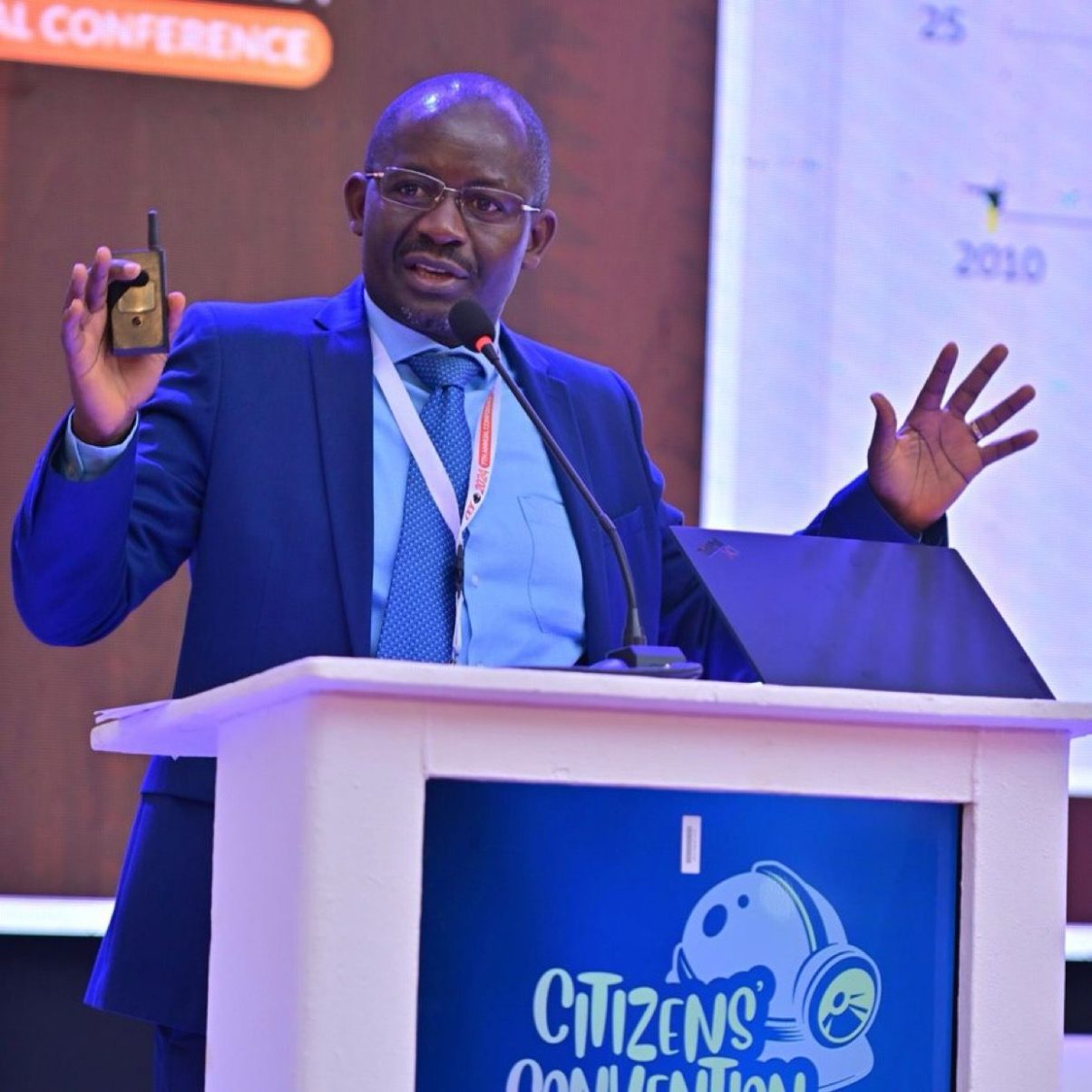
Arthur Kwesiga is the Commissioner in charge of ICT & Innovation at URSB.
“This affects system sustainability, cost-efficiency and institutional independence,” the report states.
Meanwhile, even basic asset management is faltering.
URSB’s asset register contains illogical entries, including furniture worth UGX 0.35 billion reportedly acquired in March 2025 but bizarrely recorded as having been put into use in September 2024 — months before it was even purchased.
The Bureau’s fleet of 44 vehicles was also found to be uninsured against major risks such as theft, fire or accidents.
For an institution managing public assets, this is a gamble that could cost taxpayers dearly.
Strategic performance is equally worrying.
With a staggering 63.9 percent funding gap in its strategic plan, URSB has struggled to deliver on its objectives. Out of 172 planned interventions, only 57 were fully achieved, while 75 could not even be assessed.
“This indicates major gaps in implementation and monitoring,” the report suggests.
Compliance with the National Development Plan III stands at just 47.4 percent — a figure that signals misalignment with national priorities.
Revenue performance also fell short, with the Bureau collecting UGX 71.82 billion against a target of UGX 84.94 billion, achieving only 84.54 percent.
Yet paradoxically, spending remained high, with 96.9 percent of released funds utilised — again raising the question of whether money is being spent efficiently.
The situation is no better in intellectual property management under Mugabe Robert as the Commissioner, Intellectual Property.
A total of 56 trademarks belonging to government institutions remain unregistered, while four have expired and six are still pending publication.
Even more striking is the disconnect between business registration and trademark uptake.
With over 850,000 registered businesses in Uganda, fewer than 11,000 local trademarks exist.
“This shows a huge gap in protecting intellectual property,” the report implies, exposing a missed opportunity for economic growth.
Efforts to formalise businesses nationally have also stalled, with the Bureau failing to prioritise a National Policy on Business Formalisation by the end of its strategic period.
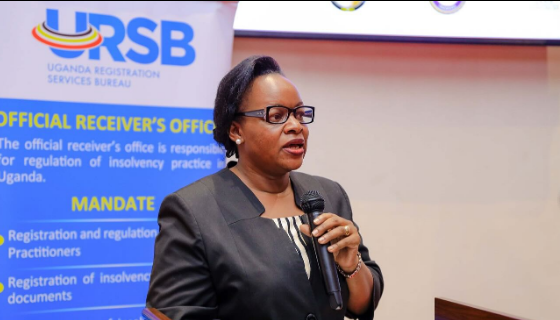
In the insolvency and liquidation arm under Caroline Egesa the Commissioner in charge of Insolvency and Receivership, the cracks widen further.
Although all planned activities were implemented, funds remained unspent, while critical functions like asset tracing — a core responsibility of the Official Receiver — were not carried out due to staffing and funding constraints.
Even more worrying, key insolvency services such as bankruptcy and receivership processes remain manual, increasing the risk of errors and limiting accessibility.
“Manual systems constrain efficiency and heighten risks,” the report notes.
As the dust settles, the spotlight is firmly on Kainobwisho and her leadership team.
With her term nearing its end and internal lobbying intensifying, the Auditor General’s findings could not have come at a more critical moment.
Because beyond the boardroom politics and succession battles, a bigger question looms.
Can URSB fix its systems, secure its data and restore confidence in its operations?
Or is Uganda’s business registry slowly becoming a house built on digital sand?
GOT A HOT STORY? EMAIL: redpeppertips@gmail.
SOURCE PROTECTION/CONFIDENTIALITY IS OUR NO.1 PRIORITY.
About Post Author