WATER MINISTRY IN SHAME! BILLIONS POURED INTO DRY PROJECTS… As Balaam’s Western Uganda Anti-Corruption Crackdown Exposes Shoddy Works, Idle Dams, Cracked Tanks & Failed Supervision
KAMPALA — Billions of shillings have been pumped into water projects across western Uganda, but in several communities, the promised clean water remains missing, infrastructure stands idle and residents are still struggling to find water for domestic use and their animals.
A tour of government projects by Local Government Minister Balaam Barugahara has exposed a disturbing trail of stalled schemes, questionable workmanship, defective infrastructure and alleged failure by technical officials to supervise contractors and protect public investment.
From a Shs3bn water project in Isingiro that has reportedly never produced a single drop, to an eight-year-old scheme in Kazo, a controversial dam in Mbarara and a solar-irrigation project serving only six people, the inspection has raised serious questions about the Ministry of Water and Environment’s oversight of projects meant to transform rural communities.
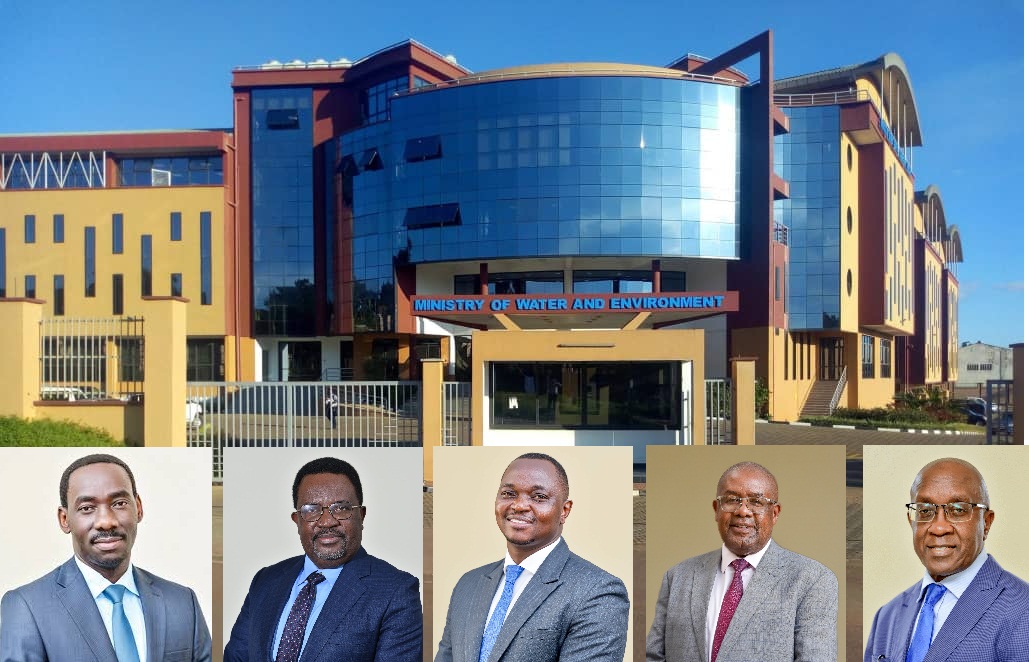
The revelations have put the Ministry’s technical leadership under scrutiny, including outgoing Permanent Secretary Dr Alfred Okot Okidi and commissioners responsible for rural water supply, planning, water resources and urban water services.
The officials whose respective departments are now facing questions include Eng. Lamu Olweny, Assistant Commissioner for Rural Water Supply and Sanitation; Andrew Masaba, Assistant Commissioner for Water Resources Planning and Regulation; Dr Callist Tindimugaya, Commissioner for Water Resources Planning and Regulation; Eng. John Vianne Twinomujuni, Commissioner for Urban Water Supply and Sewerage Services; and Dr Benon Zaake, Commissioner for Water Resources Monitoring and Assessment.
The central question is whether the Ministry’s supervision, monitoring and quality-control systems are working when projects worth billions can remain incomplete, fail to deliver water or develop defects after substantial public expenditure.
SHS3BN PROJECT, ZERO WATER IN ISINGIRO
In Rwetango Sub-County, Isingiro District, Barugahara and Agriculture Minister Bright Rwamirama inspected a Shs3bn water supply project that residents say has never delivered a single drop of water since it was commissioned.
The project was expected to bring safe water closer to households, schools, health facilities and farms, reducing the long distances residents travel in search of the precious commodity.
Instead, the structures reportedly stand idle while residents continue struggling to access water for domestic use and their animals.
During the inspection, local leaders and residents reportedly complained that they had repeatedly raised concerns about the stalled project without receiving a satisfactory explanation or seeing meaningful action.
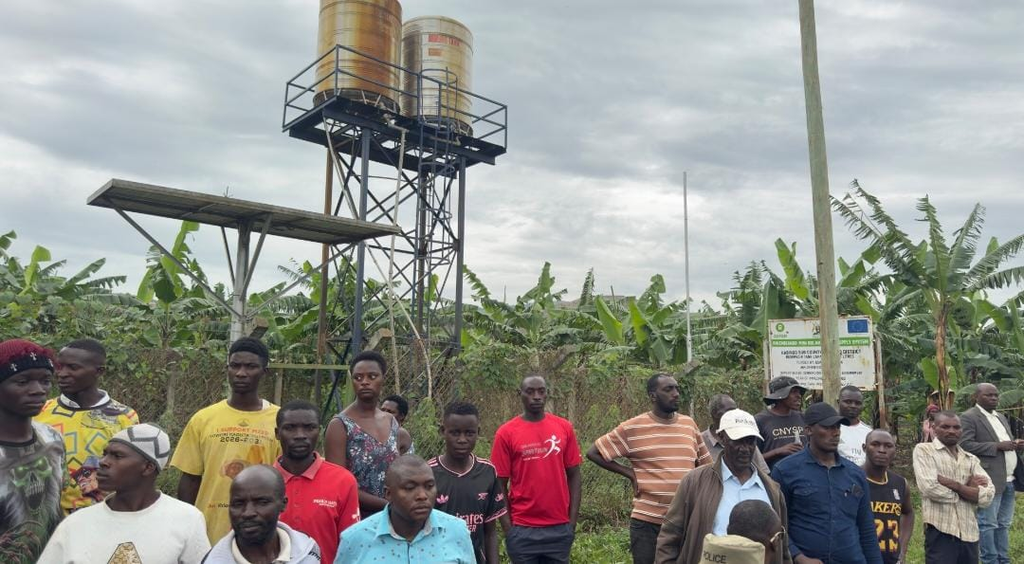
They want answers on why the scheme has failed to operate, what happened to the money invested and when the community will finally receive the promised service.
For a project that was supposed to transform water access in the area, the reported failure raises questions about planning, supervision, commissioning and follow-up by the responsible technical officers.
EIGHT YEARS, KAZO WATER ROW
In Kazo District, the minister encountered another troubling case involving the Kanoni Sub-County Water Project, which residents say has remained stalled for eight years after being commissioned by President Yoweri Museveni.
The project was designed to provide water for human consumption and irrigation, with the wider scheme expected to benefit Kanoni, Engadi and Kazo sub-counties before extending to Kikyenkye, Nsasi and Igomora, including an area in neighbouring Ibanda District.
During the visit, LCIII Chairperson Johnson Kabuumi reportedly told the minister that work had started after the presidential commissioning but stopped before the project could deliver the expected service.
He said local leaders, including area MPs and the district leadership, had been informed about the stalled works, but the community was still waiting for action.
Residents complained that they have no reliable water supply and are forced to share water sources with animals.
They also raised concerns about the theft of nuts and bolts meant for the project, questioning how materials brought to the site could disappear without effective protection or accountability.
However, the Ministry has disputed the Shs20bn figure cited by some locals.
Eng. Ronald Katalo insists that the Ministry spent Shs2.7bn on the Kazo Water Supply and Sanitation Project, not Shs20bn.
According to the Ministry’s explanation, Phase One involved construction of gravity transmission mains from Kikyenkye to the Kanoni tank, as well as a 650-cubic-metre steel tank at Rwemigina village intended to serve Kanoni and nearby areas.
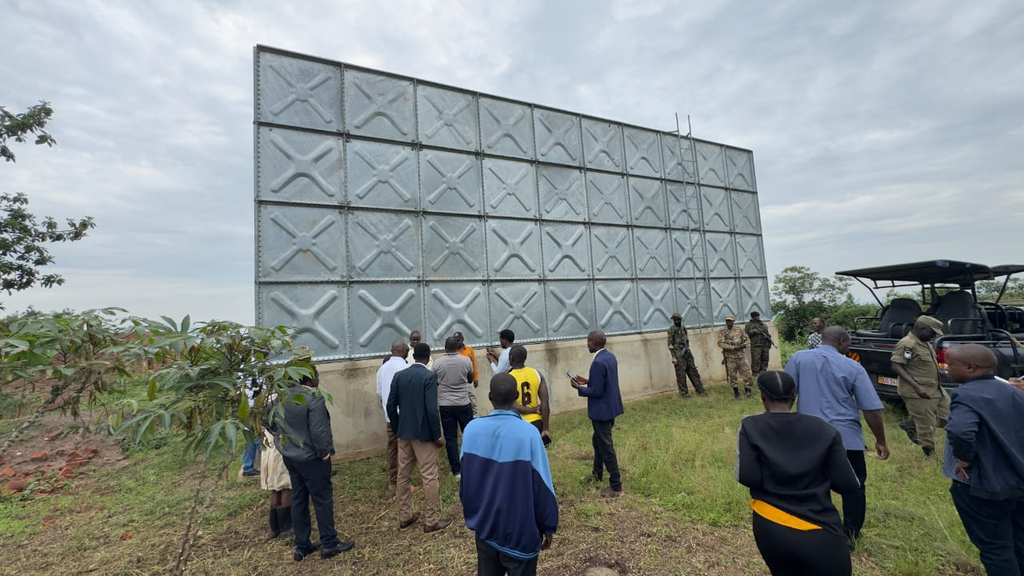
The remaining distribution mains, system intensification and augmentation works were scheduled for Phase Two, subject to funding through the African Development Bank under the Water Supply and Sanitation Project III.
The competing figures and explanations raise an important question: what exactly was completed under the first phase, how much money was spent, and why are residents still reporting serious water shortages?
SHS11BN KYENSHAMA DAM: CRACKS AND NO WATER
The inspection also turned attention to the Kyenshama Dam project in Mbarara District, where approximately Shs10bn to Shs11bn was reportedly allocated for water infrastructure, including a tank intended to serve communities and support irrigation.
Despite the substantial investment, the facility has reportedly failed to deliver the expected water supply.
The minister reportedly criticised the workmanship after inspecting the tank, with reports from the visit pointing to visible cracks in the structure.
There were also allegations that workers hurriedly plastered and painted parts of the tank shortly before the minister’s arrival in an attempt to conceal defects.
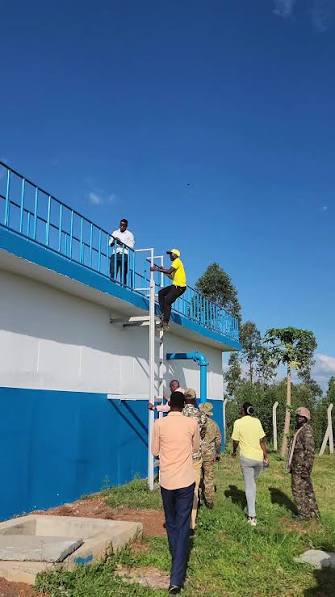
If confirmed, such conduct would raise serious questions about construction supervision, quality assurance and the inspection procedures used before public infrastructure is accepted.
The project was meant to improve water access and support agricultural production, but residents are still waiting for the promised benefits.
The Ministry and the responsible project supervisors should explain how the structure passed inspection, whether defects were recorded during construction and what action was taken against the contractor.
SHS600M IRRIGATION SCHEME SERVES SIX PEOPLE
In Rubindi-Ruhumba Town Council, Mbarara District, Barugahara raised concerns over the Shs600m Karuhama Solar-Irrigation Scheme.
The project was intended to serve an entire village, but the minister said it was reportedly benefiting only six people.
He accused District Water Officer Joseph Mucunguzi of failing to adequately supervise the works, allowing the contractor to install a low-voltage motor that could not pump water at the required capacity.
Barugahara directed that Mucunguzi be arrested and investigated over the alleged negligence.
The minister said the officer should face scrutiny over the circumstances under which the defective equipment was installed and whether the project was properly inspected before it was handed over.
The allegations, if established, could point to failures in technical supervision that leave communities with expensive infrastructure but little or no service.
SHS20BN KICENCE-KIEHAGARA-IGORORA SCHEME: WHO TOOK THE CONNECTION MONEY?
Another project raised during the minister’s tour was the Shs20bn Kicence-Keihagara-Igorora Water Supply Scheme.
Barugahara said the project was reportedly completed in 2021, yet residents were still waiting for water.
An audit report cited during the meeting reportedly established that more than 400 residents had each paid Shs100,000 through Centenary Bank for water connections but had neither received the service nor been refunded.
If the payments and audit findings are confirmed, the matter raises questions not only about the implementation of the scheme but also about the handling of money collected from intended beneficiaries.
Residents who paid for connections are entitled to know why they have not received the service and what happened to their contributions.
The emerging cases raise questions about the Ministry’s internal systems for project appraisal, procurement oversight, construction supervision, inspection, commissioning and post-completion monitoring.
GOT A HOT STORY? BLOW THE WHISTLE!
Have breaking news, explosive revelations, juicy leads or evidence of wrongdoing?
WE WANT TO HEAR FROM YOU!
Send your tips, documents, videos, photos and audio recordings to:
redpeppertips@gmail.com
Whether it’s corruption, scandals, abuse of office, injustice or stories others are afraid to tell, help us bring the truth to light.
SOURCES ARE PROTECTED.
CONFIDENTIALITY IS OUR NO.1 PRIORITY!
About Post Author