WEST ANKOLE DIOCESE PENSION WAR! Bishop Twinomujuni, Diocese, Jubilee Sacco Dragged to Court Over Clergy Retirement Cash… Retired Reverends Demand Millions, Accounts Of Missing Funds
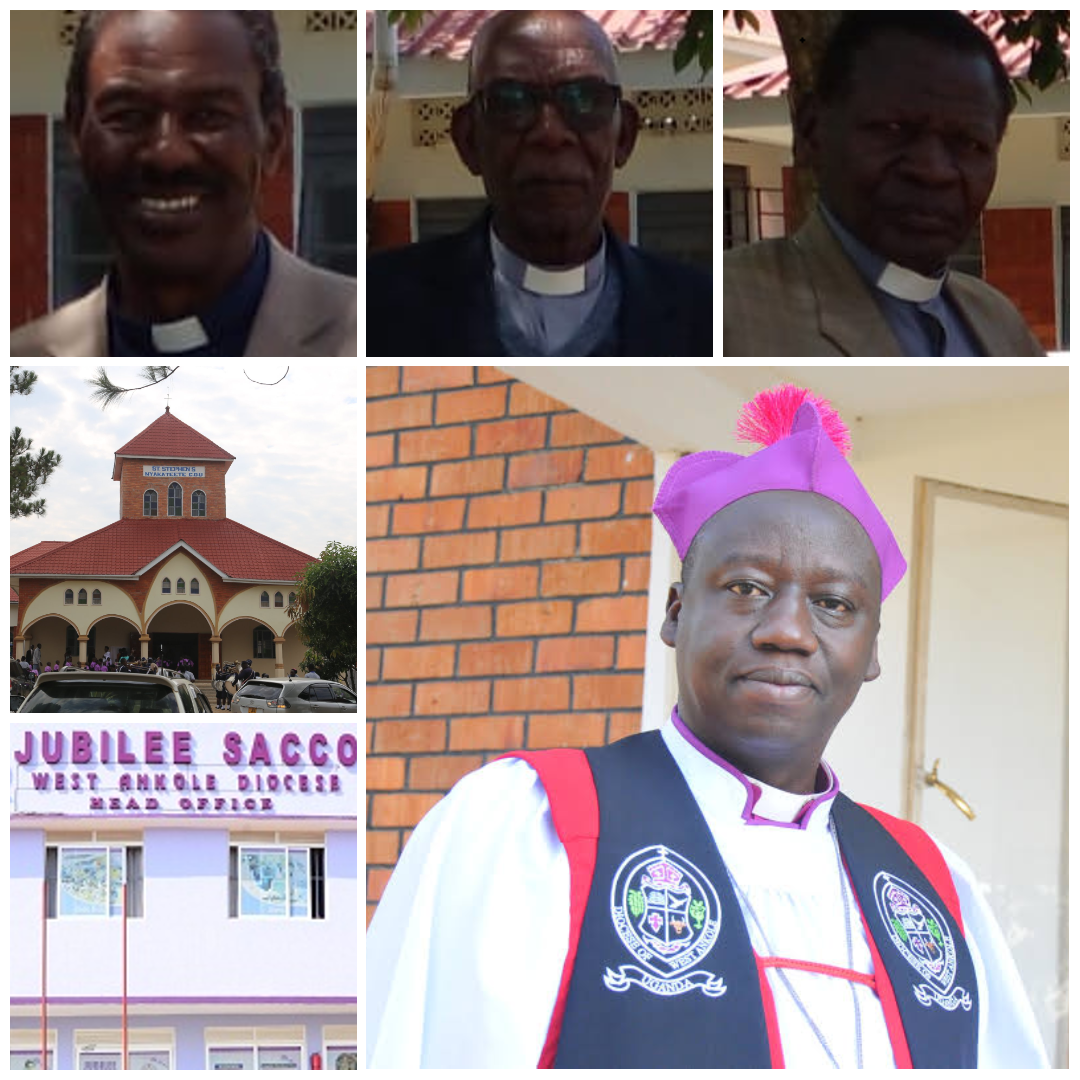
A bitter pension row has erupted in West Ankole Diocese, with four senior clergymen dragging the Church of Uganda Registered Trustees, Jubilee Savings Credit and Cooperative Society and Bishop Johnson Twinomujuni to court over alleged failure to account for retirement savings and pension contributions.
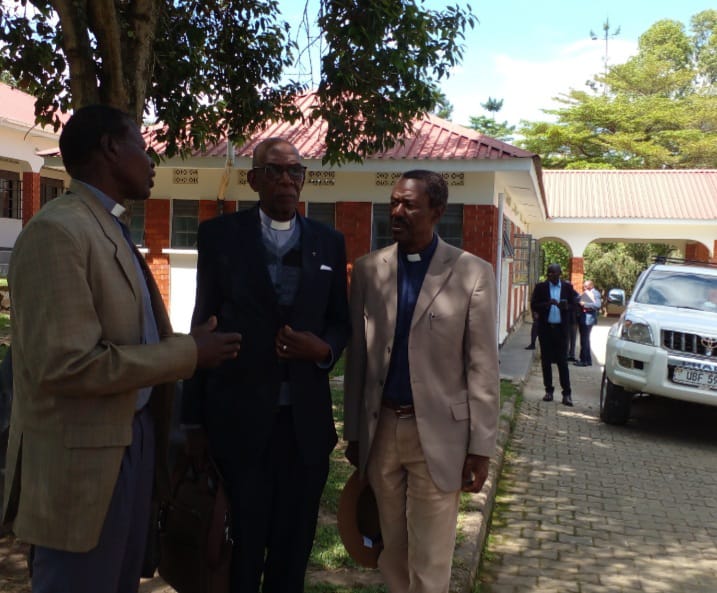
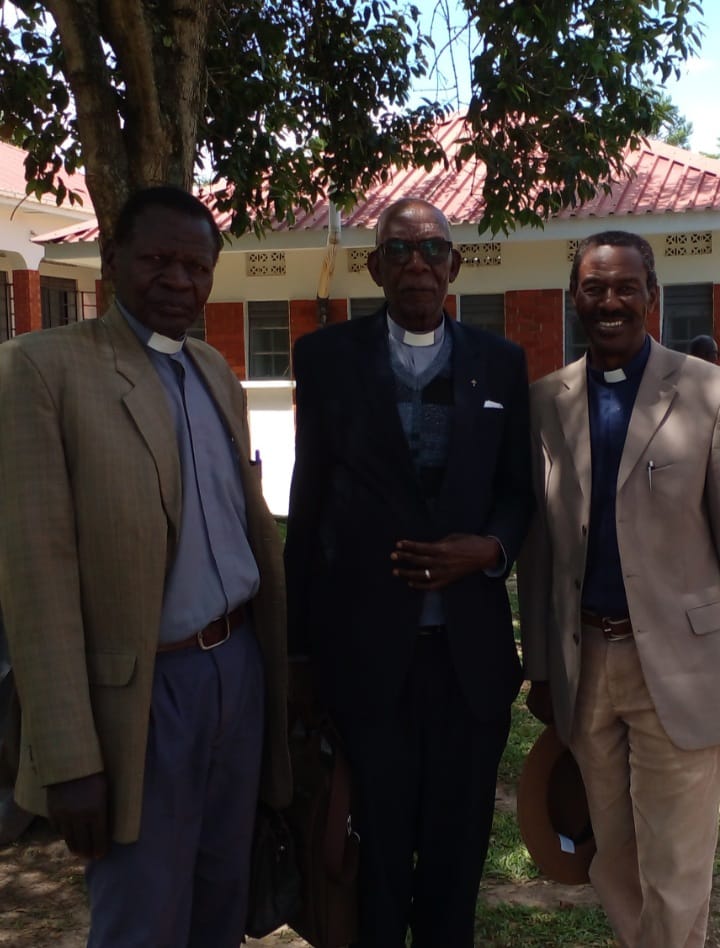
The clerics, led by Rev. Francis Mutambi, accuse the Diocese and its financial institution of keeping them in the dark about money allegedly deducted from their salaries and collected during Christmas and Easter services for a pension arrangement dating back nearly three decades.
They want the court to compel the defendants to produce a full account of the funds, establish the legal status of the pension scheme, pay outstanding retirement benefits and compensate them for the financial hardship they say they have suffered.
The dispute has now landed before the Chief Magistrate’s Court of Bushenyi in Civil Suit No.440 of 2026, where the plaintiffs are also demanding Shs200m in damages.
The other plaintiffs are Rev. Francis Mutambi, Rev. Canon Jorry Beremu, Rev. Canon Baudy Mugisha and Rev. Canon Elieza Baryamwisaki.
They have sued the Registered Trustees of Church of Uganda, Jubilee Savings Credit and Cooperative Society Ltd and Bishop Twinomujuni, who is named in his official capacity as Bishop of West Ankole Diocese.

HOW THE PENSION ROW STARTED
According to the plaint, the dispute dates back to around 1997 when the then Emeritus Bishop William Magambo, reportedly initiated plans for a pension arrangement after recognising that retiring clergy were leaving service without adequate financial support.
The plaintiffs contend that the Diocesan Synod resolved that 10 per cent of every priest’s monthly salary would be saved, alongside 10 per cent of collections from Christmas and Easter celebrations.
The money, they claim, was intended to be retained and eventually paid to priests and clerics upon retirement.
They further claim that the scheme was designed to grow through investment rather than simply keeping the contributions idle.
The plaintiffs say that, around 1998, Rev. Francis Mutambi, who was then serving as Diocesan Development Officer, applied to the Mustard Seed Foundation in the United States for a donation to establish a credit scheme offering affordable and subsidised interest rates to the clergy.
The application was reportedly successful, with the plaint stating that US$10,000, estimated by the plaintiffs at approximately Shs50m, was secured.
The money was allegedly injected into a credit scheme for diocesan priests that had already been established.
The plaintiffs further state that, in 2004, with the consent of members and beneficiaries, the arrangement was transformed and registered as Jubilee Savings Credit and Cooperative Society Ltd.
They argue that Jubilee subsequently held the revolving fund, pension and gratuity as non-current liabilities, pointing to its balance sheet for the year ended December 31, 2006, which they attached to court documents.
However, the four clerics claim that the pension and revolving fund liabilities are no longer reflected in the SACCO’s current audited books.
This, they argue, raises serious questions about the whereabouts, management and accounting of the contributions.
DEMAND FOR ACCOUNTS, AUDIT
The plaintiffs say they first sought clarification through their lawyers, Byarugaba & Co. Advocates, who wrote to the Diocesan Secretary on March 4, 2026.
The demand notice sought disclosure of the status and management of the revolving fund, the alleged pension arrangement and the inspection and reporting mechanisms governing the money.
The lawyers demanded certified bank statements covering five years, audited financial statements, inspection or regulatory compliance reports, resolutions authorising the establishment and operation of the scheme and evidence of its legal registration.
They also demanded a formal meeting between the clergy and relevant diocesan officials to explain how the funds were being managed.
The lawyers gave the Diocese 14 days to comply and demanded Shs1m in legal fees.
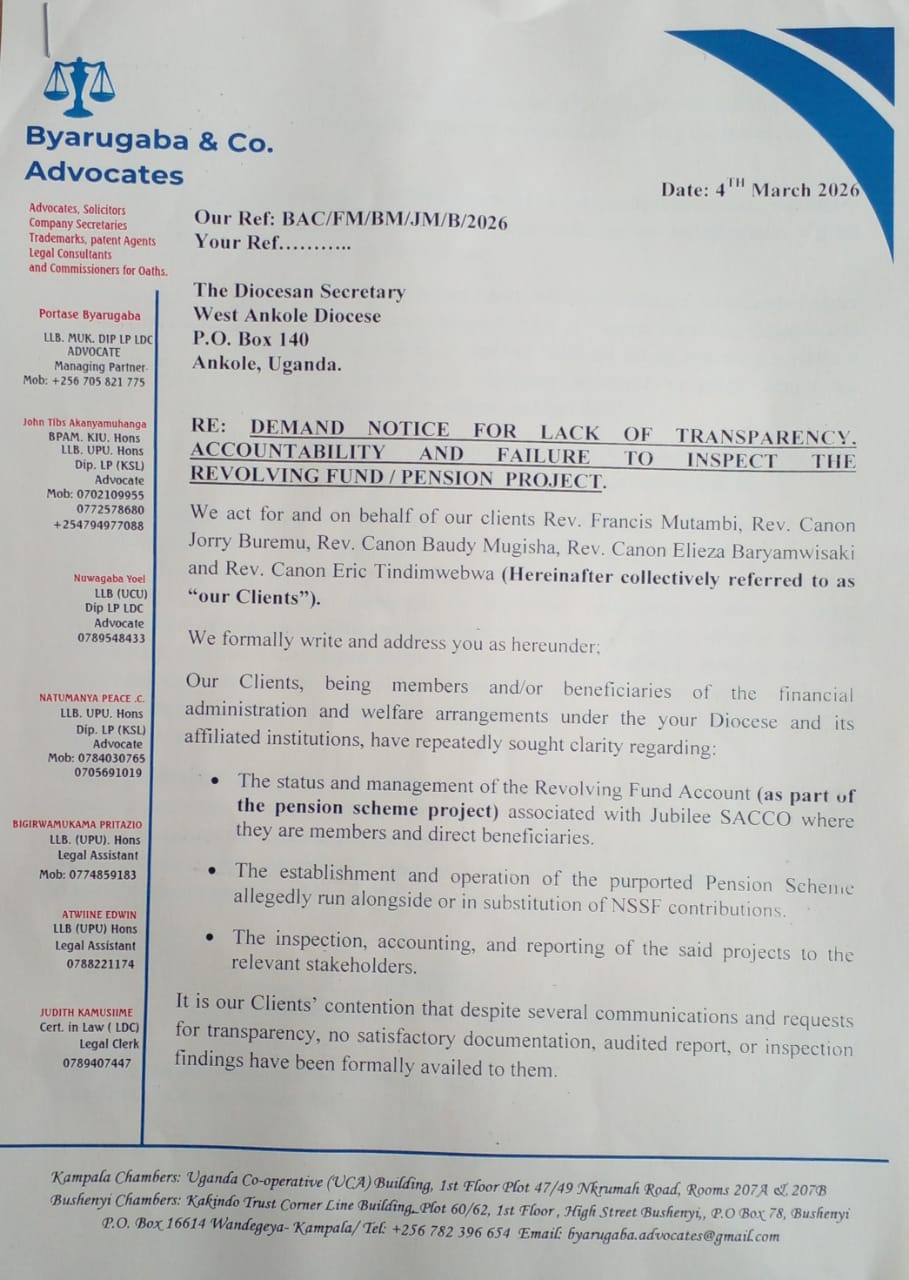
The demand letter warned that failure to provide the documents would trigger legal action, including an application for accounts, an audit, recovery of any funds found to have been misappropriated or left unaccounted for, and declarations on the legality of the scheme.
But according to the plaint, the Diocese responded on March 9, 2026, denying the existence of a revolving fund and pension scheme linked to Jubilee SACCO.
The plaintiffs say the Diocese instead informed them that retired clergy were receiving benefits directly through the West Ankole Diocese under its internal welfare and retirement arrangements.
They were dissatisfied with the explanation and subsequently demanded further accountability, registration of the alleged pension scheme and payment of outstanding pension benefits.
Bishop Twinomujuni, through his lawyers Tumusiime, Kabega & Co. Advocates, reportedly denied liability in respect of the revolving fund but, according to the plaintiffs, did not address all the other demands.
CLERGY SAY THEY HAVE BEEN KEPT IN THE DARK
In their court pleadings, the plaintiffs insist that the revolving fund and pension money were managed through Jubilee SACCO and that they cannot understand how, when or why the money was allegedly returned to the Diocese.
They further contend that the alleged pension scheme has never been properly registered, raising questions about its legal standing and long-term sustainability.
They accuse the defendants of failing to provide a proper account despite repeated demands, arguing that the lack of records has denied beneficiaries the opportunity to verify their retirement entitlements.
The clerics also claim that Jubilee was in control of the pension funds and that the Diocese, through its leadership, had responsibility for the administration and registration of the retirement arrangement.

They say the alleged failure to account for the money has caused financial hardship, inconvenience and emotional distress.
Their lawyers argue that the defendants breached contractual and fiduciary obligations and were unjustly enriched.
The plaintiffs want court to declare that contributors have a right to know how their pension money is managed and order the defendants to render a true and proper account of all contributions and retirement benefits.
They are also seeking an order compelling the defendants to register the alleged pension scheme, pay monthly pensions, clear outstanding arrears, award punitive, exemplary and general damages, interest and legal costs.
BISHOP, DIOCESE HIT BACK!
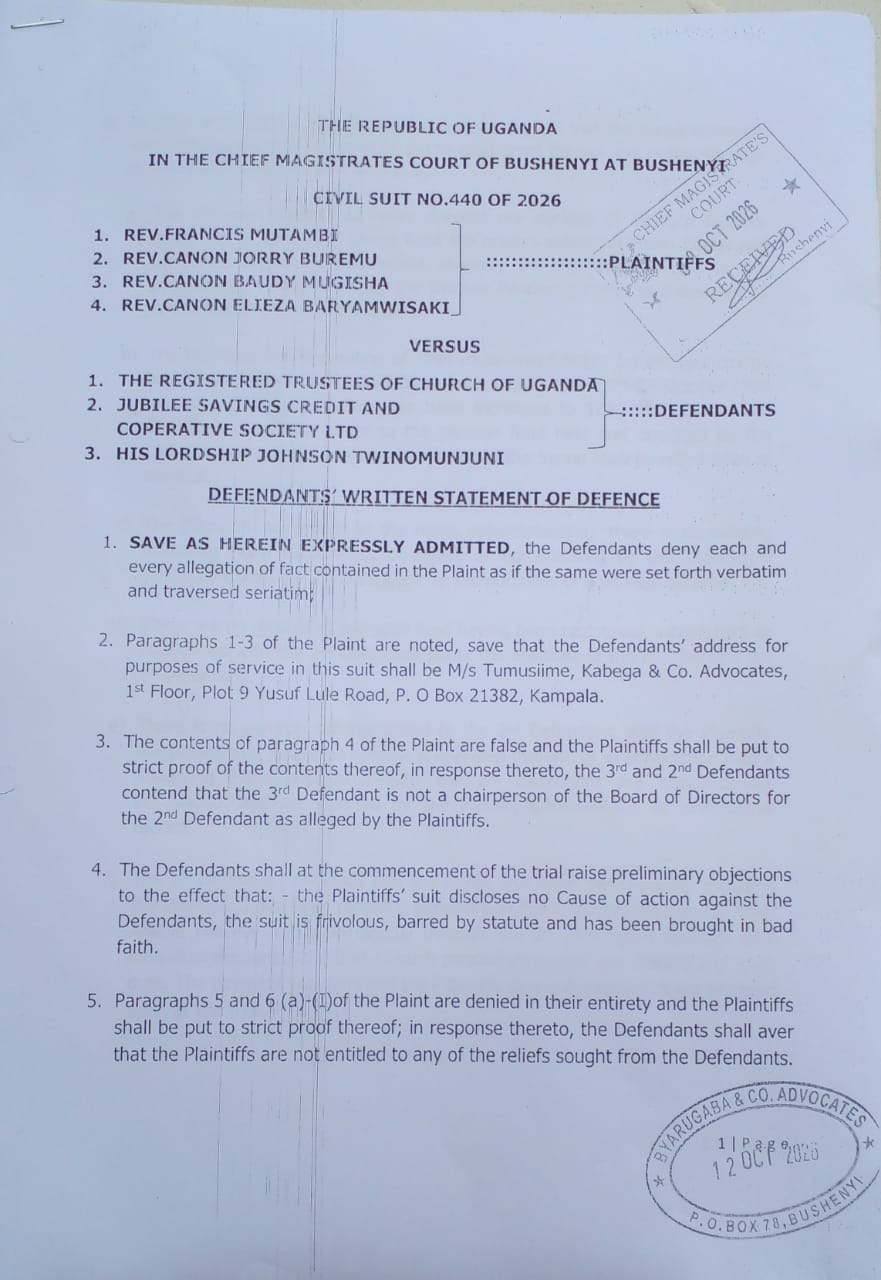
But Bishop Twinomujuni, the Diocese and Jubilee SACCO have strongly contested the allegations, describing the plaintiffs’ case as false, unsupported and legally defective.
In their written statement of defence, filed through Tumusiime, Kabega & Co. Advocates, the defendants deny virtually all the material allegations and insist that the pension arrangements are properly managed.
Their defence directly challenges the plaintiffs’ version of how the scheme started, how contributions were made and whether Jubilee ever operated a common pension or revolving fund.
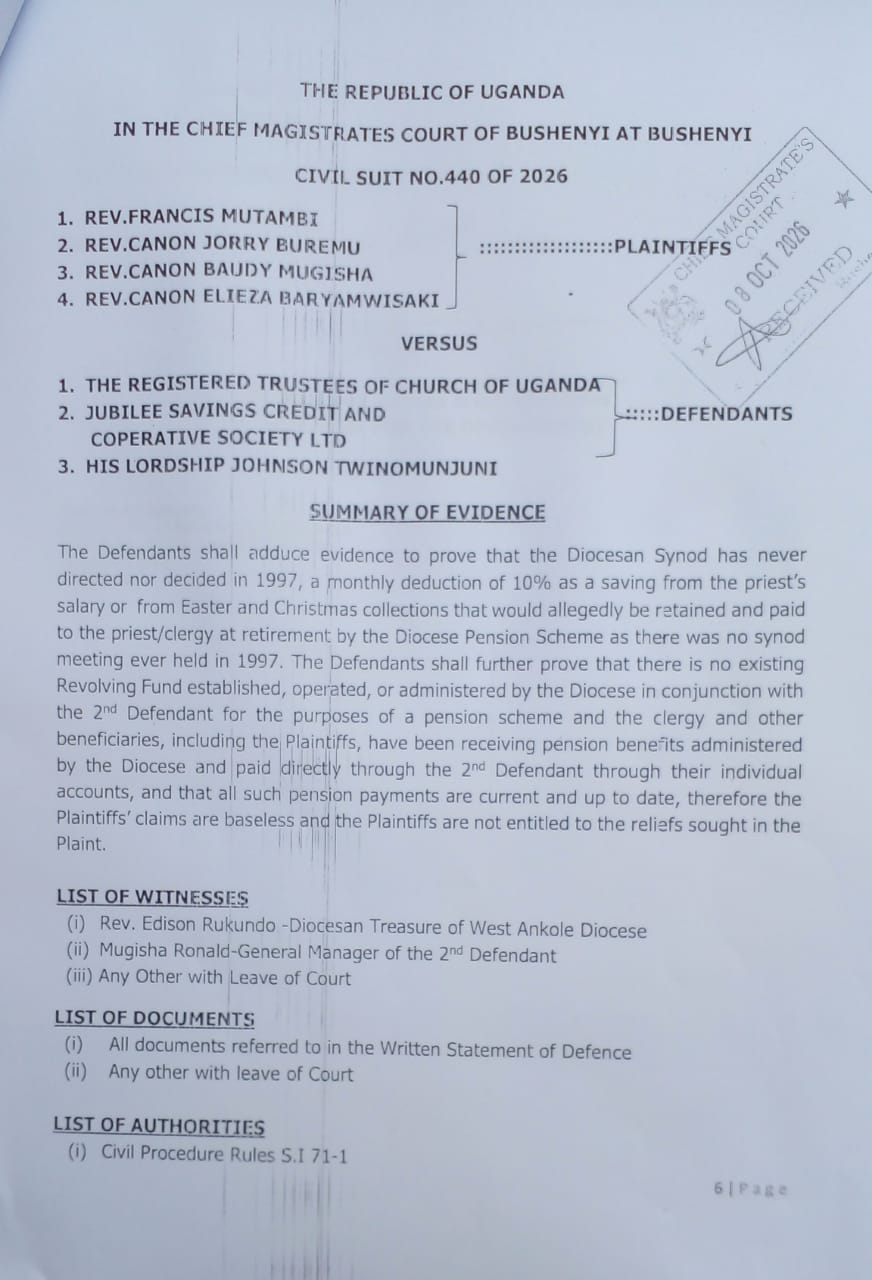
On the alleged 1997 resolution requiring priests to surrender 10 per cent of their monthly salaries and collections from Christmas and Easter services, the defendants say no such decision was ever made.
They argue that no Diocesan Synod meeting was held in 1997 and therefore the alleged resolution could not have been passed.
Instead, the defendants point to a Diocesan Synod meeting held between October 5 and 8, 1998.
According to their defence, the meeting passed a resolution providing for a 5 per cent saving contribution, which was subsequently increased to 10 per cent from Easter and Christmas collections.
The defendants say the minutes and resolution of that Synod will be relied upon during trial.
This creates one of the central battles in the case: the plaintiffs maintain that the pension contribution arrangement originated in 1997, while the defendants insist that the relevant documented decision was made in 1998 and dispute the alleged salary deductions.
JUBILEE SACCO: NO COMMON PENSION FUND HERE!
Jubilee SACCO has also distanced itself from the alleged pension and revolving fund arrangement.
The defendants contend that there is no existing revolving fund established, operated or administered by the Diocese in conjunction with Jubilee for purposes of a pension scheme.
They further state that there are no records of such a fund having been registered, established or maintained with Jubilee under the Diocese’s auspices.
Jubilee says it became an independent legal entity upon incorporation and never entered into a memorandum of understanding with West Ankole Diocese to manage pension, gratuity or revolving funds.
It denies being in possession or custody of the records the plaintiffs are demanding.
The defendants also dispute the plaintiffs’ claim that the Mustard Seed Foundation donation of US$10,000 was secured and injected into the alleged credit scheme.
They say they have no knowledge of the purported donation, the subsequent transformation of the arrangement into a SACCO or the registration process.
They also challenge the plaintiffs’ conversion of US$10,000 into Shs50m, arguing that there has never been a dollar exchange rate since 1998 that would support that figure.
The defendants consequently describe the donation allegation as false and unsubstantiated.
THE 5% SAVINGS DEFENCE
Perhaps the most important part of the defence is the explanation of how clergy savings are allegedly handled.
The Diocese and Jubilee maintain that the mandatory 5 per cent savings contribution is maintained in individual accounts for each member rather than consolidated into a common pension fund.
According to the defendants, each clergy member receives their salary through an individual account, and the Diocese can instruct Jubilee to debit its accounts to facilitate salary payments, including the mandatory savings contribution.
They argue that the savings remain accessible to the respective clergy member upon retirement after clearance by the Diocese.
The Diocese further says its policy is to retain the savings until the beneficiary retires.
It also maintains that pension benefits for retired clergy and staff are paid as an aggregate annual sum.
The defendants insist that the plaintiffs have been receiving their pension benefits through their individual accounts at Jubilee and that the payments are up to date.
They say payment vouchers and individual account statements will be produced during trial to support their position.
In another key distinction, Jubilee argues that its role is limited to processing and posting money according to instructions from its client, the Diocese.
It says it has no responsibility for determining the salaries, remuneration or retirement benefits of diocesan clergy and staff.
BISHOP TWINOMUJUNI DENIES PERSONAL LIABILITY
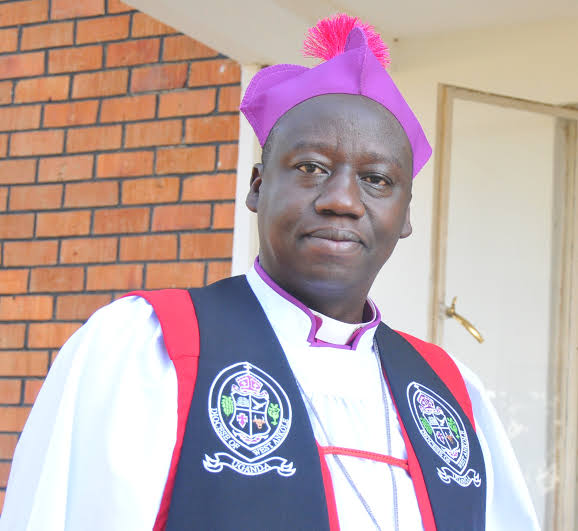
Bishop Twinomujuni has also rejected personal responsibility for the alleged financial arrangements.
The defence argues that the matters complained of allegedly occurred between 1997 and 2004, a period preceding his consecration as Bishop of West Ankole Diocese.
He therefore denies personal liability for the claims relating to the alleged pension and revolving funds.
The defendants also dispute the plaintiffs’ assertion that the Bishop chaired Jubilee’s Board of Directors.
They say the allegation is false and that the plaintiffs should be required to prove it.
The defence further argues that the plaintiffs have not exhausted the Church’s internal dispute-resolution structures, which extend from the parish level to the provincial level, before resorting to court.
On that basis, the defendants intend to raise preliminary objections, arguing that the suit discloses no cause of action, is frivolous, statute-barred and was brought in bad faith.
They deny that their actions caused the alleged financial hardship or emotional distress and reject the demand for damages.
The defendants ultimately want the case dismissed with costs.
WHAT HAPPENS NEXT?
The dispute now places two sharply different accounts of the clergy retirement arrangements before the Bushenyi court.
On one side, the four clerics insist that pension contributions and a revolving fund were established, channelled through Jubilee and subsequently not properly accounted for.
On the other, the Diocese and SACCO maintain that no joint pension fund existed, that individual savings accounts were used and that retired clergy have received their benefits.
The case is expected to turn on documentary evidence, including the 1998 Synod minutes, the SACCO’s historical and current financial statements, individual account records, payment vouchers and the alleged Mustard Seed Foundation donation.
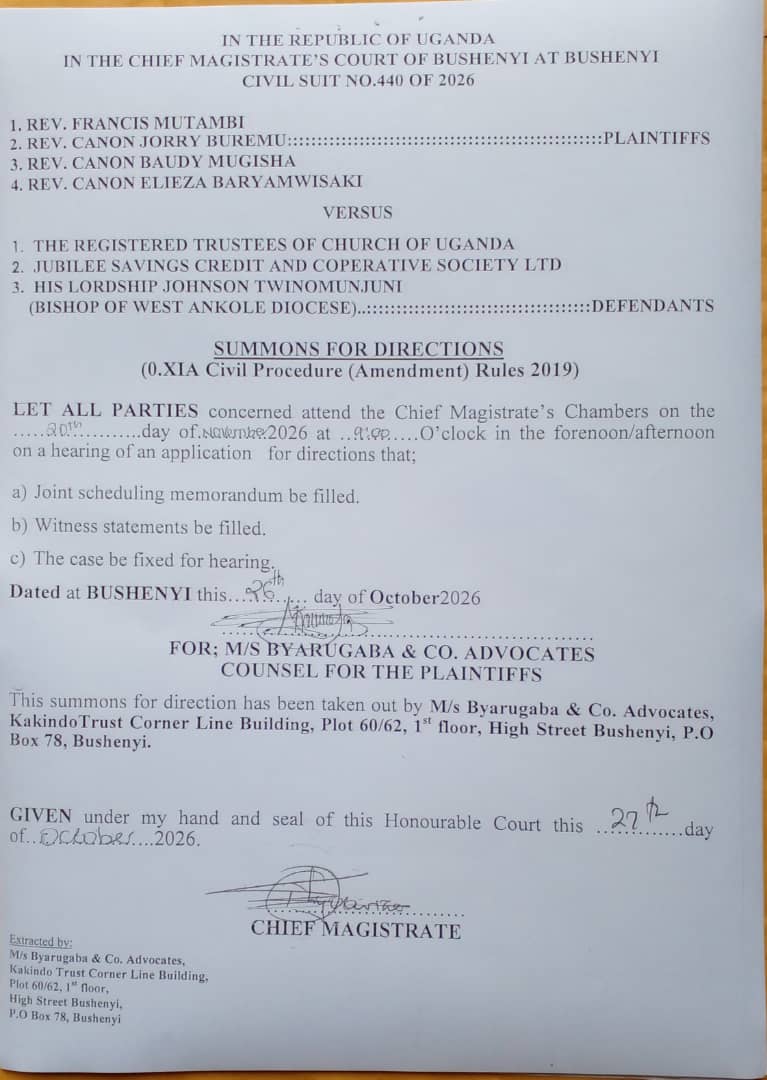
Court documents show that the parties were summoned for directions on October 30, 2026, with the court expected to consider filing a joint scheduling memorandum, witness statements and fixing the matter for hearing.
The defendants have listed Rev. Edison Rukundo, the Diocesan Treasurer of West Ankole Diocese, and Mugisha Ronald, General Manager of Jubilee SACCO, among their proposed witnesses.
The battle could therefore expose the history of the clergy savings arrangement, how contributions were collected and whether the retirement benefits were maintained as individual savings or a pooled pension fund.
For the four clerics, the demand is straightforward: account for the money and establish what is due to retired clergy.
For the defendants, the answer is equally firm: the alleged common fund does not exist, the individual savings and pension payments are up to date, and the lawsuit should be dismissed.
The court will ultimately have to determine which account is supported by the evidence.
GOT A HOT STORY? BLOW THE WHISTLE!
Have breaking news, explosive revelations, juicy leads or evidence of wrongdoing?
WE WANT TO HEAR FROM YOU!
Send your tips, documents, videos, photos and audio recordings to:
redpeppertips@gmail.com
Whether it’s corruption, scandals, abuse of office, injustice or stories others are afraid to tell, help us bring the truth to light.
SOURCES ARE PROTECTED.
CONFIDENTIALITY IS OUR NO.1 PRIORITY!
About Post Author