THE TRUTH! Secrets why Shs51Bn Akright City Project stalled
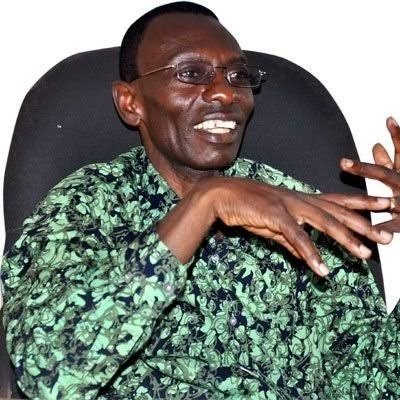
Akright city boss Kamugisha

By Our reporter
City real estate mogul Anatoli Kamugisha, who is the proprietor of Akright Projects Limited, has finally come out to clarify on the issues surrounding the multibillion Akright City project in Bwebajja, off Entebbe Road, which has since stalled.
Kamugisha’s Akright Projects LTD is involved in a bitter wrangle with some residents in Bwebajja, who accuse the company of encroaching on their land with intent to grab.
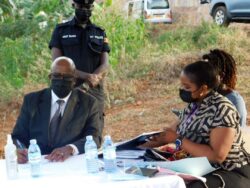
The case between Akright and the locals has been raging on for over two decades and in a bid to settle the matter, both warring parties on Friday visited the disputed land together with Justice Ketirima Eudes on a fact-finding mission.

Speaking to the press about the wrangle, Kamugisha said that; “We had planned to set up 640 condominium apartments and the project had been projected to cost Shs51Bn. But when the conflicts came in and the land grabbers laid false claims on the property and put caveats on it, the project had to stall.”
He added that; “This is because the condominium titles couldn’t be processed out of the titles we had, so we had to start legal battles which at the end of the day delayed the development project. Soon all our clients started demanding a refund of their money and started going away, meaning we had to lose a lot of money which we had invested in the infrastructure through refunding the clients.”
He explained that; “By refunding their money, it meant that we were vomiting what we had buried in the ground and this has cost us a lot of money since 2005 when the wrangles started. It is now 17 years since the wrangles started, which means that a project worth Shs51Bn has stalled for all these years; that’s how much we have suffered, although we are still fighting on. Good enough at least by now we have compiled our evidence and visited the site with the Judge so that he can ascertain the actual facts on ground.”
Explaining how the company acquired the land, Vincent Kiggundu, the Akright Projects Company Secretary, said that; “The land under dispute, which is comprised in Block 383, Plot 388, initially belonged to the estate of late John Baptist Kasasa, who bequeathed to his beneficiaries, amongst them late Fredrick Kiddu, who had acquired letters of administration for the estate from the Administrator General’s office.”
He added that ; “Kiddu later sold the same land to Angelo Kizito Nsubuga, who mortgaged it to Uganda Development Bank but failed to service the loan, hence he forfeited it to the bank, which transferred it to the Nonperforming Assets Recovery Trust, which sold it to Hermans Mutebi, who in turn sold it to Akright Projects Limited.”
Okello Oryem, who is Akright Projects lawyer, told the press that the company bought the land in 2002 but has been battling with the encroachers since 2009.

He said that; “The land was bought from the NPART after a debtor who had mortgaged it to UDB failed to service the loan and forfeited it. But now the family of the mortgagor, 20 years later, claims the land that was sold to Akright was less than the actual measurements and that Akright encroached on their land. The main objective of the Judge visiting the land with both warring sides is to gather relevant facts from both sides that will help him make a guided decision in his judgment.”
According to Oryem, the land was advertised by the bank, with the size of the land and survey report included.
“Before purchasing the land, the developer (Akright) visited the land, then relied on the advert and survey report which showed that the land measured 14.01 hectares to purchase it,” Oryem added.
However, he noted that the case demonstrates the tragedy of the economics of real estate business in Uganda, because here is a developer who bought land in 2002 but can’t develop it because of a dispute that has been in court since 2009.
He revealed that caveats have since been placed on the land and squatters have not only encroached on the land but also built houses on it.
“That means when by the time the case is decided upon by court, the business plan of the developer would have been tampered with and the business projections of the developer will not be recoverable,” he noted.
Oryem went on to explain that; “The initial business plan was worth Shs10Bn but that is very difficult to recover because the developer had to refund people and currently has no records in terms of costs for the roads he built on the land, the electricity and water, plus the development plan he brought to the area.”
He noted that; “It is not possible to evict the squatters that have already built houses on the land. The only option is for perhaps the developer to renegotiate with the squatters as the law provides in order to be able to give them new titles. But even then, what will remain of the land will not make it possible for the developer to execute the proposed development plan that had been envisaged, which is a tragedy for the company. We pray the Planning and Judicial System can become more efficient to ensure these issues are resolved as quickly as possible.”
About Post Author