PDM FARMERS GET BIG LIVESTOCK BOOST! NAGRC&DB To Deliver Subsidised Dairy, Pigs & Poultry Breeding Stock Under Five Year Plan
Move targets higher productivity, better genetics and more money for farmers
ENTEBBE: Parish Development Model (PDM) farmers are set for a major boost in livestock production as the National Animal Genetic Resources Centre and Data Bank (NAGRC&DB) rolls out a new five-year plan to make quality dairy, piggery and poultry breeding stock more accessible and affordable.
The move is expected to give thousands of farmers a stronger foundation for building profitable livestock enterprises and moving from subsistence production into the money economy.
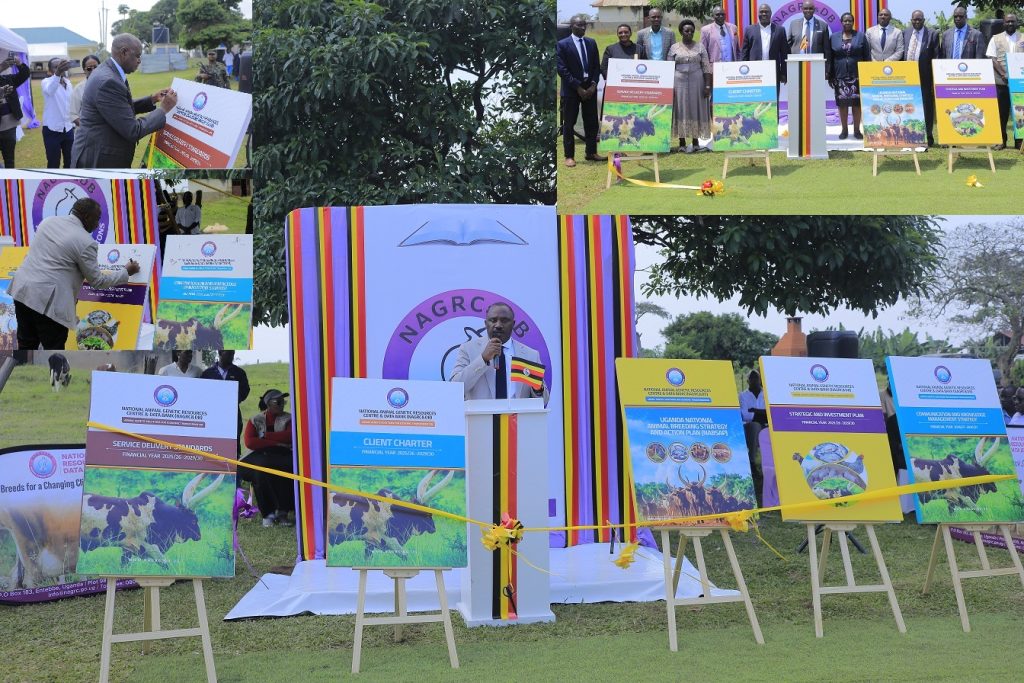
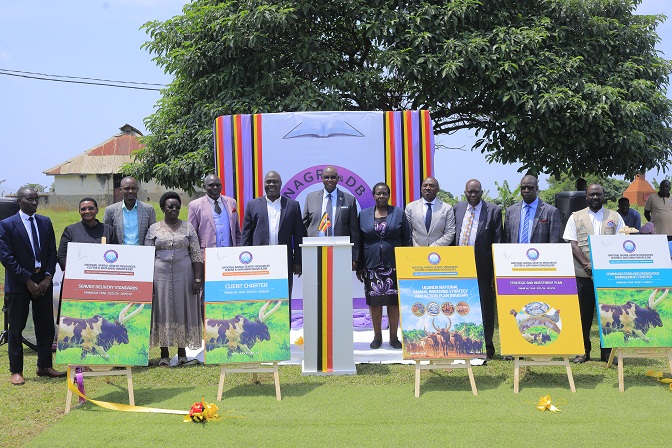
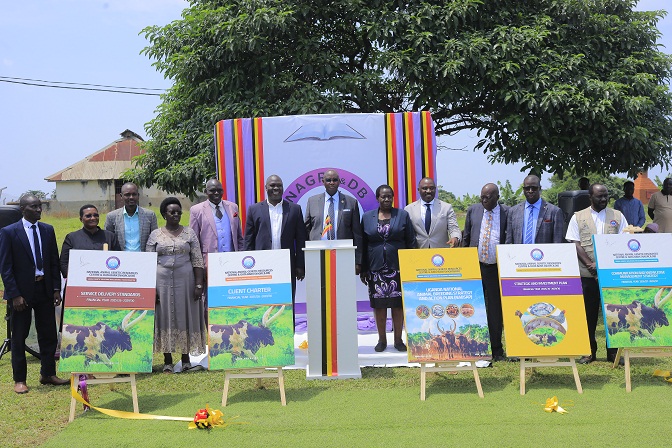
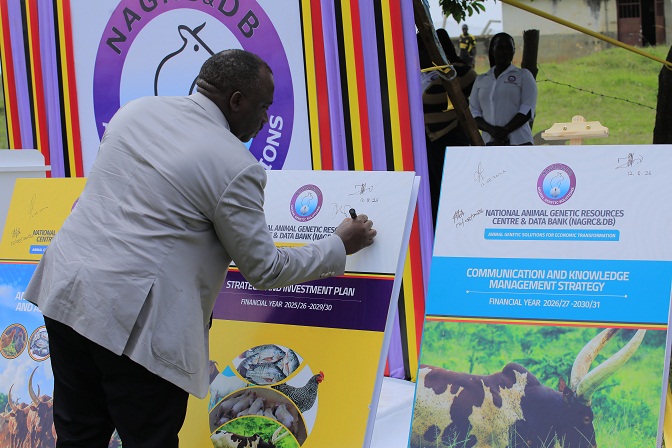
NAGRC&DB made the commitment on August 12, 2026, during the launch of five major institutional documents designed to transform Uganda’s animal breeding sector and improve services to farmers.
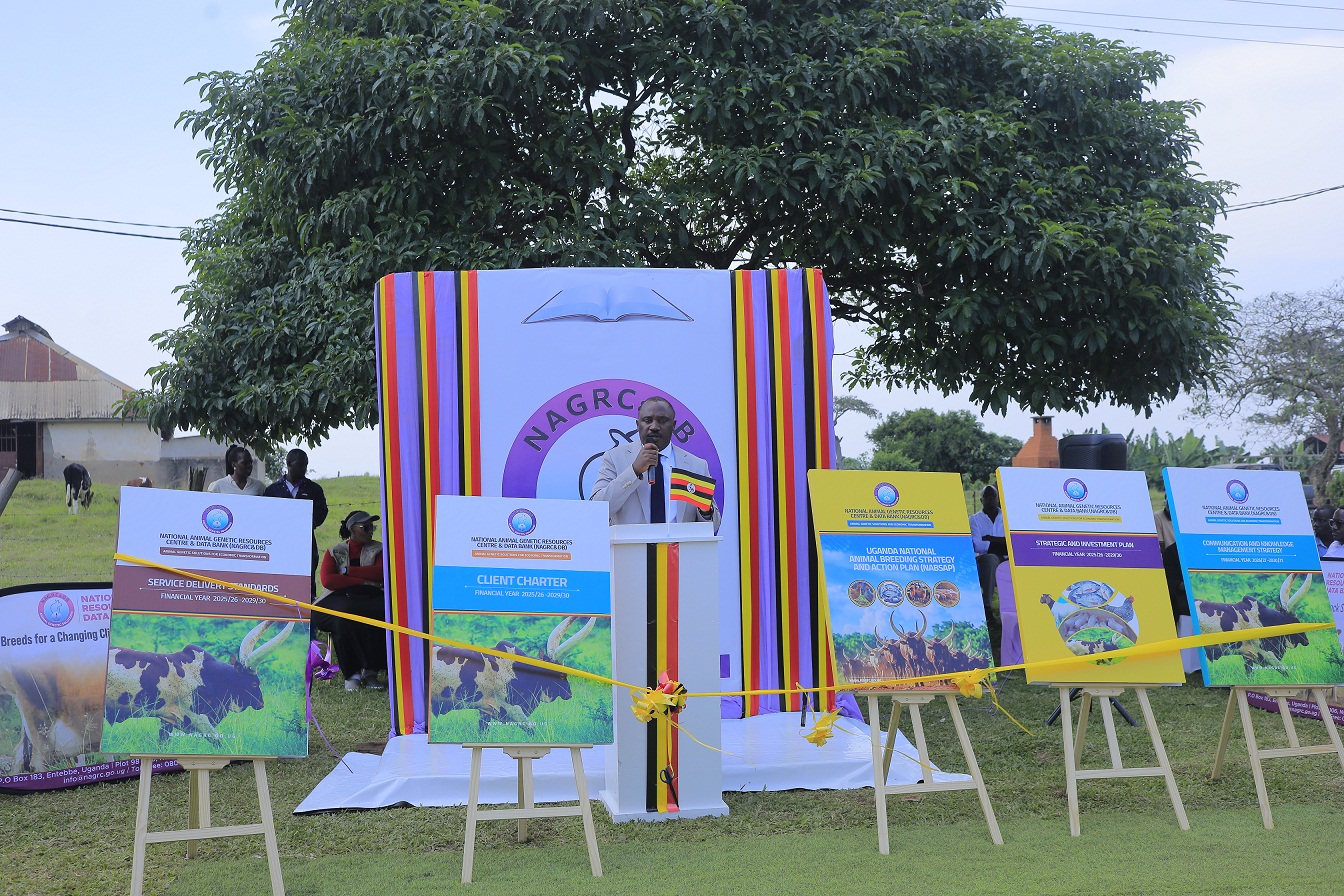
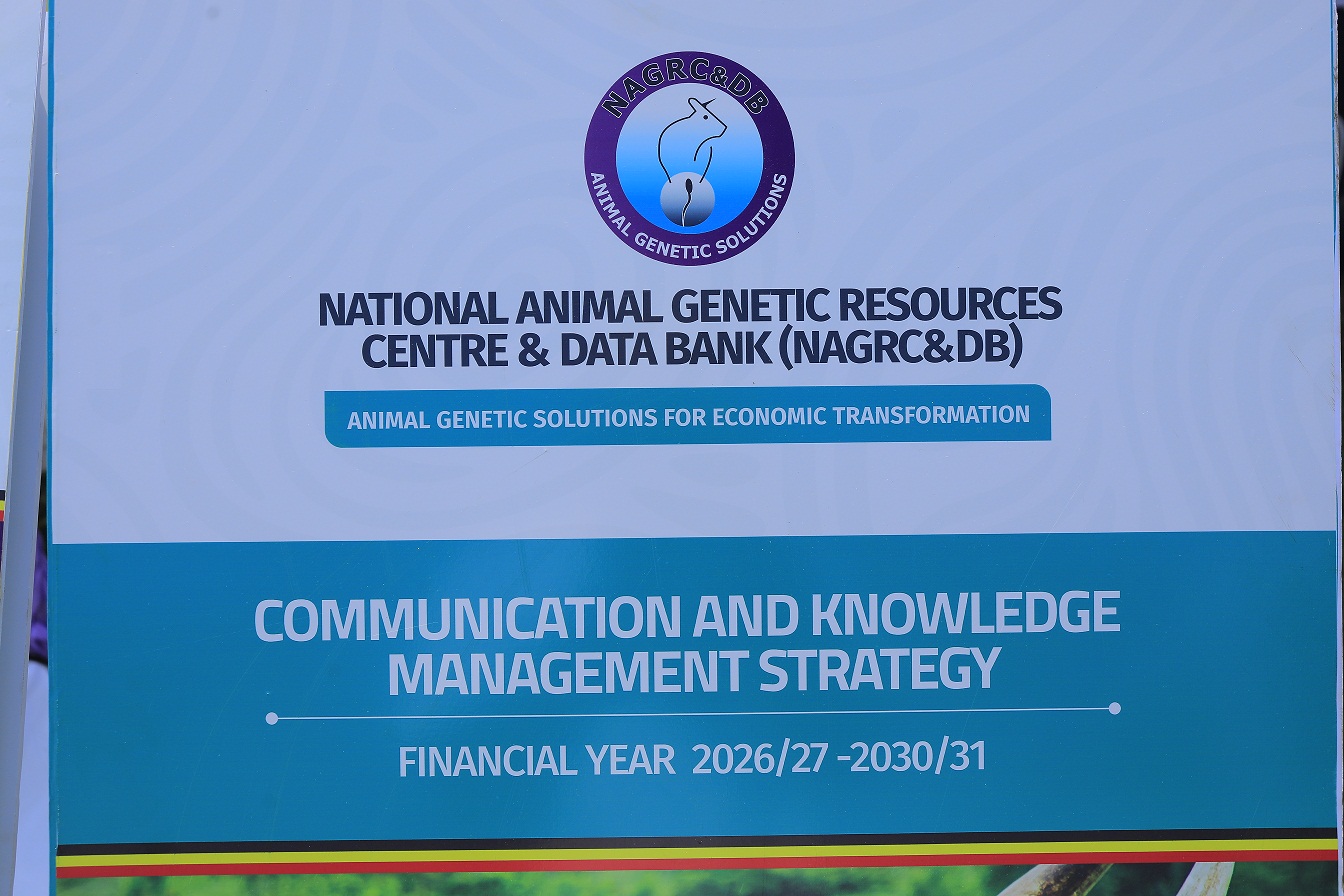
The documents include the Client Charter for FY2025/26 to 2029/30, Service Delivery Standards, the Uganda National Animal Breeding Strategy and Action Plan (NABSAP), the Strategic and Investment Plan for 2025/26 to 2029/30, and the Communication and Knowledge Management Strategy for 2026/27 to 2030/31.
The documents are designed to move Uganda’s livestock sector towards higher productivity, improved genetics, climate resilience and stronger commercialisation.
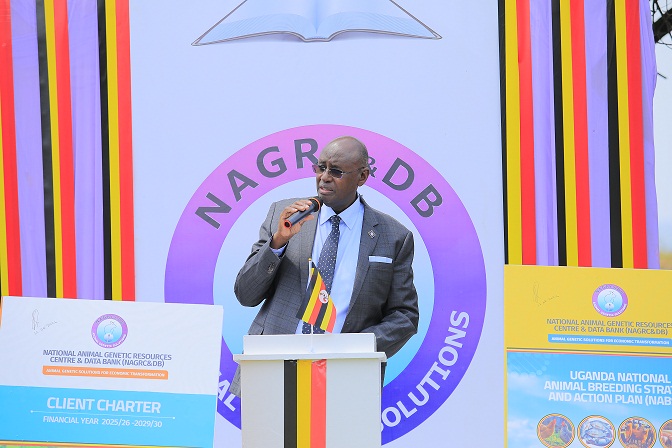
Minister of State for Animal Industry, Hon. Bright Kanyontore Rwamirama (PhD), officially launched the documents at the NAGRC&DB headquarters in Entebbe.
Rwamirama challenged the institution to ensure the plans do not remain on shelves.
He said their real value would be measured by the results farmers experience on the ground.
The Minister called for stronger accountability, better service delivery and wider adoption of modern animal breeding technologies.
He also urged NAGRC&DB staff, management, the Board and partners to ensure the new direction delivers visible benefits to farmers.
PDM FARMERS IN THE SPOTLIGHT
At the heart of the new Strategic and Investment Plan is a major commitment to PDM farmers.
NAGRC&DB plans to accelerate the breeding and multiplication of productive and farmer-preferred dairy and beef cattle, goats, pigs, poultry and fish.
The agency will also work to make these improved breeds more available and affordable.
For PDM beneficiaries, particular attention will go to dairy cattle, piggery and poultry enterprises.
The plan provides for highly subsidised breeding stock for farmers as part of efforts to support household wealth creation.
NAGRC&DB farms and ranches will serve as breeding, multiplication and technology-transfer hubs.
The agency will work with local governments, farmer organisations and PDM structures to reach beneficiaries.
The approach is expected to go beyond simply giving farmers animals.
Farmers will also be connected to technical guidance on breeding, feeding and enterprise management.
This means PDM financing can be backed by better genetics and knowledge, giving farmers a stronger chance of turning livestock projects into sustainable businesses.
The ultimate target is increased productivity and household incomes.
It also supports the wider PDM ambition of moving households from subsistence production into the money economy.
NAGRC&DB will monitor progress by tracking the livestock breeds and poultry genetic resources introduced, multiplied and made available to PDM farmers.

BETTER BREEDS, BETTER FARM RETURNS
The Uganda National Animal Breeding Strategy and Action Plan (NABSAP) provides the national framework behind the intervention.
Published in 2026, the strategy seeks to make animal breeding more productive, inclusive, climate-resilient and economically sustainable.
Uganda’s livestock sector has faced challenges including low genetic productivity, inadequate breeding infrastructure, limited access to quality breeding materials, uncontrolled cross-breeding and climate shocks.
The strategy seeks to address these challenges while protecting Uganda’s indigenous animal genetic resources.
Its four priority areas include characterisation and monitoring of animal genetic resources, sustainable use and development, conservation, and stronger policies, institutions and capacity.
For farmers, successful implementation means improved access to productive and market-oriented breeds.
It also means access to genetics that can better withstand changing climatic conditions.
The strategy further recognises the importance of conserving indigenous genetic diversity, which remains critical for future breeding and climate adaptation.
FARMERS TO GET BETTER SERVICES
NAGRC&DB is also promising a major improvement in the way it serves farmers and other clients.
The new Client Charter establishes a social contract between the institution and its clients.
It spells out services, rights, obligations and commitments.
It also provides channels through which farmers and other clients can give feedback and lodge complaints.
Under the Charter, complaints must be acknowledged within 48 hours.
Complaints requiring investigation are expected to be concluded within 14 days.
The Service Delivery Standards go further by setting measurable targets.
Clients should be attended to within five minutes of arriving at service points.
Written correspondence should receive a response within five working days.
The standards also require NAGRC&DB to provide clear, accurate, timely and relevant information.
For farmers, breeders and suppliers, the new standards provide a clear yardstick for judging the quality of service they receive.
KNOWLEDGE AT THE FARMER’S FINGERTIPS
The new Communication and Knowledge Management Strategy is expected to strengthen how farmers access information.
The strategy covers public awareness, farmer communication, knowledge management, organisational learning, stakeholder partnerships and digital communication.
It is intended to ensure that reliable information about NAGRC&DB programmes, technologies, products and services reaches the people who need it.
The strategy also strengthens systems for generating, validating, packaging, preserving and sharing technical knowledge.
This is expected to help farmers make better decisions about breeding, feeding and livestock enterprise management.
‘LAUNCHING POSSIBILITIES’
Speaking on behalf of the Board Chairperson, Eng. Robert Ssenozi, the Board member representing farmers in the Central Region, said the launch was about more than documents.
He described it as a commitment to action and said the occasion was about “launching possibilities”.
He linked those possibilities to NAGRC&DB’s mandate to lead the commercialisation of animal breeding and improve animal genetics and productivity.
Representatives from the Executive Office of NAGRC&DB, Uganda National Farmers Federation and the Office of the Prime Minister also attended the event.
A representative of the Office of the Prime Minister, speaking on behalf of the Deputy Head of Public Service, congratulated NAGRC&DB and urged its employees to uphold the standards contained in the new documents.
The National Planning Authority also welcomed the strategy.
Dr Israel Mugezi, Senior Planner for Agriculture, representing the Director of the National Planning Authority, stressed the importance of building a competitive and sustainable animal industry.
He said Uganda needs climate-resilient, high-yielding and affordable genetics to strengthen its livestock economy.
He linked improved livestock production to Uganda’s export ambitions, including value-added products such as milk powder.
The approach also supports the country’s broader agro-industrialisation and value-addition agenda under the Fourth National Development Plan.
FROM PLANS TO FARMERS
The five documents are designed to work together.
NABSAP sets the national direction for animal breeding.
The Strategic and Investment Plan translates that direction into investments and programmes, including support for PDM farmers.
The Service Delivery Standards establish performance targets.
The Client Charter strengthens accountability to farmers and other users.
The Communication and Knowledge Management Strategy ensures that information, feedback and lessons are shared across the system.
The big test now is implementation.
For farmers, success will be measured not by the number of documents launched but by what happens at the farm.
That means more affordable quality breeding stock.
Better dairy cows.
Improved piggery breeds.
Better-performing poultry.
Improved access to technical knowledge.
Faster and more responsive services.
And, ultimately, higher production and household incomes.
With NAGRC&DB farms and ranches positioned as breeding and technology-transfer hubs, the new strategy could give PDM farmers an important push towards commercially viable livestock enterprises.
The initiative also offers Uganda an opportunity to build a stronger livestock industry based on improved genetics, better services and sustainable production.
For the ordinary farmer, the message is simple: better breeds, better productivity and better opportunities to make money from livestock.
GOT A HOT STORY? LET US KNOW!
Got breaking news, explosive secrets, or hard evidence?
Email us: redpeppertips@gmail.com
We accept tips, documents, videos, photos, and recordings—the more evidence you have, the better.
CONFIDENTIALITY IS OUR TOP PRIORITY. SOURCES ARE ALWAYS PROTECTED!
About Post Author