LIST: Singapore tops the 2026 ranking of the world’s richest countries
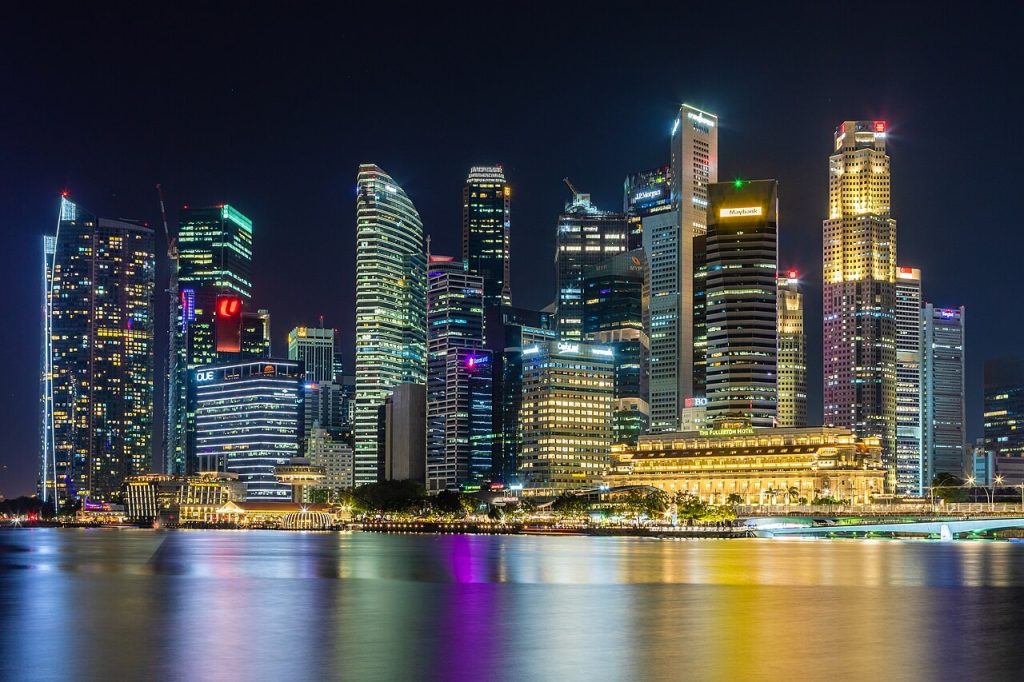
Marina Bay Singapore
By Agencies
Singapore topped the 2026 ranking of the world’s richest countries with a GDP per capita of over $156,000 in international dollars Small nations and tax havens dominated the top 10 list, with Ireland and Luxembourg both surpassing $152,000 per capita .
The United States and Taiwan entered the top 10 as the only large economies to feature in this year’s ranking. Singapore has ranked as the world’s richest country by purchasing power parity (PPP) per capita in 2026, according to data published by Global Finance Magazine on July 27, 2026, with a figure of $156,755 in international dollars per person.
The rankings by Global Finance use PPP-adjusted GDP per capita as the primary measure, which accounts for local inflation and the cost of goods and services to provide a more accurate picture of living standards than raw GDP alone.
Nine of the ten countries on the list have relatively small populations, with several operating as financial centres or tax havens. Luxembourg ranked second at $152,966, followed closely by Ireland at $152,632.
Both countries attract multinational corporations through favourable tax regimes, which significantly inflates their official GDP figures. Ireland’s headline corporate tax rate stands at 12.5%, drawing large businesses to shift their fiscal residency there, though national household disposable income remains far closer to the EU average.
Key Driver of Wealth
Singapore $156,755 (KSh 20.31m) Financial hub, tax haven, trade and manufacturing ; Luxembourg $152,966 (KSh 19.82m) Banking, offshore finance, EU institutions ; Ireland $152,632 (KSh 19.77m) Corporate tax haven, multinational HQ, tech; Macao SAR $134,485 (KSh 17.42m) Gaming industry, tourism ; Qatar $120,114 (KSh 15.56m) Oil and gas reserves ; Norway $111,545 (KSh 14.45m) Oil revenues, sovereign wealth fund ; Switzerland $102,096 (KSh 13.23m) Banking, pharmaceuticals, tourism ;Brunei Darussalam $93,731 (KSh 12.14m) Hydrocarbon reserves ; Taiwan $90,233 (KSh 11.69m) Semiconductor manufacturing, export-led growth ; United States $89,991 (KSh 11.66m) Diverse economy, technology, finance
Daniel Kathali, an economist, warned that the GDP per capita figures do not reflect equitable wealth distribution among all the citizens in a country.
“Purchasing Power Parity (PPP)-adjusted Gross Domestic Product (GDP) per capita figures serve as a useful metric for comparing macroeconomic output, but they do not automatically reflect equitable wealth distribution or the actual living standards of ordinary citizens. Within every country on the list, deep-seated structural inequalities mean that high average GDP figures can mask significant income gaps between top earners and the broader populace. Consequently, an inflated national average does not necessarily translate into higher purchasing power or economic security for lower-income households,” he explained.
Furthermore, the Global Finance report highlighted that corporate tax haven economies artificially distort GDP data through capital flow mechanisms. An estimated 40% of global foreign direct investment is routed through tax-avoidance channels and offshore financial centres.
While these financial flows drastically inflate headline national accounts, they generate minimal tangible benefits, employment opportunities, or public infrastructure investments for ordinary residents.
GOT A HOT STORY? LET US KNOW!
Got breaking news, explosive secrets, or hard evidence?
Email us: redpeppertips@gmail.com
We accept tips, documents, videos, photos, and recordings—the more evidence you have, the better.
CONFIDENTIALITY IS OUR TOP PRIORITY. SOURCES ARE ALWAYS PROTECTED!
About Post Author