AMNESTY COMMISSION MESS! Millions Trapped in Arrears, Half the Jobs Vacant, Procurements Stall as Sh80 Million Vehicle Deposit Vanishes
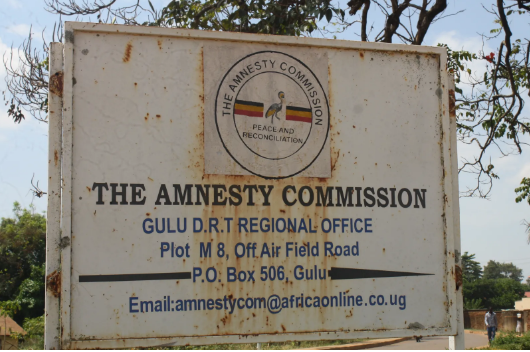
The Amnesty Commission, the government institution established to promote peace, reconciliation and the reintegration of former rebels into society, has come under intense scrutiny after the Auditor General exposed a series of financial, procurement and operational weaknesses that threaten its ability to effectively deliver its mandate.
The Auditor General’s December 2025 report paints a troubling picture of an institution grappling with staffing shortages, stalled procurements, poor records management and unrecovered public funds despite its critical role in implementing the Amnesty Act of 2000.
The Commission, whose vision is to achieve a peaceful and conflict-free Uganda and whose mission is to contribute towards peace and harmony through forgiveness and reconciliation, is responsible for encouraging combatants to abandon rebellion, processing amnesty applications, counselling returnees and supporting their reintegration into communities. However, the latest audit indicates that significant administrative weaknesses continue to undermine these objectives.
The audit revealed that the Amnesty Commission accumulated domestic arrears amounting to UGX 664.46 million by the close of the financial year, raising concerns about the institution’s financial management and its ability to meet outstanding obligations.
Staffing levels were also found to be critically low. According to the Auditor General, the Commission has an approved establishment of 63 positions, but only 30 positions, representing 48 percent, had been filled, leaving 33 positions, or 52 percent, vacant. The shortage of personnel raises questions about the Commission’s capacity to effectively implement its nationwide programmes, including sensitisation on the Amnesty Act, demobilisation of former combatants, counselling, resettlement and reintegration of returnees.
The audit further found significant weaknesses in procurement performance. During the 2024/25 financial year, the Commission planned to undertake 15 procurements worth an estimated UGX 899.81 million. However, auditors established that seven procurements valued at UGX 809.25 million were never implemented, leaving key planned activities unrealised.
Auditors also raised concerns over poor accountability for government property. A review of the Commission’s work plans and performance reports showed that agricultural inputs and tools worth approximately UGX 100 million had been procured for 200 reporters and victims under its reintegration programme. However, the Commission failed to maintain adequate stores records for the procured items, making it difficult to properly account for the distribution and management of the supplies.
One of the most striking findings relates to a vehicle procurement that has remained unresolved for several years. The Auditor General reported that in 2021, the Amnesty Commission contracted a company to supply a Toyota Hiace High Roof at a total contract price of UGX 239.10 million. The Commission paid a deposit of UGX 80 million, but the procurement was never concluded. By the time of the audit, the supplier had neither delivered the vehicle nor refunded the money paid by the Commission, leaving taxpayers exposed to a substantial financial loss.
The audit also questioned budget execution during the year under review. Although Parliament appropriated UGX 1.098 billion to finance the Commission’s recurrent expenditure, only UGX 1.057 billion was warranted, resulting in an overall funding variance of UGX 42 million.
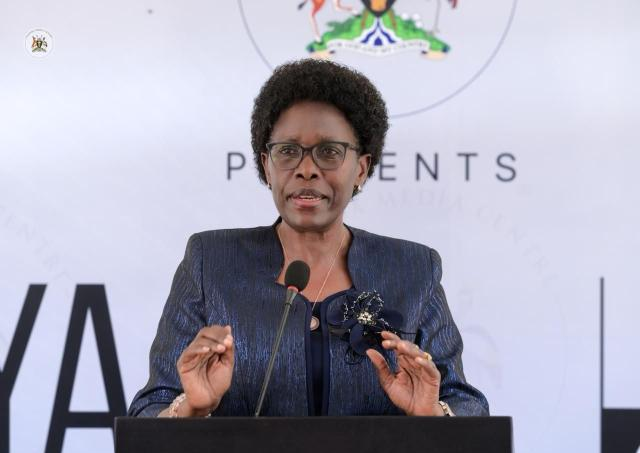
The findings place fresh pressure on the leadership of the Amnesty Commission, headed administratively by Acting Secretary Jabel Bwowe, to explain why these long-standing financial, procurement and operational weaknesses persist within an institution entrusted with one of Uganda’s most sensitive peace-building responsibilities.
The Amnesty Commission occupies a unique position within Uganda’s justice and reconciliation framework. Established under the Amnesty Act of 2000, it provides former insurgents and collaborators with an opportunity to renounce rebellion, surrender weapons, obtain certificates of amnesty and reintegrate into civilian life without prosecution. The Commission is also mandated to promote dialogue among warring parties, sensitise the public on the Amnesty Act, facilitate demobilisation, repatriation, counselling and resettlement of former combatants, and support their return to their communities.
However, the Auditor General’s findings suggest that unless the Commission urgently addresses its staffing shortages, procurement failures, weak record management and financial control weaknesses, its ability to effectively deliver on its mandate of promoting peace, reconciliation and lasting stability could remain under significant strain.
GOT A HOT STORY? LET US KNOW!
Got breaking news, explosive secrets, or hard evidence?
Email us: redpeppertips@gmail.com
We accept tips, documents, videos, photos, and recordings—the more evidence you have, the better.
CONFIDENTIALITY IS OUR TOP PRIORITY. SOURCES ARE ALWAYS PROTECTED!
About Post Author