BETTING BOARD BUSTED! Inside Regulatory Chaos, Missing Billions, Unchecked Systems & Operational Breakdowns at National Lotteries and Gaming Regulatory Board
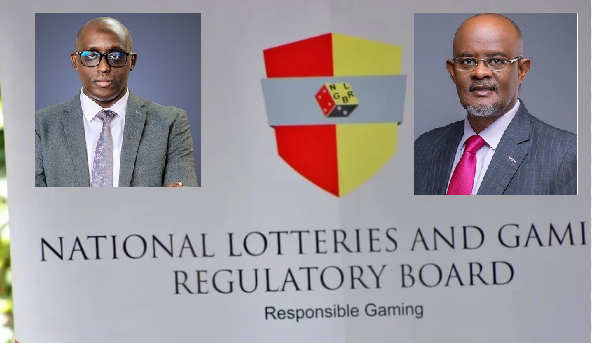
The house is supposed to set the rules — but at Uganda’s National Lotteries and Gaming Regulatory Board, the house itself is now under fire, with a damning Auditor General’s 2025 report exposing a trail of glaring failures, weak oversight, and missed billions that point directly to those entrusted with running the country’s booming betting industry.
At the center of the storm is management led by Chief Executive Officer Denis Mudene Ngabirano and a Board chaired by Kenneth Kitariko, both widely praised for their experience and leadership credentials. But behind the polished profiles and promises of a “transparent, fair, and socially responsible gaming environment,” the Auditor General has uncovered a system riddled with regulatory gaps and operational breakdowns that raise serious questions about whether those in charge have been doing their job at all.
The most shocking revelation is that despite being the country’s top authority mandated to license and regulate gaming activities, the Board has no regulation in place for approving the very games played in casinos, lotteries, and betting platforms. It is a staggering omission that leaves the entire sector operating without a clear legal framework for what games are allowed, how they should be vetted, and whether they meet fairness and compliance standards.
This regulatory vacuum sits squarely within the domain of the Board’s legal and compliance machinery, overseen by officials including Deborah Kituyi, Adrine Otunga, Richard Muteesaasira, Alicia M. Atukunda, Joan Tibeita, and Simon Mugabi. With such a lineup, the absence of a foundational regulation raises uncomfortable questions about oversight, coordination, and accountability at the very top.
The cracks widen further in the Board’s technological oversight. In the 2024/25 financial year, plans to audit critical Information Systems — the backbone of modern gaming regulation — were abandoned altogether. The reason is as alarming as the decision itself: the Board simply does not have staff with the required Information Systems audit skills.
This failure falls within the technical and audit functions led by Ainebyona Barnett Godie and Alex Nkerewe, exposing a dangerous blind spot in a sector driven by digital platforms, real-time transactions, and massive financial flows. Without proper system audits, the risk of manipulation, fraud, and unmonitored operations skyrockets, leaving the public and government revenue exposed.
And then comes the money — or rather, the shocking lack of it. The Board projected to collect UGX 47.72 billion in Non-Tax Revenue for the financial year. What it actually collected was a mere UGX 8.79 billion, representing just 18.42 percent of the target. It is a financial shortfall so massive it cannot be brushed off as underperformance; it signals a systemic collapse in revenue mobilization.
This glaring gap falls under the financial stewardship of Bernard Winyi and Colin Mutungi Katungi, raising the stakes on whether revenue leakages, weak enforcement, or poor planning are bleeding the sector dry.
Yet even as billions go uncollected, the Board appears to be operating without a clear mechanism to track its own performance. The Auditor General found that there is no annual Monitoring and Evaluation framework in place — meaning there is no structured system to assess progress, measure impact, or guide decision-making.
This failure sits within the operations arm led by Stephen Tabaruka, and it paints a picture of an institution effectively running without a compass, unable to systematically evaluate whether its strategies are working or failing.
Taken together, the findings reveal a deeply troubling pattern. A regulator without clear game approval rules. A digital system that is not being audited. Revenue targets missed by an overwhelming margin. And no framework to monitor performance or correct course.
All this unfolds in a sector that handles billions of shillings daily, influences thousands of livelihoods, and carries significant social implications. The stakes could not be higher, yet the systems meant to safeguard them appear dangerously weak.
For an institution established under the Lotteries and Gaming Act to ensure order and accountability, the Auditor General’s report instead paints a portrait of disorder — where critical controls are missing, oversight is limited, and the burden of failure ultimately falls on the very leaders tasked with keeping the industry in check.
GOT A HOT STORY? EMAIL: redpeppertips@gmail.
SOURCE PROTECTION/CONFIDENTIALITY IS OUR NO.1 PRIORITY.
About Post Author