BUGISU CULTURAL WAR! Bukuka Cries To M7 To Stop Mps From ‘Toppling’ Umukuka…Spokesperson Steven Masiga Likens Move To Obote’s 1966 Abolition Of Kingdoms
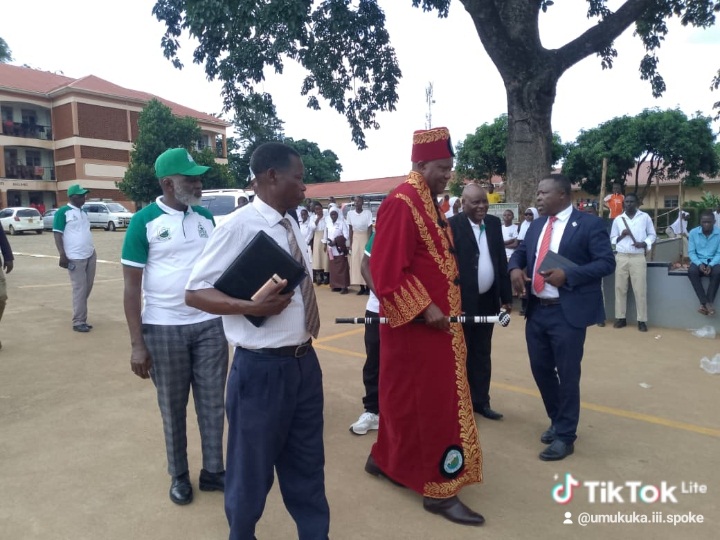
The spokesperson of the Bugisu Cultural Institution, Steven Masiga, has written a detailed petition to President Yoweri Museveni asking him to intervene and restrain Bugisu Members of Parliament whom he accuses of attempting to abolish or undermine the authority of the gazetted Umukuka, His Highness Jude Mike Mudoma.
In the letter, Masiga begins by thanking President Museveni for what he describes as unwavering support to the Bugisu Cultural Institution and the Bagisu community. He says that during the three years he has served as spokesperson, he has personally witnessed the President’s contributions to the region and has consistently explained them to the community.
Masiga credits Museveni for supporting the construction of community roads across the Bugisu sub-region, including the Bukalasi–Bukharela road in Bududa District, noting that areas where people once relied on donkeys to transport produce are now accessible by trucks and other motor vehicles.
He also recalls the President’s financial support towards the burial of the late Umukuka Emeritus Wilson Wamimbi, saying the Shs150 million contribution made in April 2024 was well received by the institution. According to Masiga, Museveni also contributed Shs300 million towards the 2024 Imbalu launch, funds which he says were utilized in accordance with the ceremony’s approved budget.
The spokesperson further praises the President for donating more than 26 cows to families in Bunambutye Resettlement Camp during the Christmas period and for providing financial support that enabled the Umukuka to engage clan chairpersons on various national issues. He says government support to the Umukuka has continued through quarterly facilitation from the Ministries of Finance and Gender as well as fulfilment of mobility pledges made to the cultural leader.
Masiga says the Office of Public Relations at the Bugisu Cultural Institution has continued using airtime allocated to the Umukuka to explain government programmes and projects to the people of Bugisu, adding that the community appreciates these efforts.
Turning to the history of cultural institutions in Uganda, Masiga reminds the President that traditional leadership was restored under Article 246 of the 1995 Constitution following its abolition in 1967. He says Museveni made the restoration of cultural institutions one of his political commitments during the bush war and fulfilled that promise after taking power.
He explains that although Article 246 restored traditional and cultural institutions, a comprehensive legal framework only came into force in 2011 through the Institution of Traditional or Cultural Leaders Act, which provided detailed procedures on how cultural leaders are recognised and the roles they perform.
Masiga then traces the origins of the current Bugisu cultural dispute back to 2020 following the election of the current Umukuka, when disagreements emerged over who the rightful cultural leader was. He says the dispute left Bugisu without an accepted cultural leader for three years until the Ministry of Gender invoked Section 16(1) of the Traditional and Cultural Leaders Act to facilitate mediation.
According to the letter, neutral mediators worked with Bugisu clan chairpersons and the process culminated in the gazettement of His Highness Jude Mike Mudoma in 2023.
Masiga argues that Mudoma is the first Umukuka to assume office through procedures established under the national law governing cultural institutions, unlike previous leaders who, according to him, were elected under locally developed cultural arrangements. He notes that courts have since been asked to determine whether the Bagisu can independently enact laws governing the installation of their cultural leaders or whether they must comply with national legislation, adding that he cannot comment further because the matter is before court.
Masiga says tensions escalated again on July 9, 2026, barely two weeks before the launch of this year’s Imbalu ceremonies, when the Bugisu Parliamentary Caucus allegedly declared that the Umukuka would not preside over the cultural functions. He says there is video evidence of the statements made by the legislators.
Describing the incident as one of the darkest moments in Bugisu’s history, Masiga compares it to the events of 1966 when the then government abolished traditional kingdoms across Uganda. He argues that powers conferred by law cannot be taken away through political pronouncements.
He questions whether Members of Parliament have the authority to remove powers from a gazetted cultural leader, arguing that if they possess such powers they should equally dismantle every cultural institution established under the Constitution.
Masiga insists that no Member of Parliament, regardless of political affiliation, has legal authority to campaign against or interfere with a recognised cultural institution.
He also accuses the legislators of ignoring guidance from the State Minister for Gender, Hon. Mary Karooro Okurut Kamuli Kutesa, whom he says advised them not to act contrary to the law.
The spokesperson reminds the President of his maiden speech after the 2026 General Election, in which Museveni reportedly praised cultural institutions that mobilised communities in support of government programmes. He says the Mufti of Uganda, Sheikh Shaban Mubajje, later informed the Umukuka that the President appreciated his mobilisation efforts during the elections.
Masiga argues that under Article 246 of the Constitution and the Traditional and Cultural Leaders Act, mobilisation of communities behind government programmes forms part of a cultural leader’s recognised role.
He also recalls accompanying the Umukuka to a meeting with President Museveni at Mbale State Lodge in November 2025 alongside Bugisu Prime Minister Dr Paul Mwambu and Permanent Secretary Dorcas Okalany. During that meeting, he says, the delegation pledged to promote unity in Bugisu and support government programmes while the Umukuka requested deployment of his teams to implement agreed initiatives.
Masiga alleges that a small group of individuals thrives on conflict and violence and accuses some MPs of creating fertile ground for renewed instability in Bugisu by undermining the gazetted cultural leadership.
To illustrate his point, he cites a passage he says he studied while at Makerere University from a work titled The Making of a Modern Mercenary, in which a mercenary rejects wishes of peace because peace would deprive him of his livelihood. Masiga says certain groups in Bugisu similarly fear the prevailing peace and prefer chaos for their own interests.
The letter also alleges attacks on the security establishment, saying some paid groups have verbally attacked security agencies while attempting to pressure them into recognising rival cultural leaders allegedly backed by influential individuals. He commends security agencies for maintaining neutrality by protecting the gazetted Umukuka.
Masiga further claims that while government officially facilitates the gazetted cultural leader, rival cultural claimants are receiving cash, fuel and other logistical support from sponsors both within Uganda and abroad.
In his concluding appeal, Masiga urges President Museveni to condemn what he describes as the Bugisu MPs’ attempt to strip the Umukuka of his customary and cultural powers, insisting the actions have no legal foundation and may expose those responsible to legal claims for damages.
He also reveals that Bugisu clan chairpersons are planning demonstrations over the parliamentary caucus’ actions, arguing that cultural matters fall under the authority of the Umukuka and clan structures rather than elected politicians.
Referring to a recent social media post in which President Museveni described the Bagisu as hardworking people who lacked proper leadership, Masiga argues that attacking a government-gazetted cultural leader is itself evidence of poor leadership.
He ends the petition by acknowledging that protocol ordinarily requires such concerns to be communicated privately but says the circumstances are exceptional because, in his view, Bugisu lawmakers are attempting to undo the President’s efforts in restoring and supporting cultural institutions.
Masiga asks the President to intervene “through his revolutionary lenses” and reiterates that what the law has established can only be altered by law. He concludes by rejecting what he terms “jungle justice” and political attempts to impose a different Umukuka on the Bagisu people, insisting that the cultural institution is non-partisan and should remain free from political interference.
GOT A HOT STORY? LET US KNOW!
Got breaking news, explosive secrets, or hard evidence?
Email us: redpeppertips@gmail.com
We accept tips, documents, videos, photos, and recordings—the more evidence you have, the better.
CONFIDENTIALITY IS OUR TOP PRIORITY. SOURCES ARE ALWAYS PROTECTED!
About Post Author