CRACKDOWN ON KILLER SCHOOL VANS! Gov’t Orders Colour Coding
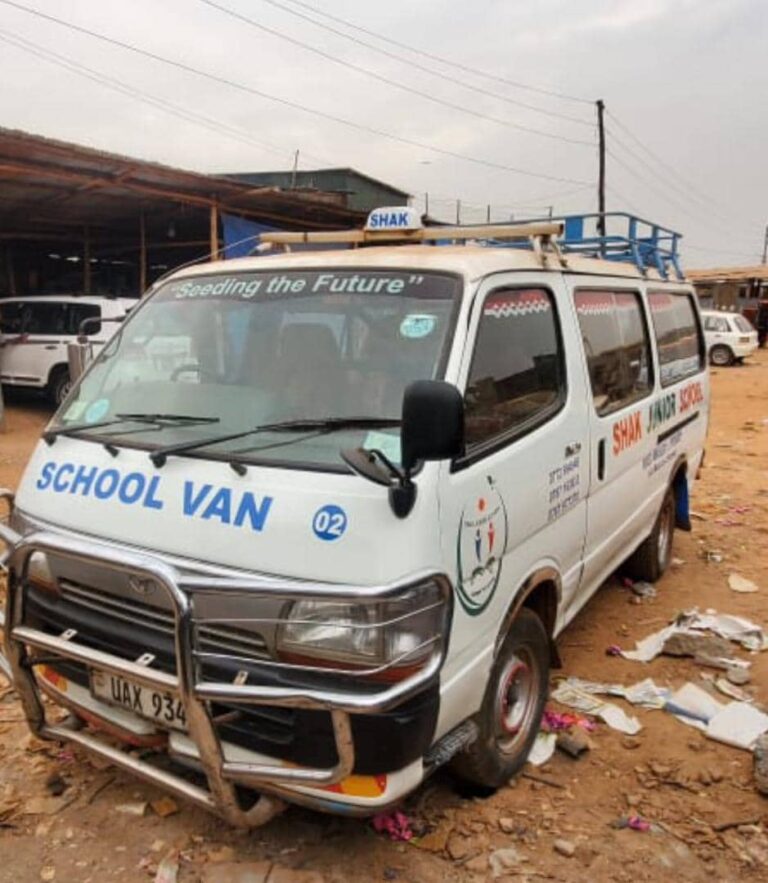
The government is set to introduce mandatory colour-coding for all school vans and buses as part of wider measures to improve the safety of learners on the country’s roads. The move is among key recommendations made by the recently constituted inter-ministerial committee formed to review school transportation following the tragic Kapchorwa accident that claimed the lives of several pupils and a teacher returning from a school trip.
The Assistant Inspector General of Police (AIGP) Lawrence Nuwabiine, Director of Traffic and Road Safety, said that the committee was initially established to address safety concerns surrounding school trips, which have been linked to several fatal accidents. However, he said the review has since revealed that the challenge is broader, extending beyond occasional school excursions to the daily transportation of learners to and from school.
“We are going to look at the entire school transport system. All aspects will be reviewed, and there will be strict enforcement of the measures that will be put in place,” AIGP Nuwabiine said. Daily transportation of learners to and from school has become a major concern, with many school vans reportedly driven recklessly, overloaded, unroadworthy, and operating on unsafe routes and schedules.
Just days before the Kapchorwa tragedy, the Minister for Children and Youth Affairs, Dr. Mercy Faith Lakisa, personally stopped a school van that was dangerously overloaded with children. Despite such interventions, enforcement of existing safety rules has often been weak. Beyond school vans, thousands of learners across the country rely on motorcycles to travel to and from school, with some carrying multiple children on a single boda boda, sometimes without proper protective gear.
The renewed focus on school transport follows years of recommendations from government agencies aimed at improving learner safety. Several guidelines have been issued in the past, but enforcement has remained a major challenge. The Ministry of Education and Sports has previously developed guidelines on school transport, requiring schools to ensure vehicles used for learners are roadworthy, properly licensed, and operated by competent drivers. Schools have also been encouraged to maintain clear records of vehicles, drivers, and safety arrangements for trips.
However, implementation has often depended on individual schools, with limited routine inspection and enforcement. AIGP Nuwabiine said the committee will now examine school transportation more broadly, with colour-coding of vehicles being one of the immediate steps aimed at improving visibility, enabling easier monitoring by traffic officers, and deterring unauthorised operators.
In many countries, including neighbouring Kenya, school buses are painted a distinctive bright yellow to improve visibility and make them easily recognisable on the road. The yellow colour has become a familiar feature of school transport, and it is often combined with other safety requirements, including warning signs, flashing lights, stop arms, designated loading and drop-off procedures, and strict regulations governing driver conduct. But, in Uganda’s case, further details on the specific colour to be adopted, the timeline for implementation, and the enforcement mechanisms are expected to be communicated after the guidelines are finalised.
Nuwabiine said the committee is developing broader regulations covering school transport, with emphasis on ensuring that the rules are not only issued but also effectively enforced. Uganda’s planned measures come as neighbouring Kenya moves ahead with stricter controls on school transport. In 2025, the Kenya National Transport and Safety Authority introduced the Traffic (School Transport) Rules, 2025, establishing detailed requirements for vehicles carrying learners.
The rules require school vans and buses to operate only between 5:00 am and 10:00 pm, make complete stops when loading and dropping off pupils, use stop-signal arms and flashing red lights, provide every learner with a designated seat, and prohibit the carrying of unauthorised passengers. Operators and drivers who violate the regulations face penalties, including fines, imprisonment of up to six months, and suspension of driving or operating licences. The Kenyan framework also gives authorities powers to conduct random inspections to ensure compliance and improve accountability within the school transport sector.
GOT A HOT STORY? LET US KNOW!
Got breaking news, explosive secrets, or hard evidence?
Email us: redpeppertips@gmail.com
We accept tips, documents, videos, photos, and recordings—the more evidence you have, the better.
CONFIDENTIALITY IS OUR TOP PRIORITY. SOURCES ARE ALWAYS PROTECTED!
About Post Author