HOLY REBELLION! Secrets Nobody Told You About Breakaway Catholic Bishops Defying Pope Leo XIV and the Vatican
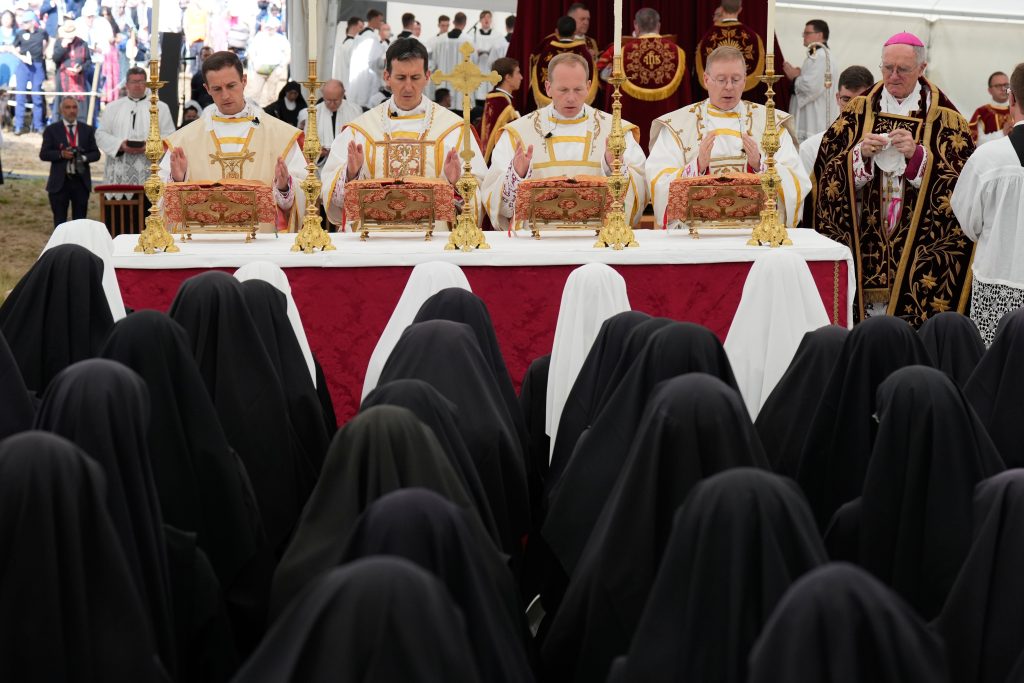
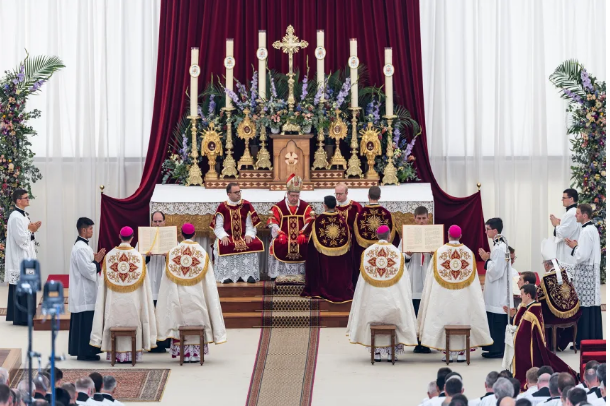
From left Marc Hanappier, Michel Poinsinet de Sivry, Michael Goldade and Pascal Schreiber pray during their consecration ceremony as bishops in a tent set up outside the Society of St. Pius X seminary, in Econe, Switzerland, Wednesday, July 1, 2026.
The ultratraditionalist Society of St. Pius X has defied Pope Leo XIV by consecrating four bishops without his consent at its seminary in Econe, Switzerland. The move incurred an automatic excommunication for the bishops involved, and amounted to a “schismatic act” — or a willful rupture of unity in the Catholic Church.
The ancient Latin Mass and ceremony, celebrated July 1 before thousands of faithful, marked the first major crisis for Leo. The American pope has prioritized church unity and healing tensions with traditionalists that worsened during the Pope Francis pontificate.
A group founded in dissent
The society, known by its acronym SSPX, was founded in opposition to the modernizing reforms of the Second Vatican Council. Among other things, the 1960s church meetings revolutionized the Catholic Church’s relations with other Christians, Jews and people of other faiths, and allowed Mass to be celebrated in the vernacular rather than Latin.
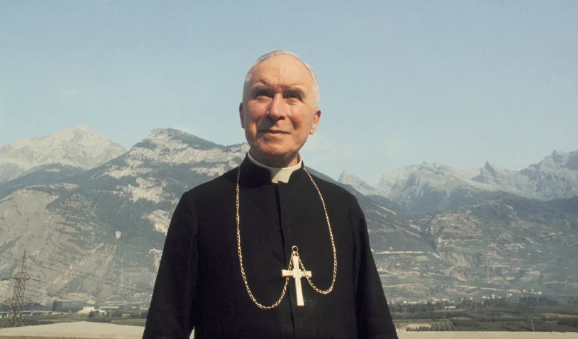
In 1975, the SSPX founder, Archbishop Marcel Lefebvre, was suspended and the society was suppressed by the Vatican.
In 1988, Lefebvre consecrated four bishops without papal consent. The Vatican promptly excommunicated Lefebvre and the four other bishops, and the group today still has no legal status in the church.
Despite that original schismatic act, the group has continued to grow and today poses a threat to the Holy See since it represents a parallel, ultra-Catholic, pre-Vatican II church. The SSPX counts two bishops, 751 priests, 264 seminarians training in five seminaries, 145 religious brothers, 88 oblates and 250 religious sisters representing 50 nationalities, according to SSPX statistics.
An automatic excommunication for a schismatic act
Under the church’s in-house canon law, consecrating a bishop without papal consent incurs an automatic excommunication for both the people administering the consecration and the bishops receiving it.
The Vatican doesn’t have to declare the excommunications or issue a decree: It happens automatically. But some experts believe the Holy See wanted to respond publicly in some form since the SSPX made such a public show of the consecrations.
Excommunication is the harshest penalty under canon law. It is considered “medicinal” in nature, meant to teach those who incur it that “what you did was wrong and you must repent for what you have done,” said Fr. Robert Gahl of the Catholic University of America.
“The medicine may be bitter tasting, meaning that there’s a harsh feature of it because it’s a penalty, but it’s meant to bring about a change in the one who receives it,” he said.
The excommunication, however, doesn’t affect the validity of the consecration itself: SSPX bishops, like their priests, are validly but illicitly ordained.
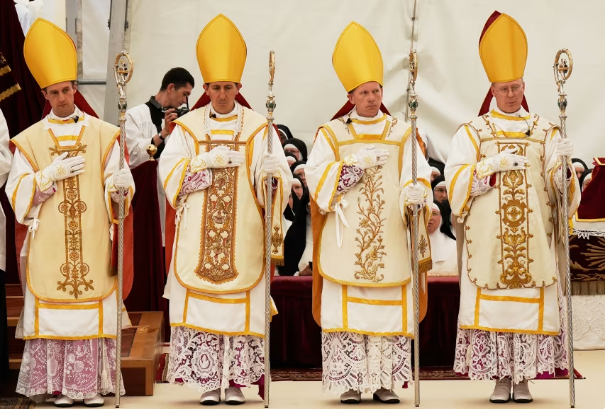
In response, the Vatican’s doctrinal office on Thursday published a decree saying that the four bishops are excommunicated, along with the two bishops who participated in the ordination ceremony. Excommunication means they are excluded from the sacraments of the church.
It added in an explanatory note that priests belonging to the society and lay members who “formally adhere” to the group are also in schism and excommunicated.
The decree warns all “clerics and the lay faithful” not to formally follow the society as they will automatically incur the penalty of excommunication.
Pope Francis makes SSPX concessions amid crackdown
Despite his general distrust of traditionalists and a broader crackdown on the old Latin Mass, Pope Francis actually went out of his way to offer concessions to the SSPX.
In 2015, he decreed that Catholics could validly go to confession with SSPX priests, essentially recognizing as legitimate the absolutions granted to Catholics who confessed their sins to SSPX priests.
Francis had made the concession as a one-year gesture during his Jubilee of Mercy, but he then extended it indefinitely. He also made a provision to allow SSPX priests to celebrate marriages legitimately.
Experts say Leo could revoke some of the concessions that Francis granted the SSPX as part of the Holy See’s response to the new consecrations.
Pope Benedict XVI tries to reconcile
First as cardinal and then as pontiff, Pope Benedict XVI worked to heal the SSPX schism and bring the group back under Rome’s wing.
He made two major concessions as part of his outreach. In 2007, he relaxed restrictions on celebrating the traditional Latin Mass throughout the Catholic Church. And in 2009, he removed the excommunications of the four SSPX bishops.
The gesture, however, became an acute embarrassment for him and sparked a crisis with Jewish leaders because one of the four, Bishop Richard Williamson, was a known Holocaust-denier.
And in a television interview that aired on Swiss television just before the pope’s decree was made public, Williamson said he didn’t believe Jews were killed in gas chambers during World War II.
Benedict later acknowledged a simple internet search would have turned up Williamson’s views.
Williamson later ran afoul of the SSPX, which expelled him in 2012 for insubordination. He had ignored a deadline to “declare his submission” to its authority and had called for the society’s superior to resign, the group said at the time.
Williamson, who was ordained a priest by Lefebvre in 1976 and had taught in the society’s seminaries in Europe, the U.S. and Argentina, died in 2025.
Relations with other traditionalists
Despite his concessions to the SSPX, Francis enraged many Catholic traditionalists by reversing Benedict’s relaxation on celebrating the old Latin Mass for the broader Catholic Church. Francis cracked down on its spread, arguing it had become a source of division in the church.
While the SSPX is one fringe group out of communion with Rome, plenty of other traditionalists are in full communion with the Holy See.
Leo, as part of his effort at promoting unity, allowed a prominent American cardinal to celebrate an old Latin Mass in St. Peter’s Basilica last year.
In a final appeal to the group Monday, Leo had warned that the ordinations would be a “schismatic” act and a “sin of extreme gravity,” and the ruling by the Vatican is wide-ranging in clamping down on the group.
Later Thursday, the doctrinal office set out the steps needed for priests to be allowed back into regular church life, including writing personally to the pope asking for the excommunication to be lifted, Vatican News reported.
Priests must also sign a profession of faith and make a pledge not to publicly attack the pontiff and his teachings, as well as other conditions, according to Vatican News.
Leo has not commented publicly since the ordinations were carried out.
Cardinal Pietro Parolin, the Vatican’s secretary of state, expressed his “deep sorrow” on Wednesday about the ordinations, saying they “break the unity of the Church and incur very specific sanctions – fundamentally, excommunication.”
GOT A HOT STORY? LET US KNOW!
Got breaking news, explosive secrets, or hard evidence?
Email us: redpeppertips@gmail.com
We accept tips, documents, videos, photos, and recordings—the more evidence you have, the better.
CONFIDENTIALITY IS OUR TOP PRIORITY. SOURCES ARE ALWAYS PROTECTED!
About Post Author