MUSEVENI U-TURN! Shs393bn Mukula Lake Fuel Project in Limbo After President Rejects Oil Transport on Victoria
President Yoweri Museveni’s latest rejection of fuel transportation on Lake Victoria has thrown fresh uncertainty over a Shs393 billion ($100 million) petroleum logistics project associated with businessman Capt Mike Mukula, after the President previously backed and launched the lake-based fuel facility.
Museveni on Thursday said Uganda should not transport petroleum products across Lake Victoria, warning that a fuel vessel accident could contaminate the country’s freshwater resource.
Instead, the President said Uganda should rely on pipelines and railways to move petroleum products.
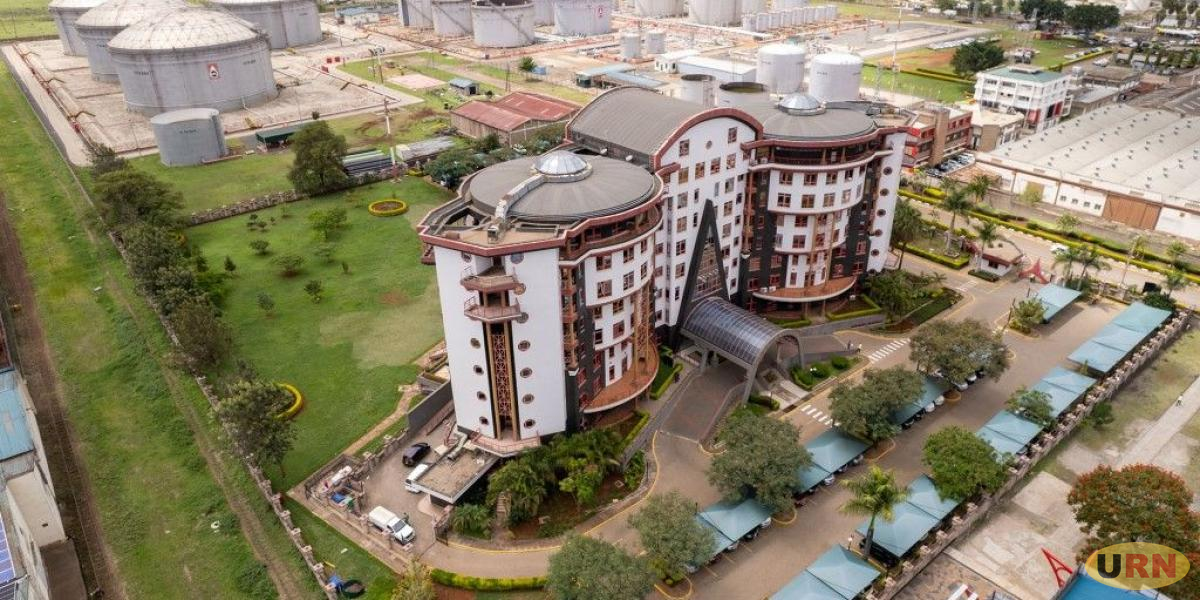
The remarks have raised questions over the future role of the Lake Victoria Logistics facility at Bugiri-Bukasa, Kawuku, which was launched by Museveni in July 2024 as part of efforts to shift fuel transportation from roads to water.
The facility, formerly associated with Mahathi Infra Uganda, represents an investment of about $100 million, equivalent to roughly Shs393 billion at current exchange rates.
From “safe” vessels to “dangerous” lake
The latest position marks a striking contrast with Museveni’s public backing of the project at its launch.
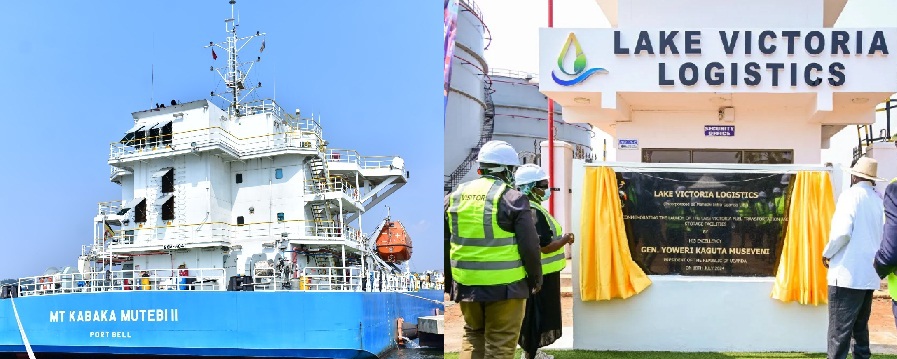
In July 2024, Museveni launched Lake Victoria Logistics at Bugiri-Bukasa and praised the investment as a way of reducing fuel transportation costs, road congestion and accidents.
At the time, the State House said the project had been established by Mahathi Infra Uganda and involved 14 storage tanks with a combined capacity of 70 million litres, a 256-metre jetty and two tanker ships, each capable of carrying 4.5 million litres.
Museveni also publicly reassured the country about the safety of the vessels.
The project’s operators said the two tankers could make up to 10 trips each month, giving the system a potential transportation capacity of 90 million litres per month, with plans for two additional ships that could raise capacity to 180 million litres.
Now, however, Museveni says the lake is too risky for petroleum transportation.
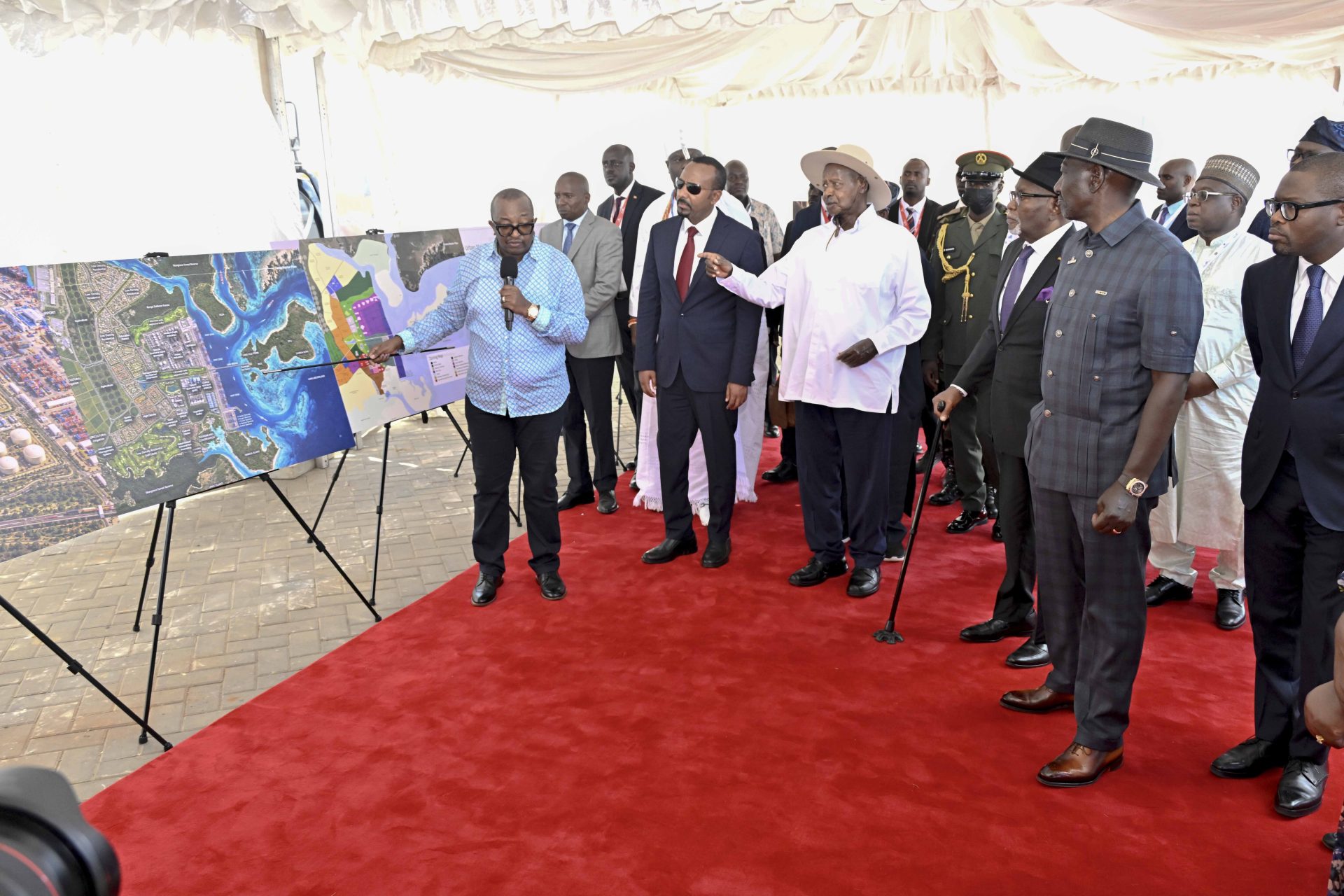
Speaking at the groundbreaking of the 320-million-litre Kampala Storage Terminal in Mpigi, the President said he was uncomfortable with transporting petroleum over Lake Victoria because of the possibility of an accident.
He pointed to the routing of the East African Crude Oil Pipeline away from Lake Victoria as evidence of the approach Uganda should follow.
Museveni said pipelines and railways should instead be prioritised for petroleum transportation.
Mukula project caught in the middle
The development places the spotlight on Capt Mike Mukula, who was previously chairman of the Lake Victoria Logistics venture.
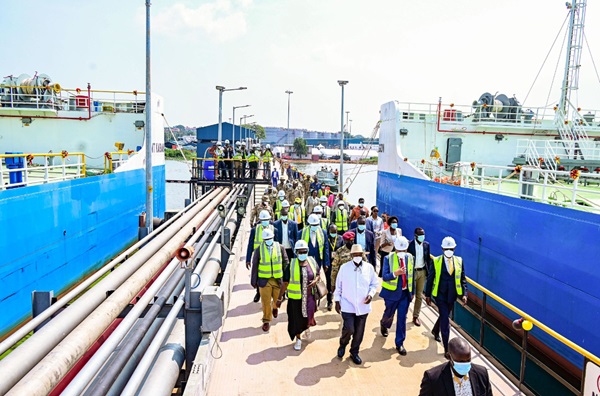
At the 2024 launch, Mukula thanked Museveni for supporting the project and credited the President with helping initiate the investment.
Mukula said the facility would reduce the cost of transporting fuel between Kisumu and Uganda and reduce the burden on roads.
The project was designed around the very model Museveni is now questioning: bringing imported fuel from Kisumu by lake tanker instead of relying entirely on trucks travelling from the Kenyan coast through Uganda.
The government had also presented the lake route as a way of cutting congestion, road damage and transport costs.
The Kawuku facility was funded by Mahathi Infra Services, Digimon Group and Africa Finance Corporation and has 70 million litres of storage capacity and two 4.5-million-litre tanker ships.
A project backed by government
The lake project was not simply a private commercial experiment.
In 2021, the government defended an arrangement giving Mahathi exclusive rights for barge transportation for a specified period, with officials saying the exclusivity was linked to the size of the investment required to build the terminal and acquire the vessels.
Mukula at the time defended the arrangement, saying the company needed an opportunity to recover its investment.
In 2024, Museveni personally launched the completed facility.
The Ministry of Energy also promoted the project as part of Uganda’s effort to diversify fuel supply routes.
Now Museveni wants pipelines and rail
At the new Kampala Storage Terminal, Museveni said Uganda’s future petroleum transportation system should be built around pipelines and railways.
He cited the 1,443-kilometre EACOP, which carries Uganda’s crude towards Tanzania, saying the pipeline was deliberately routed around Lake Victoria because putting it under the lake would be dangerous.
The President said the same principle should apply to refined petroleum products.
His remarks come as Uganda builds additional storage and develops plans to transport refined products from the planned Hoima refinery towards the Kampala storage terminal.
The new Mpigi facility is expected to hold 320 million litres, adding substantial strategic storage capacity to Uganda’s petroleum system.
But the lake facility is still there
There is an important unanswered question.
Museveni’s remarks do not, at this stage, amount to a formal announcement cancelling the Lake Victoria Logistics operation.
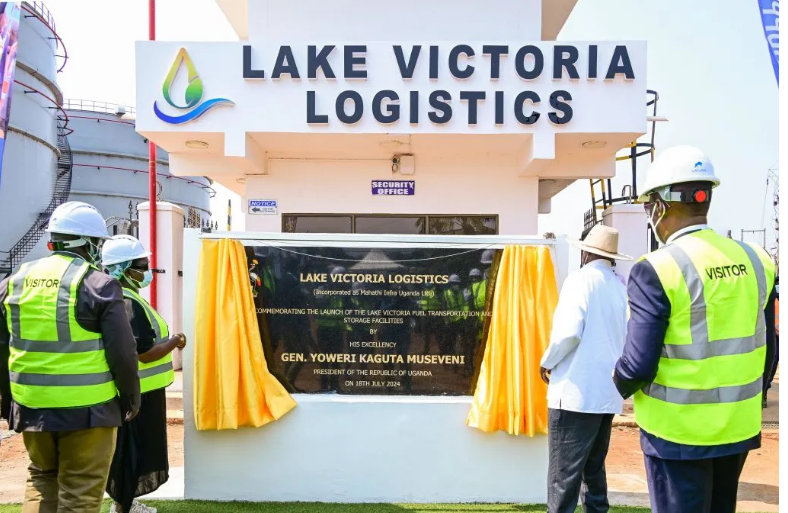
Indeed, Energy Minister Monica Musenero said at the Mpigi event that the government could in future explore connecting the Kampala terminal to the Mahathi inland facility, potentially providing another route for receiving petroleum products through Lake Victoria.
That leaves Uganda with two seemingly competing policy signals: continued investment in a lake-linked petroleum logistics system, alongside a presidential call to move petroleum through pipelines and railways rather than across Lake Victoria.
For Mukula’s Shs393 billion project, the question is therefore no longer simply how much fuel the tankers can carry.
It is whether the lake route that government once promoted will remain a central part of Uganda’s petroleum supply chain.
GOT A HOT STORY? LET US KNOW!
Got breaking news, explosive secrets, or hard evidence?
Email us: redpeppertips@gmail.com
We accept tips, documents, videos, photos, and recordings—the more evidence you have, the better.
CONFIDENTIALITY IS OUR TOP PRIORITY. SOURCES ARE ALWAYS PROTECTED!
About Post Author