Probe Unearth Rot Under Kala-Azar (PKDL) Vaccine Project at Makerere Funded by European Vaccine Initiative
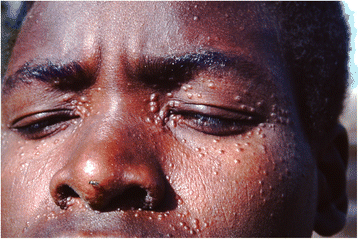
Visceral Leishmaniasis (also called kala-azar) is a deadly parasitic disease spread by sandflies, and Post-Kala-Azar Dermal Leishmaniasis (PKDL)
A major international research project at Makerere University aimed at developing a vaccine to prevent the deadly visceral leishmaniasis and post-kala-azar dermal leishmaniasis (PKDL) has come under scrutiny after the Auditor General flagged a series of financial management and accountability weaknesses spanning several years.
The findings, contained in the Auditor General’s reports covering the PREV-PKDL Project from the financial year ended March 31, 2019 to March 31, 2025, reveal recurring concerns ranging from poor absorption of funds and expenditure outside approved budgets to failure to deduct and remit withholding tax to the Uganda Revenue Authority (URA).
The PREV-PKDL project is an international research partnership implemented by Makerere University under the European Vaccine Initiative and funded through the European and Developing Countries Clinical Trials Partnership (EDCTP2) Programme. Running from April 1, 2018, the project seeks to advance the clinical development of the ChAd63-KH vaccine to prevent deadly visceral leishmaniasis and post-kala-azar dermal leishmaniasis, while strengthening research capacity across Uganda, Kenya, Ethiopia and Sudan.
However, despite its scientific ambitions, the Auditor General found a pattern of financial management issues that persisted across several reporting periods.
For the financial year ended March 31, 2019, the project had an approved budget of €203,671.42, approximately UGX 877 million. Of this, only €192,933.61, equivalent to about UGX 831 million, was available, leaving a funding deficit of €10,737.81, about UGX 46 million. More strikingly, only €40,301.79, approximately UGX 174 million, representing just 21 percent of the available funds, was spent. The remaining €152,631.82, about UGX 657 million, remained idle, leading to failure to implement planned project activities.
The audit for the year ended March 31, 2020 showed that although the project had an approved budget of €93,921.42, approximately UGX 404 million, no funding was received because of the effects of the COVID-19 pandemic. Even so, auditors found that project management paid suppliers €5,912.43, about UGX 25.5 million, without deducting and remitting the required six percent withholding tax to URA amounting to €354.75, approximately UGX 1.5 million.
For the year ended March 31, 2021, the project had an approved budget of €116,490.66, approximately UGX 502 million. However, only €86,826.40, roughly UGX 374 million, was received, leaving a funding deficit of €29,664.26, equivalent to about UGX 128 million, representing only 75 percent funding performance. The Auditor General also found that the project spent €708.43, approximately UGX 3 million, on activities that had not been provided for in the approved budget.
The following year presented a different scenario. During the financial year ended March 31, 2022, the project had an approved budget of €63,740.66, approximately UGX 275 million, but received €97,932.78, equivalent to about UGX 422 million, resulting in a surplus of €34,192.12, roughly UGX 147 million, representing 154 percent funding performance.
The trend continued in the financial year ended March 31, 2023. Although the approved budget remained €63,740.66, approximately UGX 275 million, available funding rose to €142,955.22, equivalent to around UGX 616 million, creating a surplus of €79,214.56, about UGX 341 million, representing 224 percent funding performance. Despite receiving more than double the approved budget, the project spent only €72,837.90, approximately UGX 314 million, leaving €70,117.32, roughly UGX 302 million, unspent. The Auditor General noted that this translated into an absorption level of just 51 percent.
The audit for the year ended March 31, 2024 did not identify any reportable issues.
However, fresh concerns resurfaced in the financial year ended March 31, 2025. Auditors found that the project spent €54,501.65, approximately UGX 235 million, without any budget provision. They also established that although only €52,401.18, about UGX 226 million, had been budgeted for salaries, project management spent €76,465.03, approximately UGX 329 million, leading to excess expenditure of €24,063.85, about UGX 104 million, representing 46 percent above the approved salary budget.
The Auditor General further found that project management paid €3,618.97, approximately UGX 15.6 million, to a supplier without deducting the mandatory six percent withholding tax amounting to €234.90, approximately UGX 1 million.
The findings raise serious questions about financial discipline and budgetary compliance in the management of one of Makerere University’s internationally funded health research projects. While the project is expected to contribute to the development of a vaccine against one of the world’s neglected tropical diseases and strengthen research capacity across East Africa, the Auditor General’s report suggests that financial controls did not always keep pace with the project’s scientific goals.
The audit is likely to spark further questions over whether the weaknesses identified in the PREV-PKDL project were isolated or whether other donor-funded research projects implemented by Makerere University could also be grappling with similar shortcomings in budgeting, expenditure control, tax compliance and financial accountability.
GOT A HOT STORY? LET US KNOW!
Got breaking news, explosive secrets, or hard evidence?
Email us: redpeppertips@gmail.com
We accept tips, documents, videos, photos, and recordings—the more evidence you have, the better.
CONFIDENTIALITY IS OUR TOP PRIORITY. SOURCES ARE ALWAYS PROTECTED!
About Post Author