Ugandan Researchers Develop Model to Bridge Gap between Academia and Industry
Dr. Annabella Habinka Basaza-ejiri
A team of Ugandan researchers has developed an innovative communication model aimed at bridging the gap between academia and industry.
The model is a culmination of a year – long study titled “Tackling Youth Unemployment: Aligning University Training to Industry Skills Demand through a University-Industry Communication Model.”
Sponsored by Makerere University Research and Innovation Fund (MaKRIF), the groundbreaking project will lead to a dynamic web portal designed to enhance collaboration and improve employment outcomes for graduates.
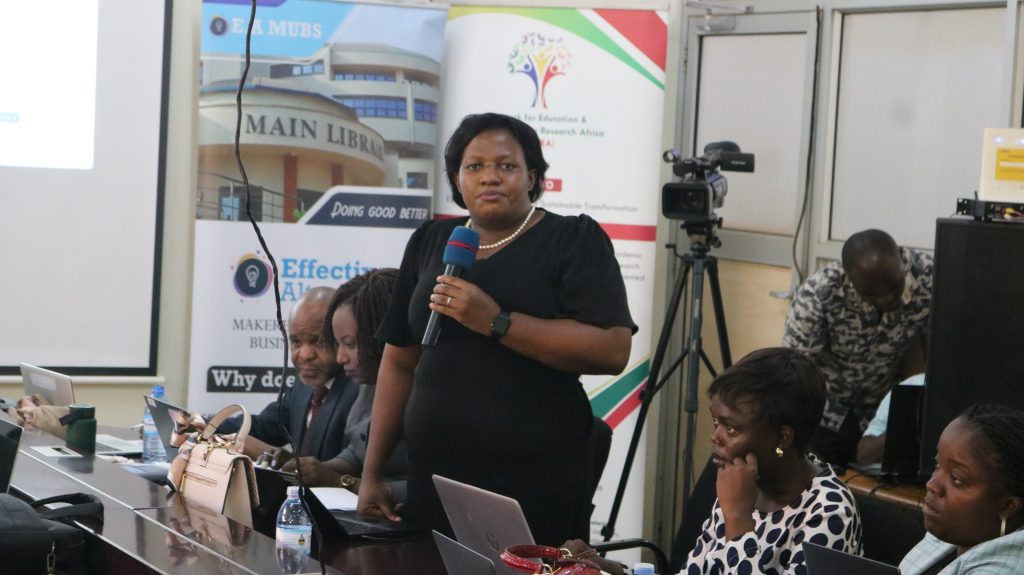
During the presentation of findings at Makerere University Business School on Wednesday, the Principle Investigator, Dr. Annabella Habinka Basaza-ejiri, said the study was in response to the alarming rates of graduate unemployment and the growing skills mismatch between university training and industry needs.
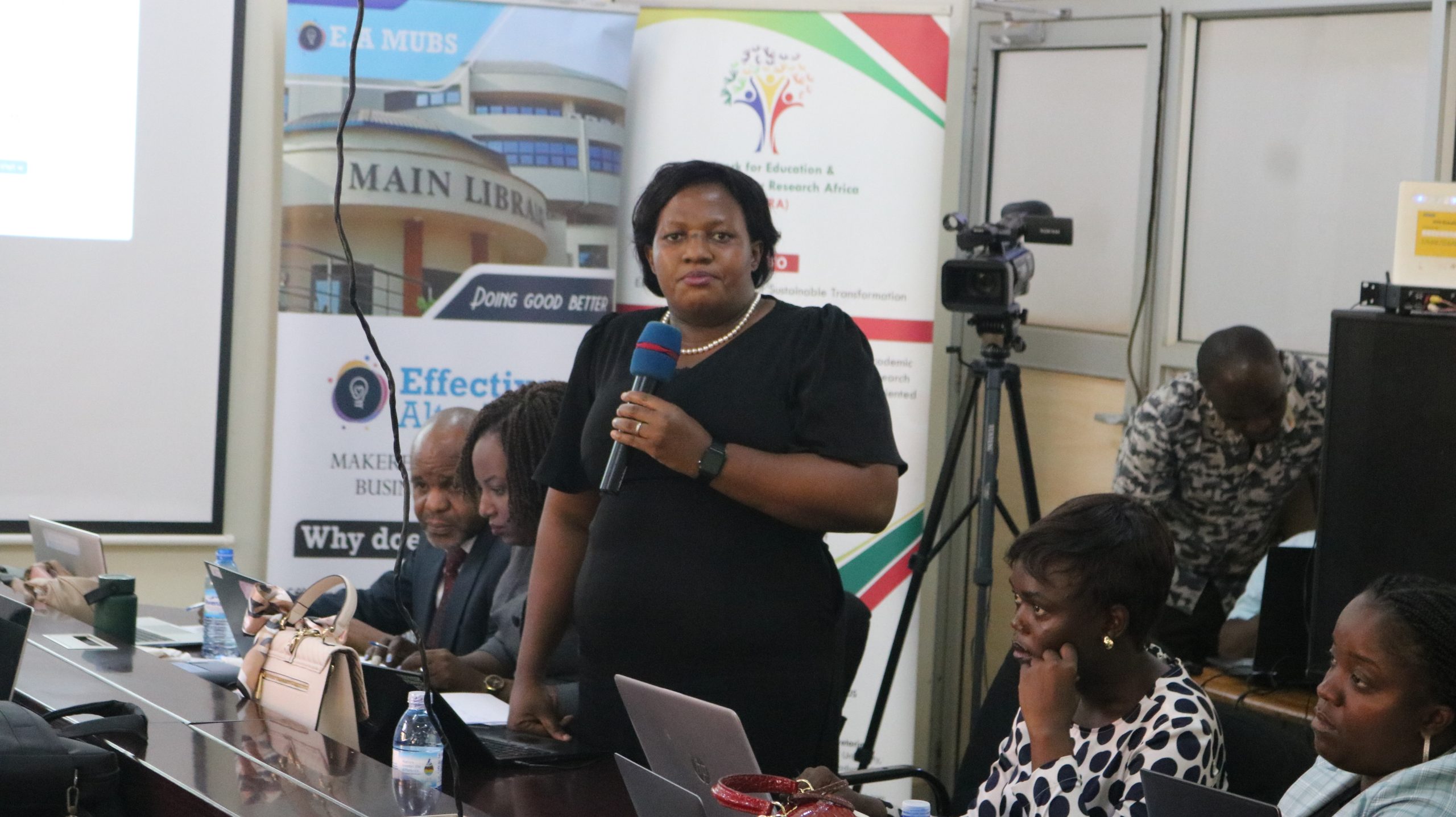
The dissemination workshop held under the theme “Harnessing Information and Communication Technology to drive development,” also aimed to validate the field findings to inform requirements for the model that has been designed into an integrated University-Industry Collaboration solution tailored to the identified needs and gaps.
The objectives of the study were to; Conduct a comprehensive baseline survey to ascertain current and anticipated industry needs and university curriculum development processes; Analyze existing local and international collaborations between academia and industry; Design an integrated University-Industry Communication model tailored to identified needs and gaps and, finally, Implement the communication model by initiating a pilot phase within selected university departments and industries.
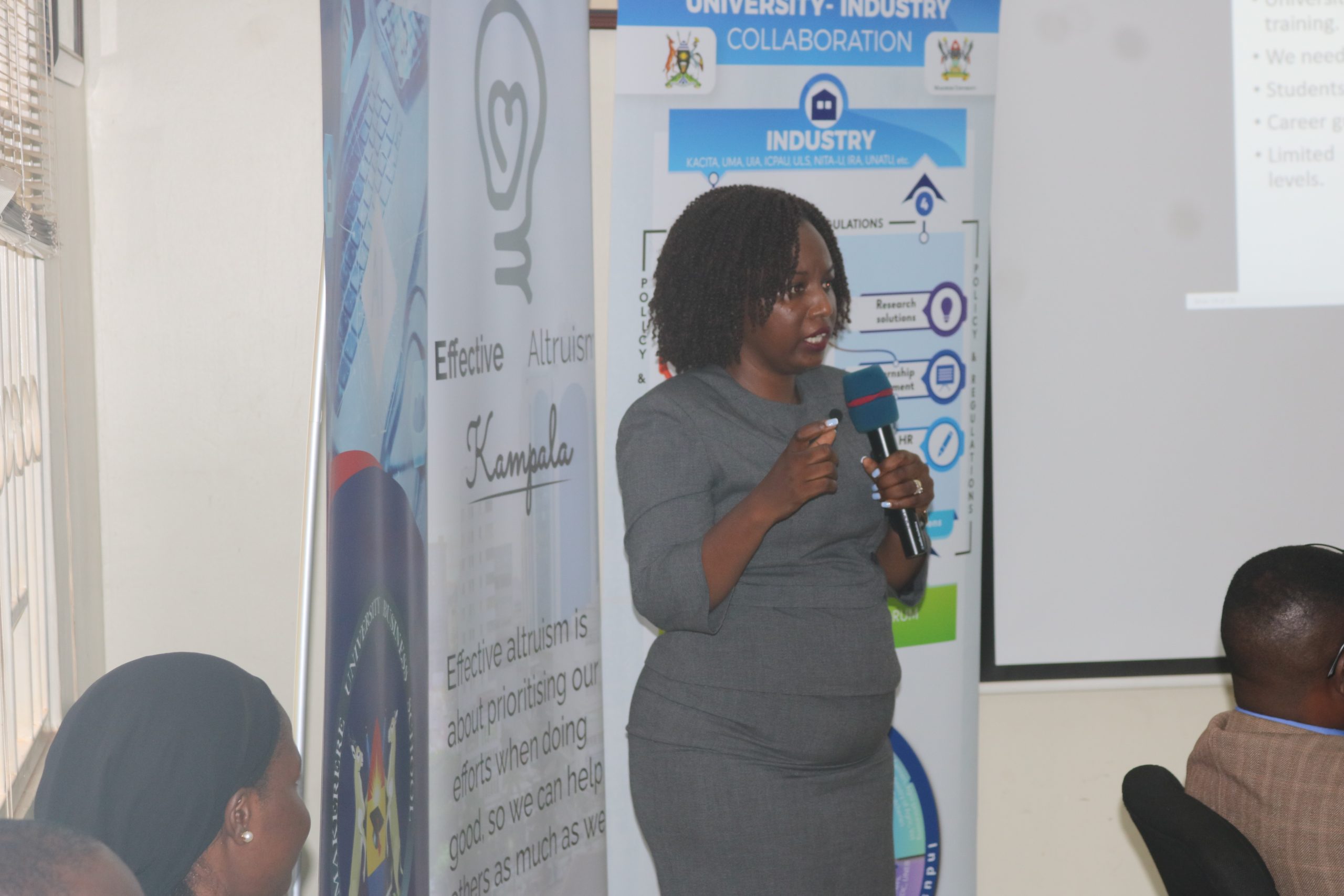
Presenting the findings, the Co- Principal Investigator, Ms. Barbara Kayondo said the study project used a design science research method and a mix of different research techniques to create the platform. She added that the researchers collected data from 400 respondents across five districts—Kampala, Wakiso, Jinja, Mbale, and Mityana. More data was captured from agricultural farms, hotels, the National Council for Higher Education, Uganda Manufacturers Association, National Planning Authority, and various ministries.
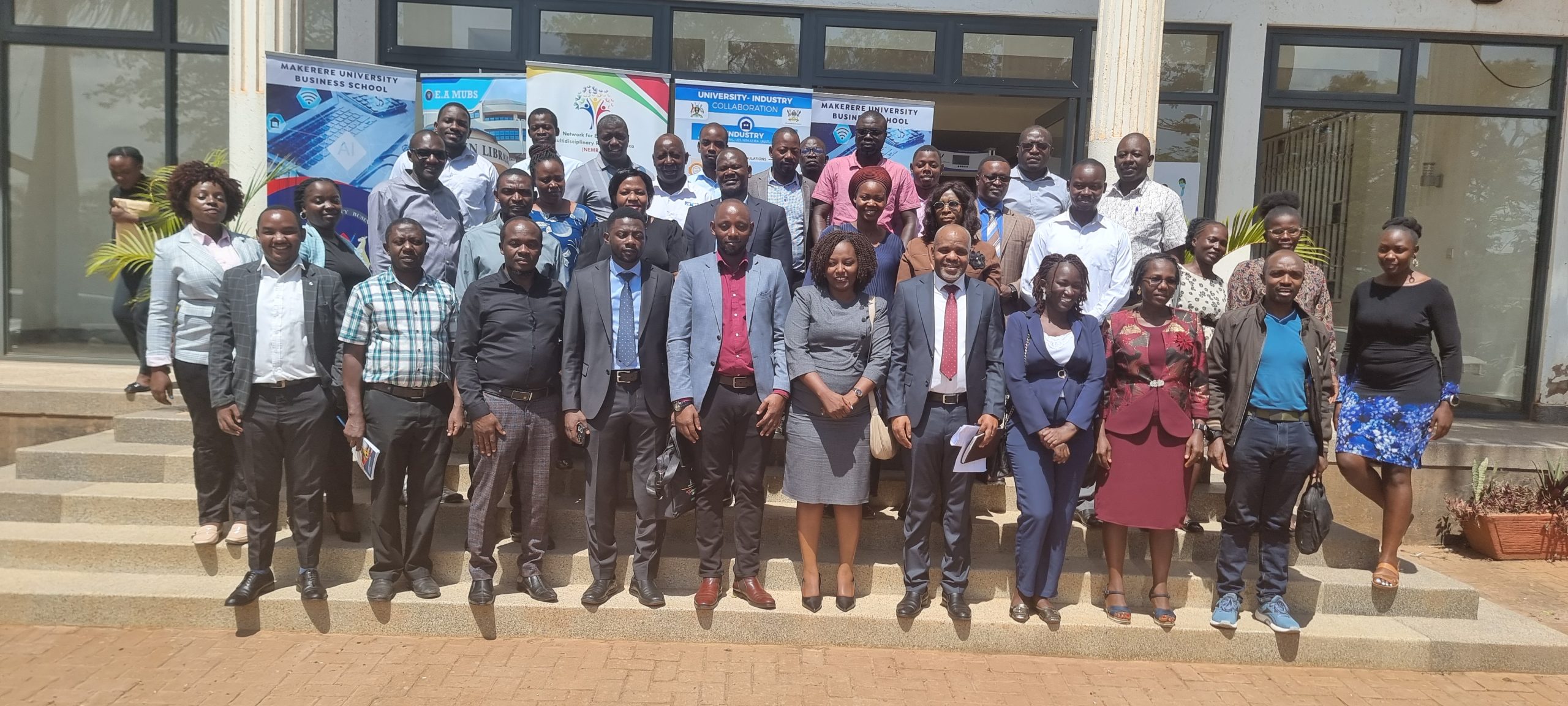
“Respondents included university students, lecturers, department heads, CEOs, HR managers, and district officials,” revealed Ms. Kayondo during her presentation that was attended by various stakeholders including scholars from Makerere University Business School.
Findings indicate that University-Industry Collaborations (UICs) take various forms, including joint research projects, technology transfer offices, innovation hubs, contract research, cooperative education programs, and public-private partnerships.
However, significant gaps have been identified in these engagements with employers highlighting the high demand for practical, hands-on skills, the need for a balance between theoretical knowledge and practical training, and the lack of effective collaboration between universities and industries.
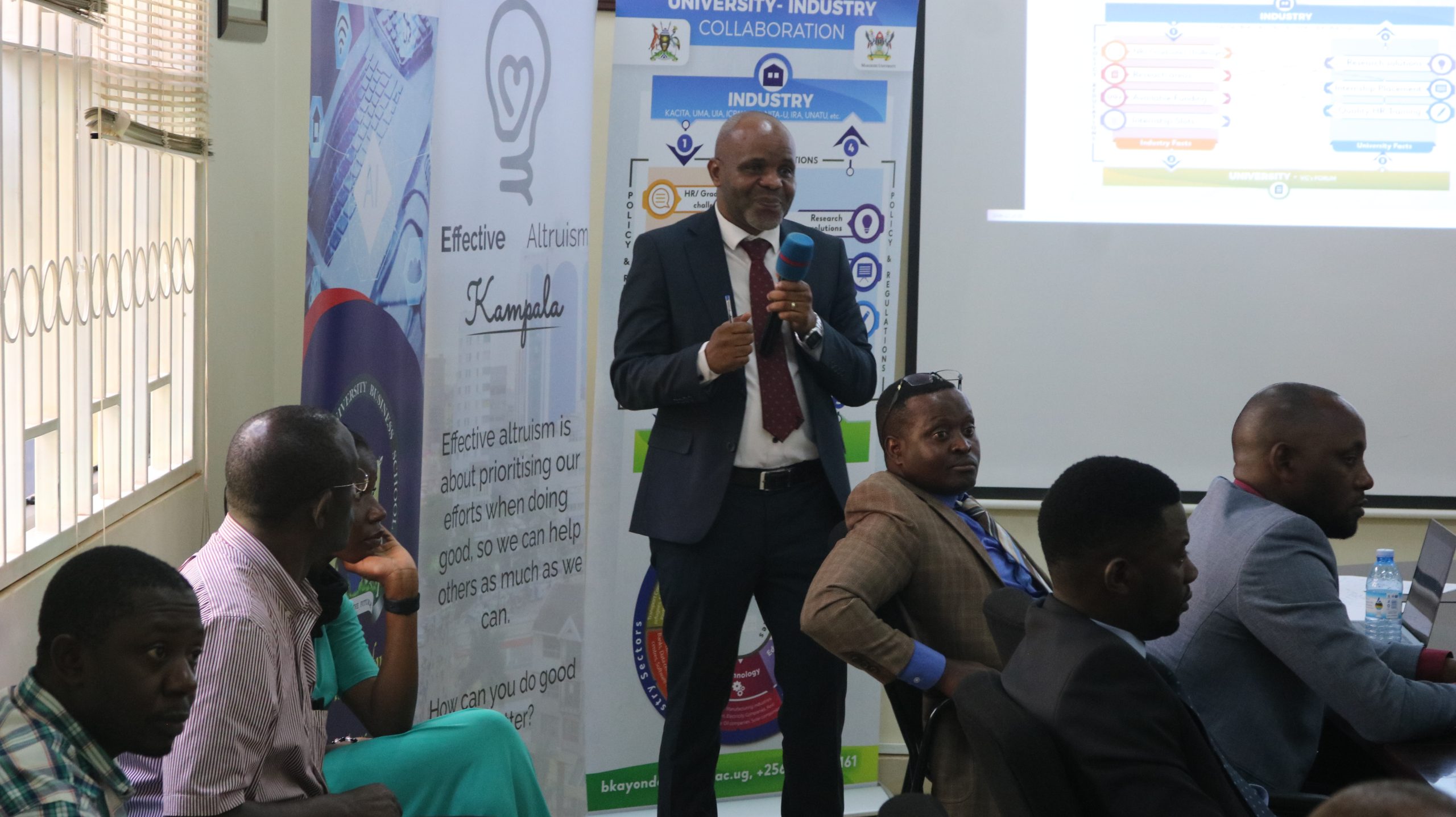
Other findings include inadequate career guidance, limited data on collaborations, money-minded rather than skill-focused students, and poor grooming and mentoring of youth. Additionally, students struggle to secure and fund internships, and universities often fail to disseminate research findings to industry.
More findings from the National Council for Higher Education (NCHE) and the National Planning Authority (NPA) indicate the need for conducting needs analysis with industry, and benchmarking with other institutions with the aim of developing programs that fully address industry needs, highlighting the necessity for a technology-supported collaboration model.
Using the example of existing collaborations between universities and industry, such as partnerships between the University of Cape Town and Sasol, Strathmore University and IBM, and Makerere University and Google, the researchers proposed a University-Industry Collaboration model that roots for industry to drive university activities by providing feedback, research areas, funding, and internship opportunities.
Key Features of the model
The model will be implemented through a dynamic web portal, where the platform will serve as a comprehensive repository that consolidates the needs of both academia and industry. It will thus inform training curricula, program design, research agendas, funding opportunities, and the identification of skills gaps.
Additionally, the platform will facilitate collaborative research opportunities, enabling stakeholders to propose, fund, and manage joint projects.
It will further enable real-time communication features, such as discussion forums and chat tools, ensuring seamless interaction among users.
An integrated events calendar will keep stakeholders updated on relevant conferences, exhibitions, and workshops. Advanced data analytics and reporting tools will provide actionable insights, measuring the impact of collaboration efforts and guiding continuous improvement.
Significant National Relevance
This innovative model aligns with strategic national blueprints such as Uganda’s third National Development Plan (NDP III) and the National Resistance Movement’s (NRM) manifesto. The project’s goal is to reduce youth unemployment to 5% by 2025 and foster human capital that meets industry standards. The initiative also supports the Sustainable Development Goals (SDG), particularly quality education (Goal 4) and sustainable economic growth (Goal 8), and aligns with Uganda Vision 2040’s ambition to increase formal sector employment to 50% by 2040.
The model is timely given the current youth unemployment rate in Uganda which stands at 16.5%, with graduate unemployment nearing an alarming 60%. Despite the nation’s surplus of university graduates, many are ill-prepared for the demands of the modern economic landscape.
Project Team
It is a consortium of researchers from 5 institutions; Makerere University, Makerere University Business School, National Planning Authority, National Curriculum Development Centre, and National Council for Higher Education.
| S/N | Name | Institution | Role |
| 1. | Dr. Annabella Habinka Basaza-ejiri | Makerere University College of Computing | Principal Investigator |
| 2. | Barbara Kayondo Naluwadda | Makerere University Business School | Co-Principal Investigator |
| 3. | Tuhame Moses | National Curriculum Development Centre | Project Coordinator |
| 4. | Dr. Hamis Mugendawala | National Planning Authority | Member |
| 5. | Dr. Onyait Godfrey | National Council for Higher Education | Member |
| 6. | Dr. Robert Muwanga | Makerere University Business School | Member |
About Post Author