BALAAM’S CORRUPTION TOUR! Documents Obtained By RedPepper Expose What Local Govt Minister May Have Missed In Kazo, Ibanda Water Projects Probe… Beneficiary List Emerges As Questions Raised Over Possible Incomplete Briefing To Barugahara
BY VENENSCIAS KIIZA
KAMPALA: Local Government Minister Balaam Barugahara may have been working with incomplete information during his recent investigations into alleged mismanagement of government water projects in western Uganda, with fresh documents from the Ministry of Water and Environment and Ibanda District revealing details that could significantly change the picture.
The documents, obtained by Red Pepper, provide a different account of the controversial Kanoni water project in Kazo and the Shs20.158bn Nyabuhikye-Kikyenkye water supply scheme in Ibanda.
They raise questions about the figures quoted during the Minister’s inspections, the actual scope of the projects, their implementation timelines, funding arrangements, beneficiary payments and the number of households that have received water.
While Barugahara’s investigations brought attention to communities complaining about projects that have failed to deliver the expected services, the Ministry’s records suggest that some of the information presented to him may not have captured the full project history and implementation status.
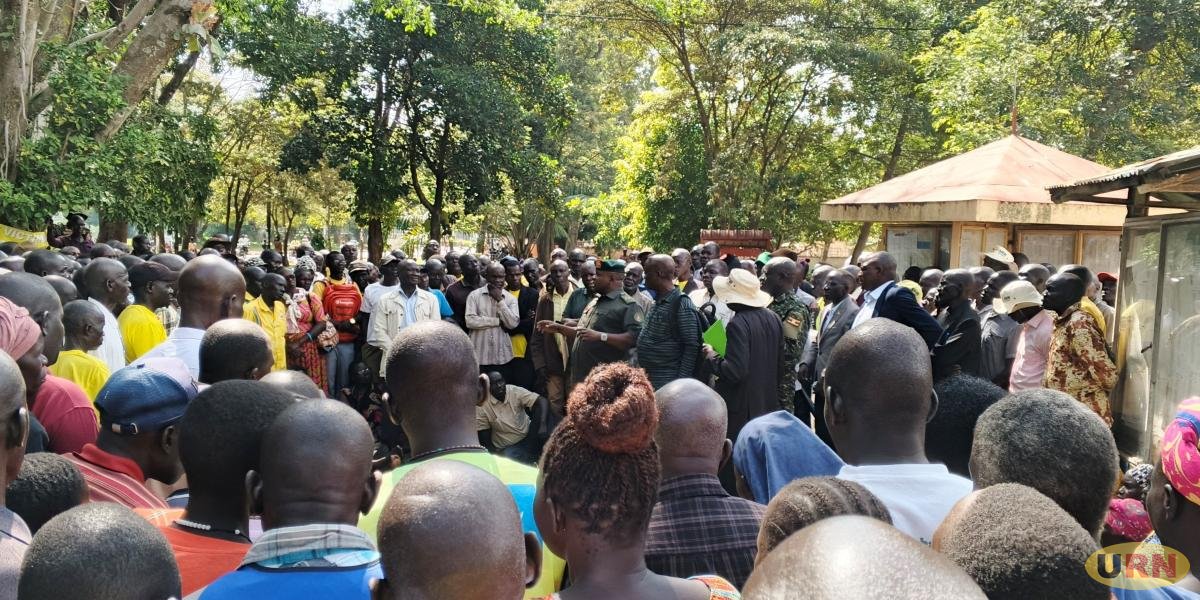
In Kazo, the Minister reportedly found that the Kanoni Sub-County water project had remained stalled for eight years after being commissioned by President Yoweri Museveni.
He also raised concerns about the Shs20bn Kicence-Keihangara-Igorora water supply scheme, which residents reportedly said had been completed in 2021, yet households were still struggling to access water.
During the investigations, an audit report was cited as having established that more than 400 residents had each paid Shs100,000 through Centenary Bank for water connections but had neither received the service nor been refunded.
However, the Ministry’s records now reveal additional information about the two projects, including the actual cost of the Kanoni reservoir, the phased implementation arrangements and the reasons given for the delays.
The documents do not automatically clear anyone of responsibility. Instead, they provide additional leads that investigators must examine to establish whether public funds were properly utilised, whether beneficiaries received the services promised and whether the information presented to the Minister was complete.
KAZO: SHS20BN OR SHS579M?
One of the biggest disagreements concerns the amount reportedly spent on the Kanoni water project.
Following the concerns raised during Barugahara’s tour, the Ministry of Water and Environment issued a clarification disputing the suggestion that Shs20bn had been spent on constructing the Kanoni tank.
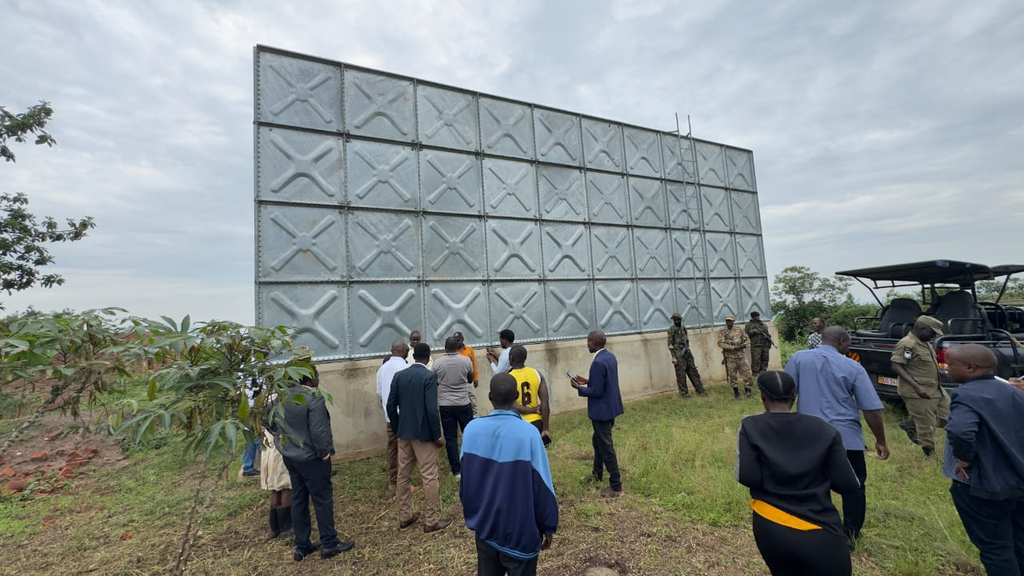
Eng. Ronald Katalo, explaining the Ministry’s position, said the Kanoni water works formed part of the wider Nyabuhikye-Kikyenkye water supply and sanitation system and were implemented in phases.
According to the Ministry, Phase I concentrated on laying gravity transmission mains from Kikyenkye to the Kanoni reservoir and constructing a 650-cubic-metre steel tank in Rwemigina Village, Kanoni Sub-county.
The Ministry put the cost of constructing the Kanoni reservoir, including site works, at Shs579,678,500.
This is substantially different from the Shs20bn figure reportedly cited during the Minister’s investigations.
The Ministry explained that the remaining distribution mains, system intensification and augmentation works were planned under Phase II, which was dependent on securing additional funding.
It said proposals had been prepared to obtain financing from the African Development Bank (AfDB) under the Water Supply and Sanitation Project III.
However, the approval and acquisition of the loan were beyond the Ministry’s control.
The Ministry maintained that Phase II would commence once the required funding was secured.
This raises an important distinction that may not have been fully explained during the Minister’s tour: the Shs579.6m was the cost of the Kanoni reservoir and its site works, while the wider Shs20.158bn contract related to the larger Nyabuhikye-Kikyenkye Phase I scheme in Ibanda.
IBANDA SHS20BN PROJECT: THE OTHER SIDE OF THE STORY
The Ibanda project has an even more complicated history.
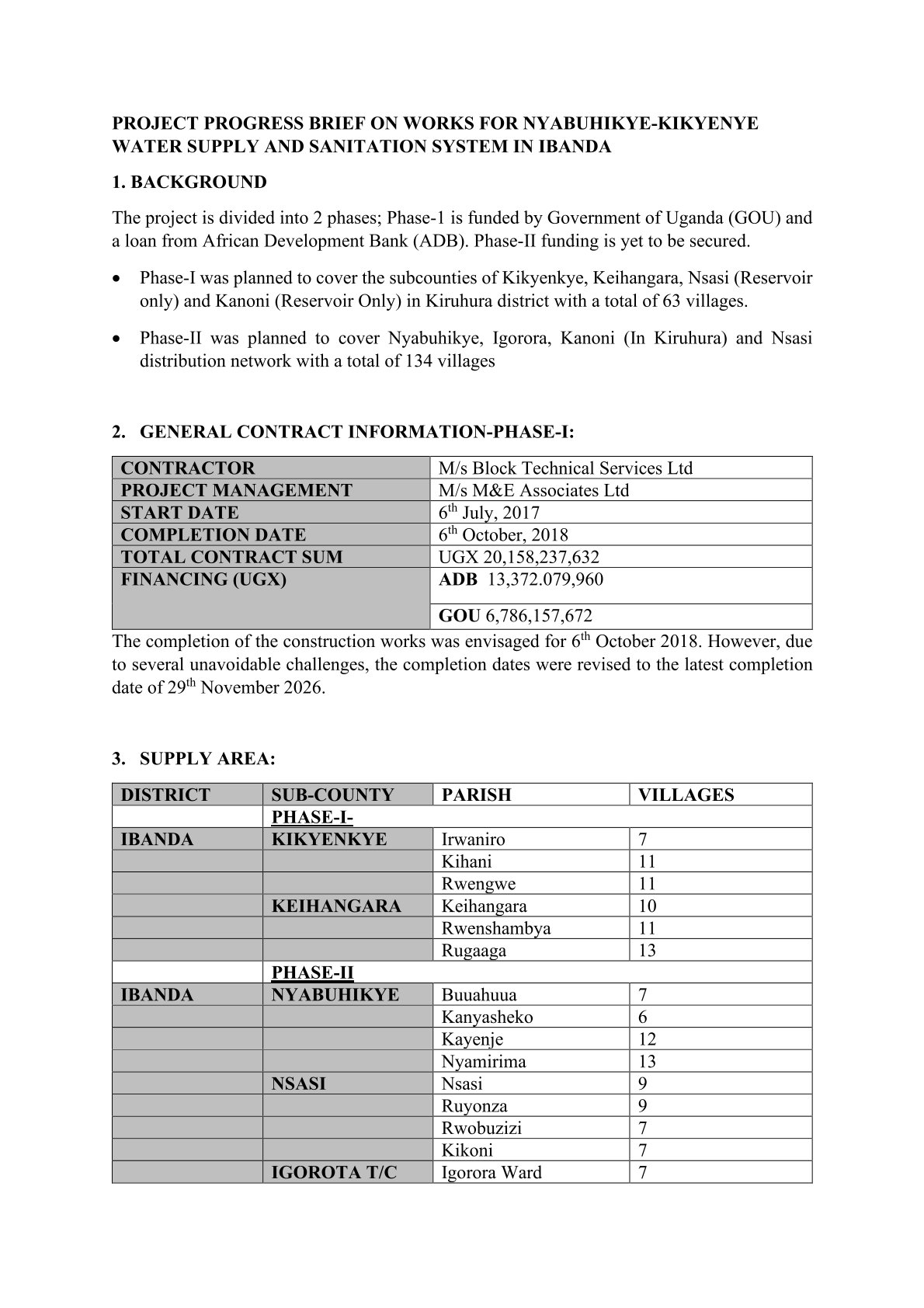
According to Ministry of Water records, the Nyabuhikye-Kikyenkye Gravity Flow Scheme was contracted to Block Technical Services Limited, with M&E Associates Limited serving as project management consultants.
The contract was signed on April 15, 2017, with construction commencing on July 6, 2017.
The original completion date was October 6, 2018, but the project experienced significant delays.
In a letter dated August 18, 2026, addressed to the Chief Administrative Officer of Ibanda District, the Ministry explained that implementation progressed until February 2019, when construction works stalled following disputes involving landlords and sections of the community.
According to the Ministry, landlords whose land was required for key project components disputed the compensation rates approved by the Chief Government Valuer, reportedly anticipating higher payments.
The disagreements escalated into confrontations, with some community members allegedly stopping the contractor’s staff from accessing project sites.
As a result, construction stagnated at 52 per cent for approximately two years, from February 2019 to April 2021.
The Ministry said it subsequently worked with Ibanda District Local Government to engage the aggrieved landlords and community members.
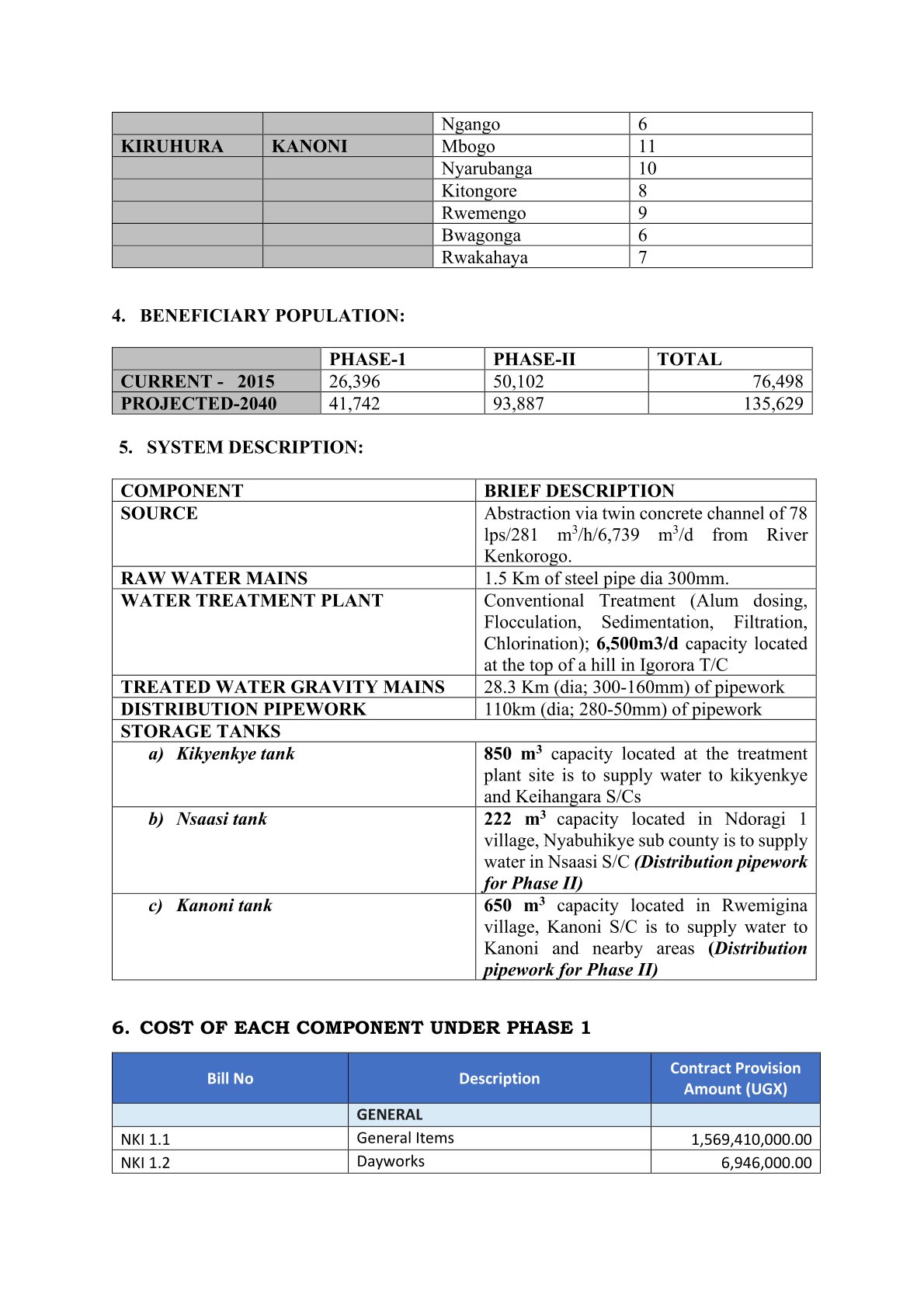
An amicable settlement was reportedly reached, allowing the contractor to resume work on August 15, 2021.
The Ministry says substantial progress was registered after the contractor returned to the sites.
This history is important because it challenges the impression that the entire project was simply completed in 2021 and abandoned without explanation.
860 PEOPLE PAID, ONLY 450 CONNECTED?
Perhaps the most sensitive issue concerns the money collected from residents who wanted household water connections.
In a letter dated August 12, 2026, Ibanda Chief Administrative Officer Kweyamba Ruhemba wrote to the Ministry’s Project Manager seeking clarification on the completion and operationalisation of the scheme.
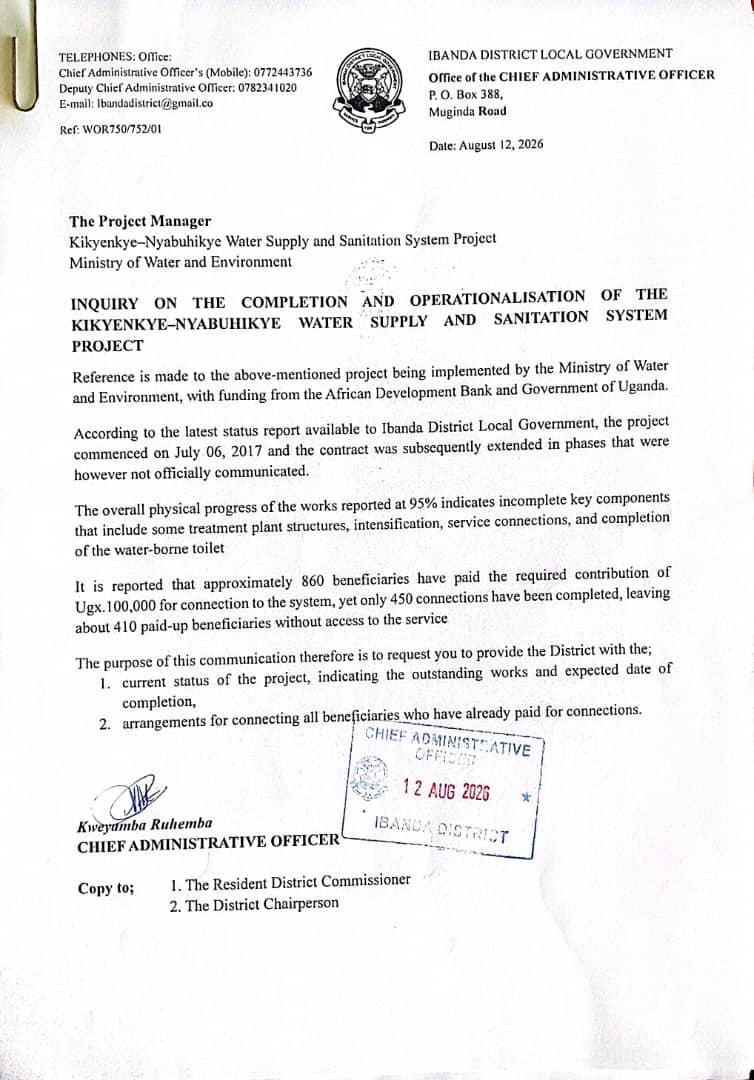
The CAO stated that approximately 860 beneficiaries had paid Shs100,000 each as their contribution towards household connections.
However, only approximately 450 connections had been completed, leaving about 410 paid-up beneficiaries without access to the service.
The district requested the Ministry to provide an updated project status, identify outstanding works and explain arrangements for connecting all beneficiaries who had already paid.
The figures suggest that approximately Shs86m could have been collected if all the 860 reported beneficiaries paid the required Shs100,000.
Of these, the first 450 connections account for approximately Shs45m, while the remaining 410 applications represent another Shs41m.
The Ministry’s subsequent August 18 response provided further details.
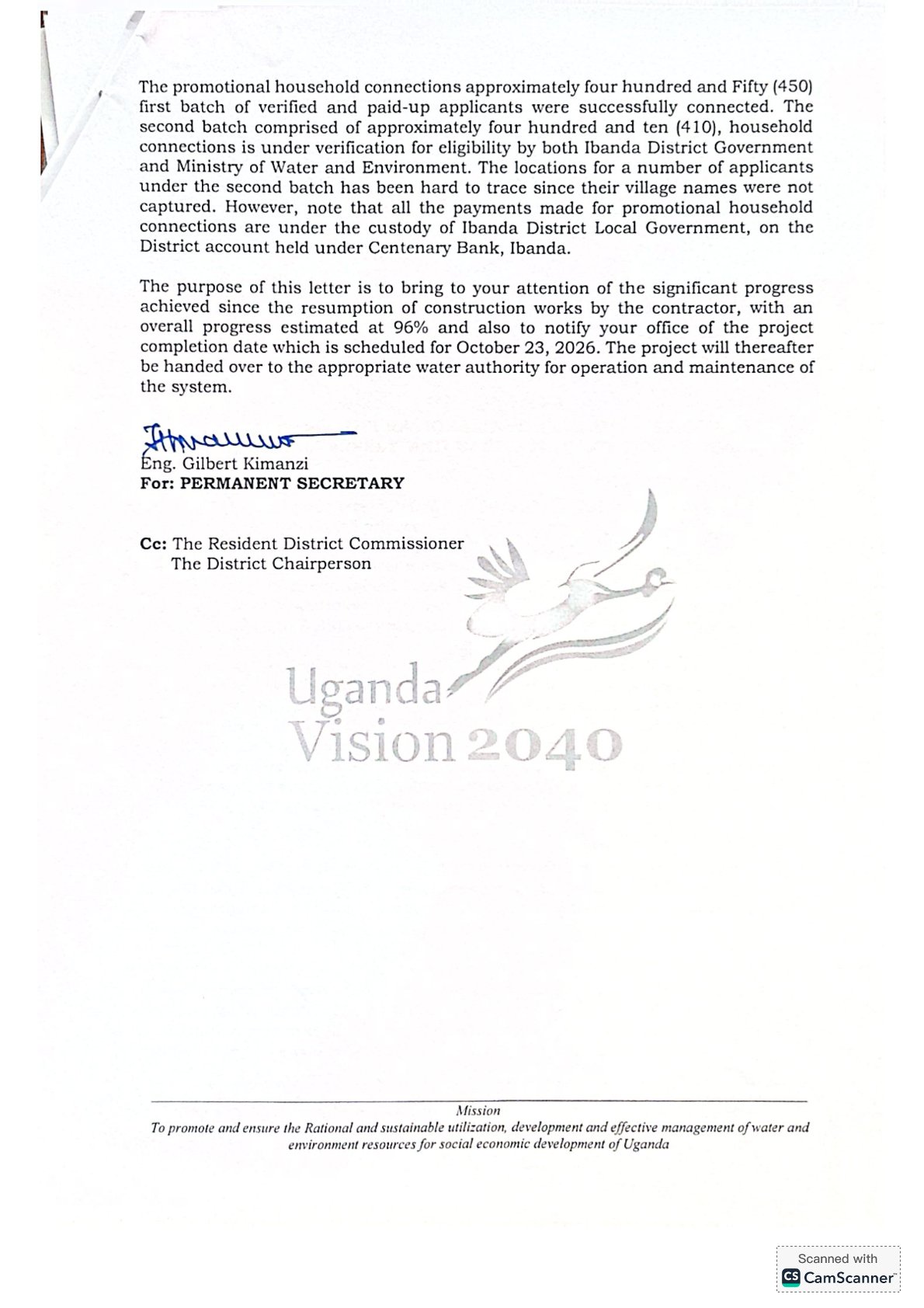
It said approximately 450 first-batch promotional household connections involving verified and paid-up applicants had successfully been completed.
The second batch, comprising approximately 410 applications, was undergoing eligibility verification by Ibanda District Local Government and the Ministry of Water.
The Ministry added that tracing some applicants had proved difficult because their village names had not been captured.
It also made a significant disclosure regarding the money.
“All the payments made for promotional household connections are under the custody of Ibanda District Local Government, on the District account held under Centenary Bank, Ibanda,” the Ministry stated.
This disclosure puts the district’s payment records at the centre of the investigation.
Investigators will need to establish the actual amount collected, the identities of the contributors, the dates of payment, the bank deposits and whether every eligible beneficiary was eventually connected.
They will also need to establish why some applicants could not be traced and whether the missing village particulars were caused by poor record-keeping or other administrative failures.
WATER WAS FLOWING, BUT WHAT ABOUT EVERY HOUSEHOLD?
In its August 18 letter, the Ministry reported that the raw water intake works had reached 100 per cent completion, while the water treatment plant was 96 per cent complete.
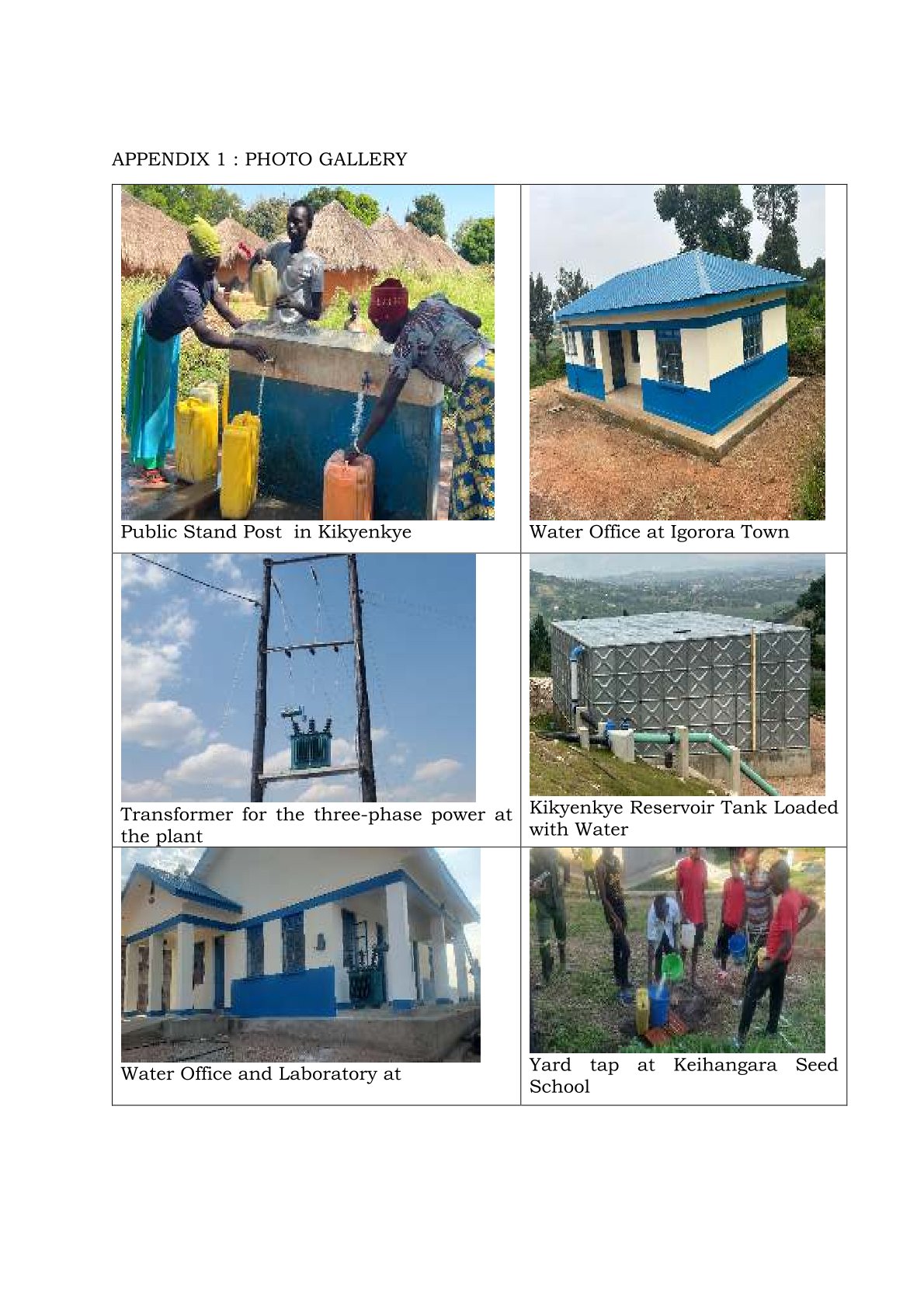
It further stated that the clear-water transmission and distribution networks for Kikyenkye and Keihangara were complete and water was flowing in the two sub-counties.
The Ministry estimated overall project progress at 96 per cent and informed Ibanda District that completion was scheduled for October 23, 2026.
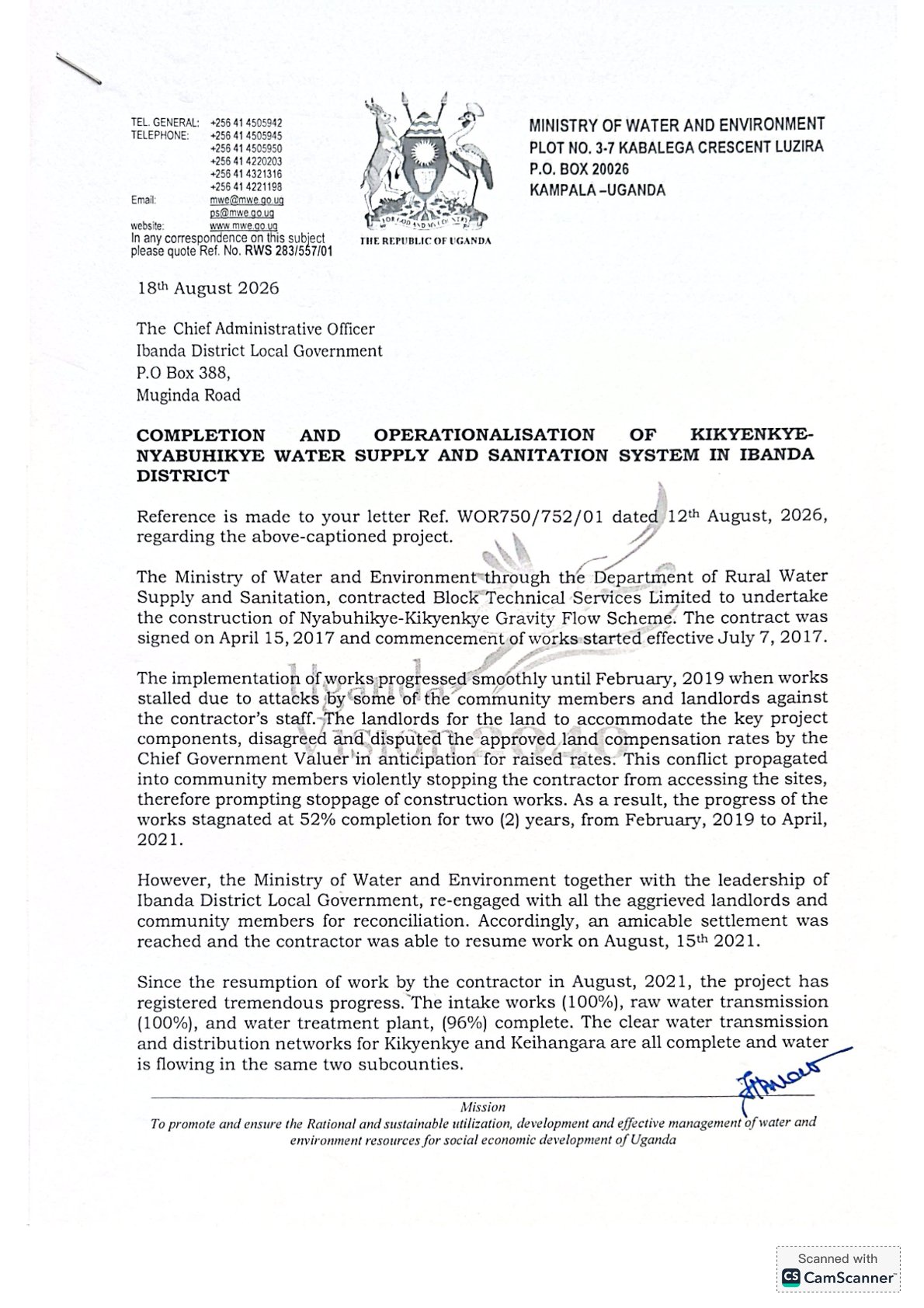
The Ministry’s broader project progress brief also contains figures indicating that reservoir tanks at Kikyenkye, Kanoni and Nsasi were 95 per cent complete, while 50.06 kilometres of distribution network and 29.01 kilometres of transmission mains were at 90 per cent completion.
The project also included a water treatment plant with a capacity of 6,500 cubic metres per day, a raw water intake from River Kenkorogo and extensive transmission and distribution infrastructure.
The planned storage facilities included an 850-cubic-metre Kikyenkye reservoir, a 222-cubic-metre Nsasi reservoir and a 650-cubic-metre Kanoni reservoir.
The Ministry’s records also list completed treatment facilities, including rapid mixing tanks, flocculators, sedimentation tanks, rapid gravity filters, chlorine contact facilities, clear-water storage, offices, laboratories and staff accommodation.
BENEFICIARY REGISTER: HUNDREDS OF NAMES EMERGE
The Ministry’s beneficiary register, containing 450 entries, provides investigators with another important source of evidence.
The register identifies households and institutions in different villages and parishes across Kikyenkye and Keihangara sub-counties.
In Kikyenkye, the recorded locations include Kihani, Sigirira, Rwengwe, Irwaniro, Nyakabungo, Makerere, Kajumbura, Karitutsi, Kaburo, Rwomuhoro and Kindadali.
Among the beneficiaries listed in Kihani are Maria Tibakanya, Maria Assumpta Nyabutono, Leonard Mwishikiatyo, Danyano Nkora, Naboth Tumusiime, Odomaro Byaruhanga, John Francis Nuwagaba, Marko Makabura, Adriano Niro and Longino Asimwe.
The Sigirira entries include Gilbert Twinobusigye, Alex Arinaitwe, Lawrence Tunanukye, Edward Kihika, Raymond Kweyamba, Julius Mwiine, Francis Bisheko, Gaston Ndisasirwa, Tadeo Batarigaya, Leonard Kamukama, Beatrice Keikangara, Moses Iswarira and Evalyne Nzakyagye.
In Rwengwe, the register lists Donanta Bashasha, Konsiri Tibayeita, Charles Mbahwireho, Fausta Bonabana, Nathan Barigye, Beatrice Kanazima, Rose Nyakahoza, Robert Mwesigye, John Mubangizi, David Besize, Milton Kamugisha, Gilbert Tuhimbise and Jamson Gumisiriza.
Other entries from Nyakabungo include Lando Ndyamuba, Stella Katushabe, Marius Byaruhize, Jovulet Keishanyu, Robert Besigize, Frednard Nuwakunda, Elena Kefurika, Milton Mwembebezi, Innocent Tumusime, Jane Komugisha and Matayo Turyomwe.
The Makerere entries include Isaac Kabyogamu, Vito Rwakyendera, Ludovico Tumihiase, Rose Nakunda, Charles Nahabwe, Julius Tumusime, Innocent Nakunda, John Katariwa and Julius Tumukunde.
In Irwaniro, the register includes David Tumuhimbise, Robert Mucunguzi, Jennifer Kyobutungi, Gerald Banyanga, Girevazio Katarikawe, Selegio Ndangoha, Teodoro Byomuhangi, Clesent Gadgongire, Aloysius Ahimbisibwe, Pritazio Byaruhanga and Edwin Turwahebwa.
In Keihangara, the recorded locations include Kebicori, Rwenshambya, Kaburo, Kakunama, Kisementi and Rwomuhoro.
Among the names listed in Kebicori are Samuel Rutasheka, Alex Mushabe, Deus Kanyomozi, David Buhaire, Ferdinand Kizza, Salimi Rwabaritega, Izidoro Kasisi, Ronald Musiime and Korodia Kyeibatenga.
Rwenshambya entries include Lawrence Bitariho, Anania Musolini, Oliva Tugabirwe, Thereza Nyagoma, Levicato Mwesigye, John Mwesigye, Oliva Vumira, Robert Mbirekye, Panilina Tusiime, Caroline Kenguto, Adrine Tugabirwe and Florence Mbabazi.
Other listed beneficiaries include Innocent Bagume, Levicato Rutakirwa, Jackson Tandeka, George Kamuntu, Agnes Kembabazi, Felix Kamugisha and Clare Kendagano.
The register also contains institutional entries, including Sigirira Catholic Church, Good Hope Junior School, Rwengwe Primary School, St Kizito Catholic Church, Rwenshambya Health Centre II, God’s Grace Primary School and Seventh Day Adventist Church.
PHASE II STILL WAITING FOR MONEY
Another important detail that may not have been fully explained during the Minister’s tour concerns Phase II of the wider water scheme.
While Phase I covered Kikyenkye and Keihangara, with reservoirs at Nsasi and Kanoni, Phase II was intended to extend the distribution network to Nyabuhikye, Igorora, Kanoni and Nsasi.
The planned second phase was designed to cover another 134 villages.
However, the Ministry’s records indicate that Phase II funding had not yet been secured.
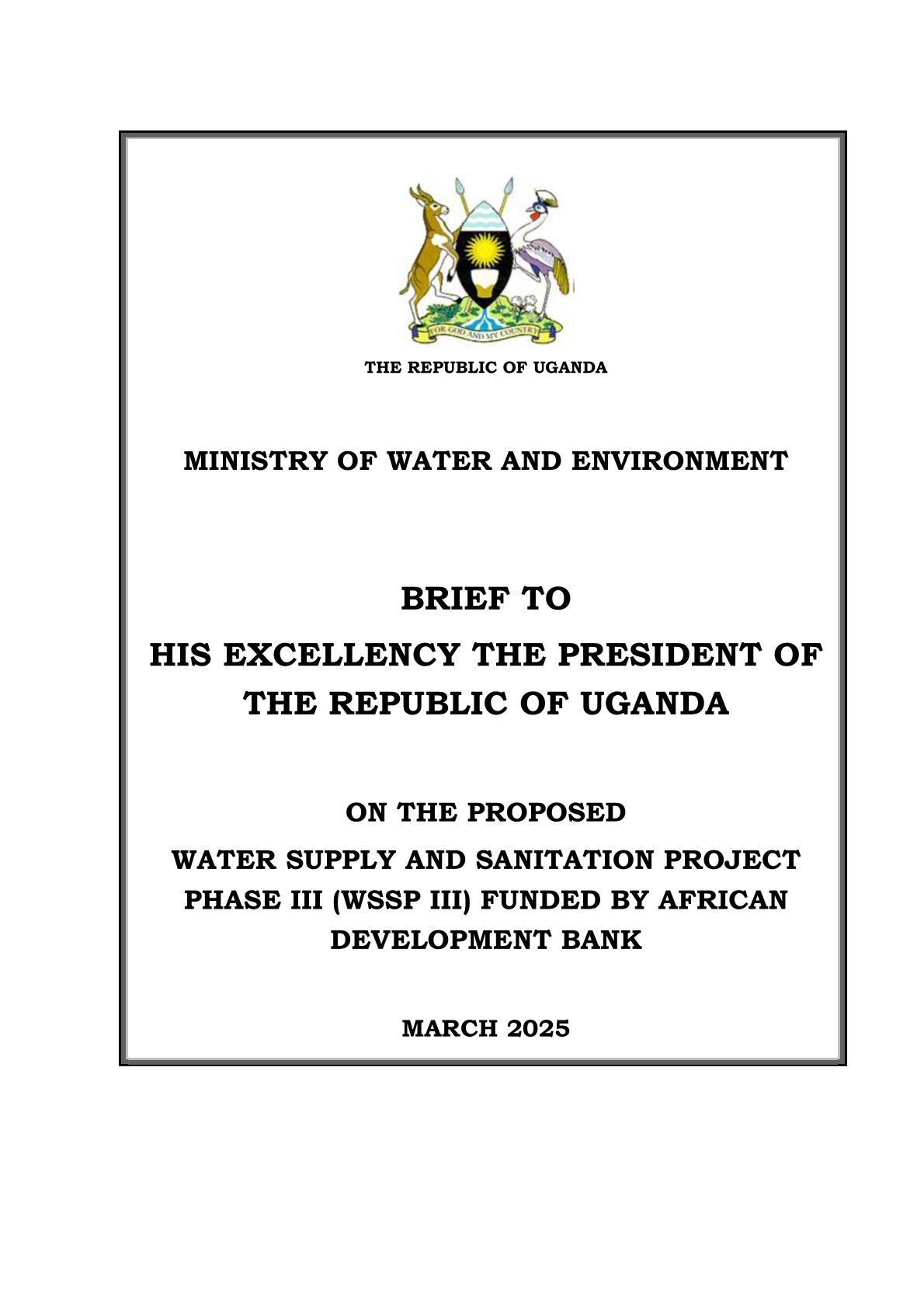
A March 2025 brief to President Museveni on the proposed Water Supply and Sanitation Project Phase III, funded by the African Development Bank, sought government support towards financing the programme.
The Ministry said it had prepared proposals seeking a loan of UA61m from the African Development Bank, alongside government counterpart funding.
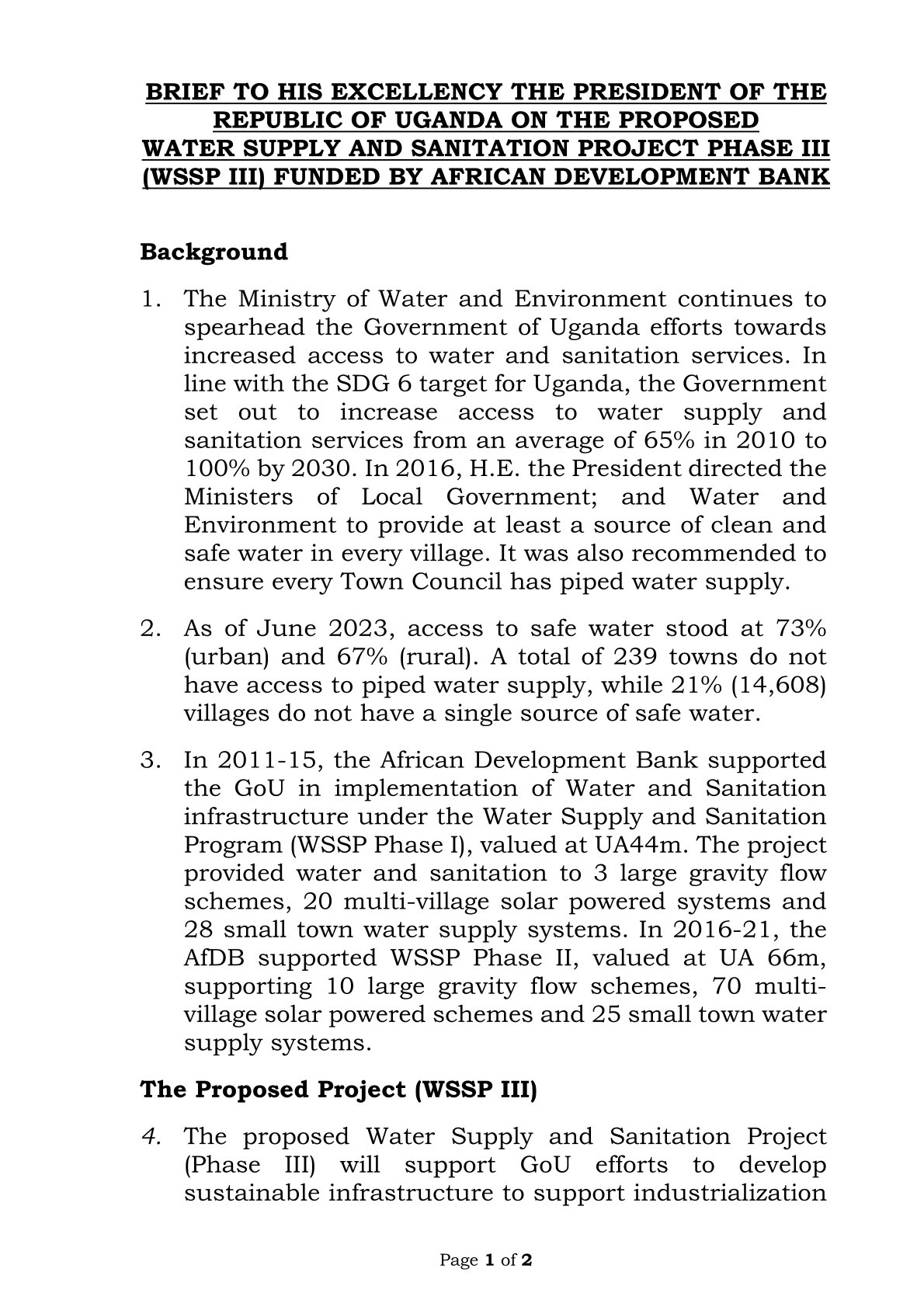
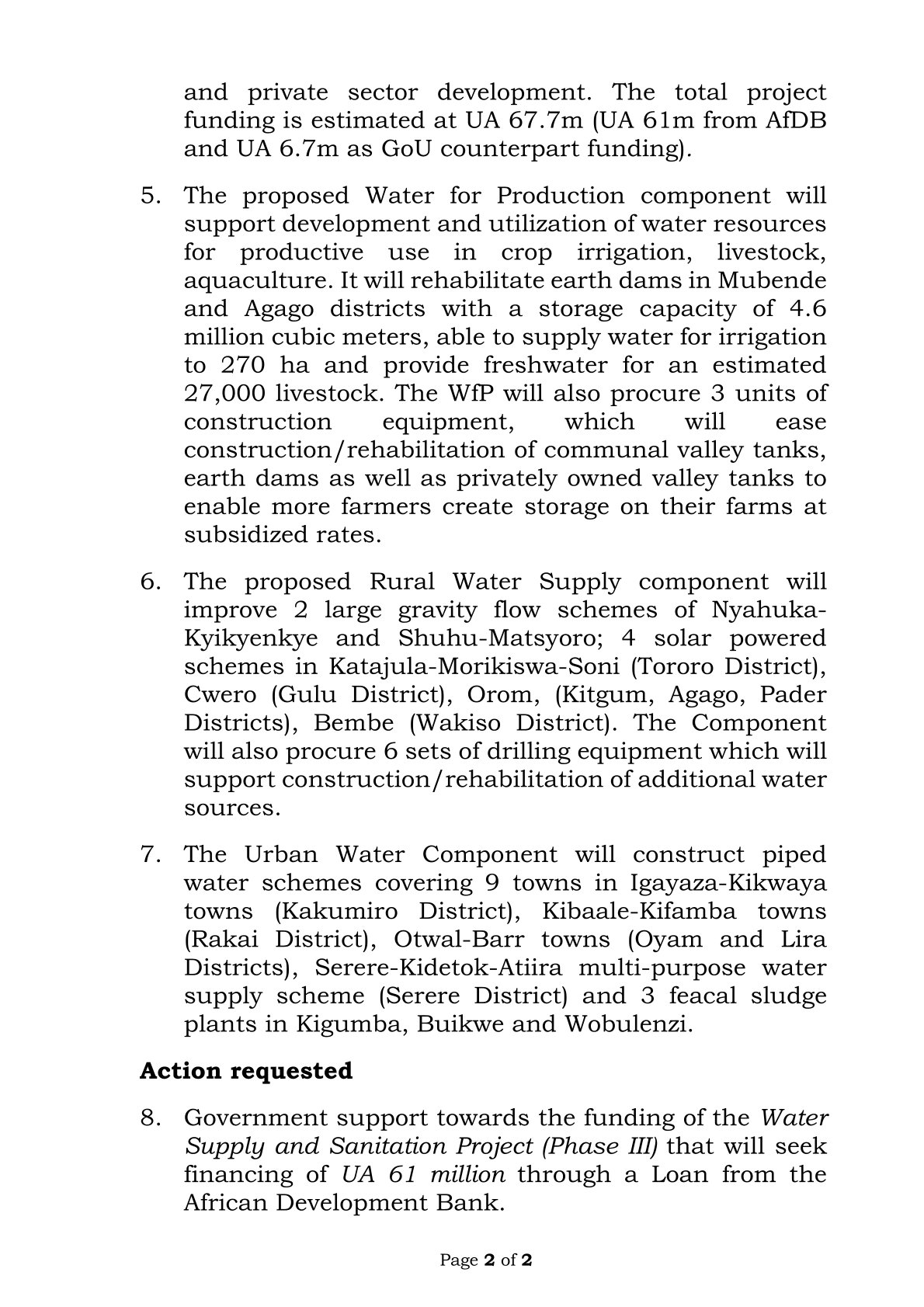
The proposed programme was intended to support several water supply and sanitation interventions across the country.
The Ministry’s report says it submitted the Ibanda Phase II funding proposal to President Museveni through the Minister of State for Water in March 2025 and was awaiting guidance.
This means that while some communities may have expected the wider scheme to serve them, the distribution network for the second phase remained dependent on securing funding.
BALAAM MAY HAVE MISSED PART OF THE STORY
The documents now provide several lines of inquiry beyond the initial allegations raised during Barugahara’s visit.
The emerging documents suggest that the Minister’s investigations may have relied on only part of the available information about the two water schemes.
While residents’ complaints about delayed water access, unpaid-for connections and stalled infrastructure deserve attention, the Ministry’s records show a more detailed history involving phased implementation, land disputes, funding constraints, completed infrastructure and beneficiary payments.
The information does not mean that all allegations have been disproved.
Neither does it establish that every government official, contractor or district administrator acted properly.
Instead, it gives investigators additional evidence to test the competing accounts.
GOT A HOT STORY? BLOW THE WHISTLE!
Have breaking news, explosive revelations, juicy leads or evidence of wrongdoing?
WE WANT TO HEAR FROM YOU!
Send your tips, documents, videos, photos and audio recordings to:
redpeppertips@gmail.com
Whether it’s corruption, scandals, abuse of office, injustice or stories others are afraid to tell, help us bring the truth to light.
SOURCES ARE PROTECTED.
CONFIDENTIALITY IS OUR NO.1 PRIORITY!
About Post Author