NAROVAC VACCINE MYSTERY! M7 Unveiled Wonder Tick Killer, But Farmers are Now Cursing NARO As They Can’t Find It… Questions Mount: White Elephant, Who’s Sleeping On The Job As Rollout Stalls?
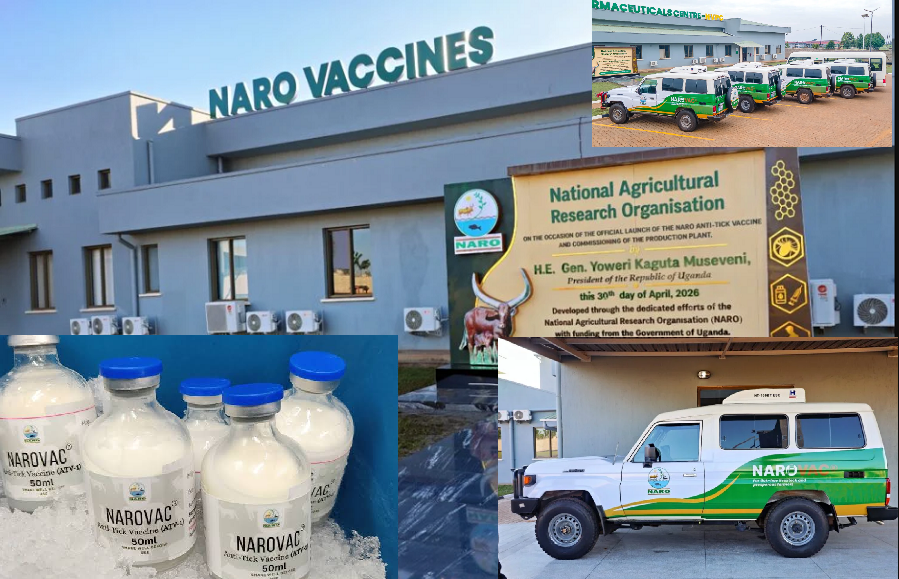
KAMPALA – Livestock farmers are growing increasingly frustrated with the National Agricultural Research Organisation (NARO) over delays in making the much-publicised locally developed anti-tick vaccine available, months after President Yoweri Kaguta Museveni unveiled the scientific breakthrough.
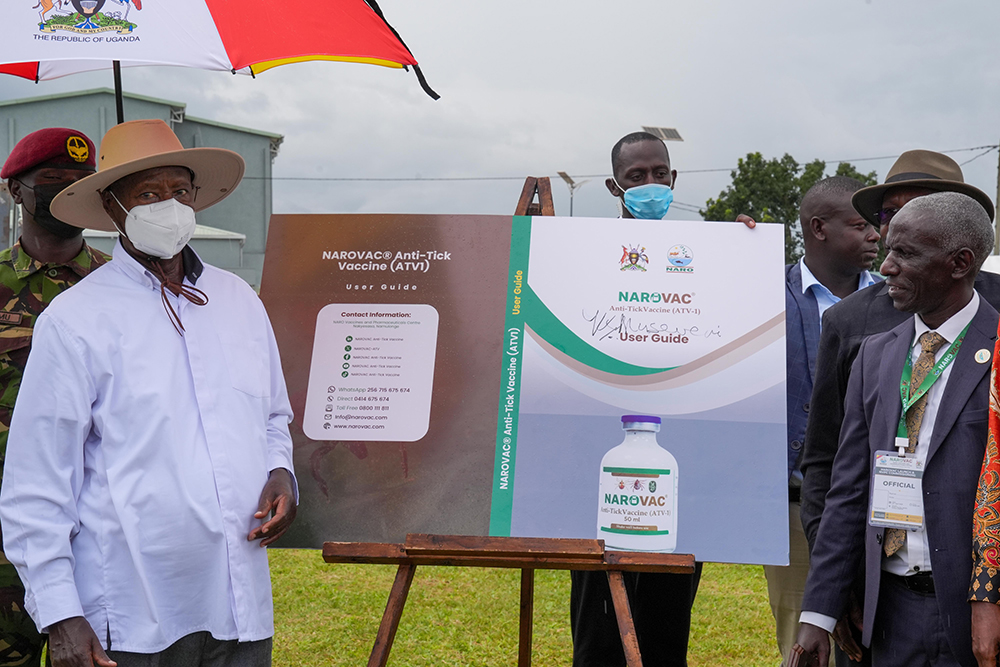
The vaccine, christened NAROVAC-ATV1, was unveiled by Museveni in April this year at the National Livestock Resources Research Institute (NaLIRRI) in Namulonge, Wakiso District, following years of research by Ugandan scientists.
At the launch, the President hailed the innovation as a major breakthrough in the fight against tick-borne diseases, which have for decades inflicted heavy losses on cattle farmers.
Museveni famously declared: “The cow now kills the tick.”
The vaccine was presented as a game-changer that would reduce farmers’ dependence on toxic chemical acaricides, which have increasingly become expensive and less effective because of tick resistance.
NARO also indicated that each dose would cost approximately Shs10,000, raising hopes among livestock farmers that they would finally have an affordable locally developed solution to their persistent tick problem.
However, months after the presidential unveiling, farmers, particularly in the Ankole and Teso sub-regions, say they are still waiting to access the vaccine.
“We saw the launch, but we have been waiting for the vaccine in vain,” one frustrated herder said.
The delay has raised questions about the gap between Uganda’s investment in agricultural research and the actual delivery of innovations to the farmers who need them.
For cattle keepers battling tick infestations and tick-borne diseases, the presidential unveiling had raised expectations that the vaccine would soon be available through veterinary outlets and district animal health services.
Instead, insiders at NARO is now explaining that the vaccine is yet to receive final regulatory market authorisation from the National Drug Authority (NDA), alongside Good Manufacturing Practice (cGMP) certification.
The organisation has also cited working capital constraints as another major obstacle to expanding production and making the vaccine widely available.
SHS108BN FUNDING GAP
The financial challenge facing the vaccine rollout emerged during an engagement between NARO officials and Members of Parliament, where researchers disclosed that the organisation requires Shs108bn in annual working capital to operate its anti-tick vaccine manufacturing facility at full capacity.
Dr Swidiq Mugerwa, NARO Deputy Director General in charge of Research, told legislators that although Government had supported the establishment of the manufacturing facility, additional resources were needed to sustain production.
“Through support from the Government, NARO has been able to establish the anti-tick vaccine facility. However, for us to be able to operate at full capacity and give this country the 48 million doses annually, we need working capital of Shs108 billion,” Mugerwa told MPs.
The revelation raises questions about how the country will move from celebrating the scientific breakthrough to ensuring that farmers can actually purchase and administer the vaccine.
NARO says the manufacturing facility at its Nakyesasa research station has an installed capacity of 48 million doses annually.
However, the organisation says the Shs40bn allocated to it for the 2027/2028 financial year would only support production of approximately 10 million doses.
This leaves a significant gap between the available financing and the resources required to run the facility at full capacity.
80 MILLION DOSES NEEDED!
The production challenge is further complicated by Uganda’s livestock population and the vaccination schedule required during the first year.
Prof. Justus Rutaisire, NARO Research Director, estimates that Uganda has approximately 16 million cattle, 17 million goats and 4.4 million sheep.

According to Rutaisire, each animal requires three doses during the first year of vaccination: an initial dose, a booster after 30 days and another booster after six months.
This means the cattle population alone would require approximately 48 million doses during the first year.
When goats and sheep are included, the national requirement rises to approximately 80 million doses.
Yet the facility’s installed annual production capacity stands at 48 million doses, even before considering the financial limitations affecting actual output.
Rutaisire said NARO had nevertheless improved the facility’s production efficiency from an initial capacity of 20 million doses to the current 48 million annually through scientific innovations and optimisation of manufacturing processes.
He added that researchers had been working extended hours, including overnight shifts, to increase output.
The figures expose the enormous task facing NARO as it attempts to transform a research breakthrough into a nationwide livestock vaccination programme.
FARMERS STILL DEPEND ON ACARICIDES
The delay comes at a time when Uganda is losing an estimated US$1.1bn annually to ticks and tick-borne diseases through livestock losses and expenditure on acaricides, veterinary drugs and other control interventions.
For years, farmers have struggled with tick resistance, forcing many to spend heavily on repeated spraying and other veterinary interventions.
NARO believes NAROVAC could significantly reduce this financial burden by triggering an immune response in vaccinated animals that makes feeding ticks die.
The innovation was designed to reduce reliance on chemical acaricides and lower the overall cost of livestock production.
However, the vaccine is not being presented as a magic solution that will completely eliminate ticks from livestock.
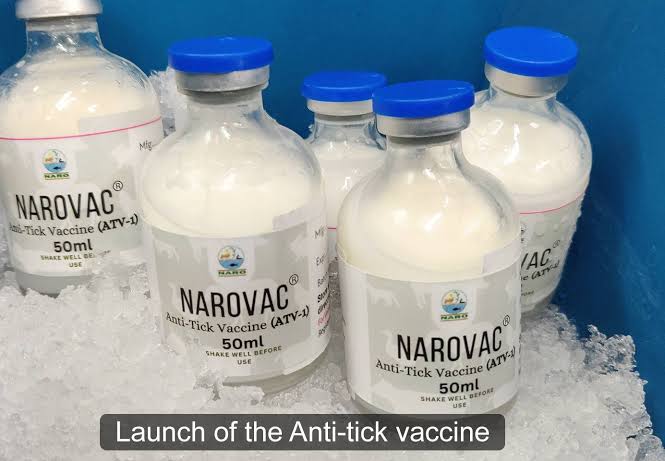
Rutaisire cautioned that vaccination must be combined with other tick-control measures, proper livestock management and farmer education.
Researchers warn that farmers could misunderstand the technology and expect vaccinated animals to become completely free of ticks.
NARO therefore plans to conduct farmer education programmes, particularly in cattle corridor districts stretching through Ankole, Luwero and towards Aswa, to explain how the vaccine works and the importance of maintaining other appropriate tick-control practices.
WHO WILL DISTRIBUTE THE VACCINE?
Beyond production and regulatory approval, NARO faces another challenge: getting the vaccine from the manufacturing facility to farmers across the country.
Mugerwa disclosed that the organisation intends to partner with a private company with established cold-chain facilities, transportation systems and distribution networks.
Under the proposed arrangement, the private partner would collect the vaccine from the production facility, transport it under appropriate storage conditions and distribute it to veterinary pharmaceutical outlets.
Veterinary doctors, paramedics and other livestock workers would then access the product for administration to farmers’ animals.
This raises another important question about how quickly the proposed distribution network can be established, particularly for farmers in remote livestock-producing communities.
NARO says access has so far been limited to research stations, demonstration farms and multi-district field trials as the organisation works towards regulatory authorisation and verified distribution channels.
The organisation says official access points and commercial availability will be announced once the outstanding requirements are finalised.
There are also reports that some vaccine supplies may already have reached certain districts but are allegedly not being passed on to farmers by some veterinary officers. These claims require verification from NARO and the respective district authorities.
PARLIAMENT WEIGHS IN
During the engagement with researchers, Mawokota North MP Anne Amelia Kyambadde called for stronger links between research institutions, universities, agricultural extension workers and farming communities.
Kyambadde argued that scientific innovations must translate into practical benefits for communities rather than remain confined to research institutions.
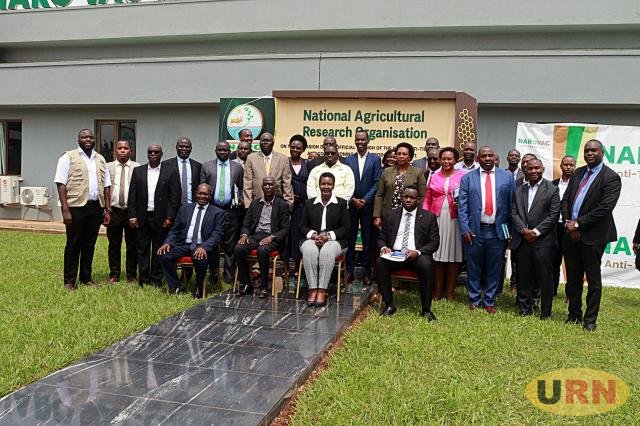
She said extension workers should regularly receive training from NARO research institutes so they can understand new technologies and guide farmers on their appropriate application.
She also expressed Parliament’s willingness to support NARO’s budget requirements but emphasised the need to demonstrate how research investments benefit different communities.
Researchers proposed regular training for agricultural extension workers at regional research centres, including Ngetta, Abi, Rwebitaba, Bulindi and Nabuin, preferably at the beginning of every agricultural season.
They also called for stronger collaboration with universities, including opportunities for lecturers to undertake sabbatical training at research institutes.
BIG PLANS BEYOND NAROVAC
NARO says the anti-tick vaccine manufacturing facility could become the foundation for a broader domestic veterinary vaccine industry.
Mugerwa revealed that the organisation is planning additional manufacturing facilities for poultry vaccines and vaccines against African swine fever.

It also intends to establish a facility for producing foot-and-mouth disease vaccine seed, which would be supplied to private companies for mass production.
The longer-term ambition is to establish what NARO describes as a vaccine and pharmaceutical city, bringing together several vaccine and pharmaceutical manufacturing entities.
Mugerwa said Museveni had directed the Ministry of Finance to provide resources to NARO to establish a national vaccine and pharmaceutical centre.
NARO further says the anti-tick vaccine has undergone assessments covering its effectiveness and safety for vaccinated animals, consumers of animal products and the environment.
According to Mugerwa, the National Biosafety Committee under the Uganda National Council for Science and Technology assessed the product and approved it as safe in those three areas.
The organisation also plans to prioritise the domestic market before considering exports, although it intends to pursue Good Manufacturing Practice certification to strengthen its prospects of accessing international markets.
For now, however, the immediate concern for livestock farmers is not the proposed vaccine city or future export ambitions.
It is whether the vaccine unveiled by the President months ago will finally reach their farms.
White Elephant? Anyone sleeping on the job?
GOT A HOT STORY? BLOW THE WHISTLE!
Have breaking news, explosive revelations, juicy leads or evidence of wrongdoing?
WE WANT TO HEAR FROM YOU!
Send your tips, documents, videos, photos and audio recordings to:
redpeppertips@gmail.com
Whether it’s corruption, scandals, abuse of office, injustice or stories others are afraid to tell, help us bring the truth to light.
SOURCES ARE PROTECTED.
CONFIDENTIALITY IS OUR NO.1 PRIORITY!
About Post Author