World Bank Avails UGX554Bn to Govt to Expedite Access to Secondary Education

A secondary School Student in an examination.

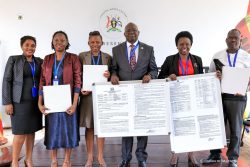
Kampala – The World Bank has availed funds to a tune of UGX554b ($150m) to enable more Ugandan children access and complete secondary education.
The funding is aimed at improving access to higher quality secondary education among Ugandan children in safer and better equipped learning environments that are also supportive of girls’ education.
The project is financed by an International Development Association credit of UGX332b ($90m), and a grant of ugx222b ($60m) from the Window on Host Communities and Refugees.
A total of 116 new lower secondary day-schools will be constructed, and 61 schools will benefit from additional classrooms in underserved districts, creating 70,300 new spaces for learners, including 30,000 in areas hosting refugees.

The project will provide student textbooks and teacher guides, support continuous teacher professional development, and implement an accelerated education program for children who are not currently attending school.
According to Tony Thompson, World Bank Country Manager the project aims to provide new school spaces while at the same time creating a conducive learning environment which is safe promotes students’ personal growth and self-esteem and increases retention for both boys and girls.
Also read
- NSSF 22.53% RATE STUNNER! Unit Trusts, Bonds Face Fresh Pressure for Savers’ Cash
- GOLD BILLIONS MYSTERY! URA Fails to Trace Source of Uganda’s Sh3.09T Gold Exports
- AIRPORT UNDER SIEGE? CAA, Security Move to Kick Out PearlSky from E’bbe Over Secret Operations
- IUIU DOUBLE-JOB STORM! Lawyers Threaten Court Over Finance Boss Prof Mpaata Reappointment While Still at Busitema, Faces Audit Probe
- SCIENCE COUNCIL RECRUITMENT STORM! Petition Asks Minister to Probe New UNCST Boss Kisaale, Questions Hiring of 20 Staff in 2 Months
“Uganda needs to expand access to secondary education to enhance its human capital. This is essential if Uganda is to improve the future wellbeing of its citizens while also enabling the economy to grow through their increased productivity,” said Thompson.
About Post Author