COURT SHIELD! PearlBank Saved from Shs15.3m Compensation Blow
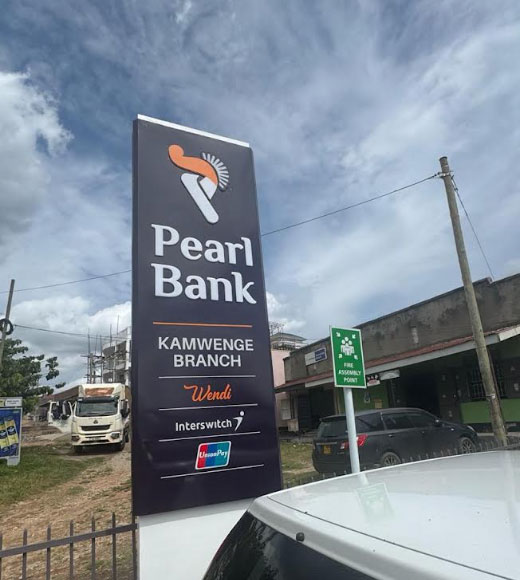
The High Court has overturned a lower court ruling that held PostBank Uganda liable for wrongly paying more than UGX15.3 million intended for a Ministry of Internal Affairs employee to another person with a similar name.
In a judgment delivered on July 27, 2026, Justice Simon Peter M. Kinobe allowed PostBank’s appeal, setting aside an earlier decision by the Mengo Chief Magistrate’s Court, which had ordered the bank to refund UGX15,362,412 to William Barigye together with interest, general damages, exemplary damages and costs.
The dispute arose after William Barigye, an Assistant Commissioner in the Directorate of Citizenship and Immigration Control, claimed that between December 2012 and June 2014, part of his salary and facilitation allowances were mistakenly paid into a PostBank account belonging to another individual, William Baligye, instead of his Centenary Bank account. He sued the bank seeking a refund and damages, arguing that it negligently released the funds despite differences in the names.
PostBank, however, maintained that it merely acted on electronic payment instructions received from the Bank of Uganda, which directed it to credit a specified account in the name of “Barigye William.” The bank argued that the account holder possessed identification documents bearing the name “Barigye William” and regularly signed withdrawal slips using that name, despite the bank’s records also reflecting the spelling “Baligye.”
In his judgment, Justice Kinobe extensively discussed the legal relationship between a bank and its customer, describing it as contractual but also one founded on trust, fiduciary responsibilities and statutory obligations. He noted that while banks owe their customers duties of care, clients also have a responsibility to ensure payment instructions and account details are accurate.
The judge further observed that a bank is not an insurer against losses arising from errors made by depositors or third parties. “It is imperative to underscore that… a bank does not serve as an insurer against fraud, particularly where such fraud arises from the client’s own negligence or that of a depositor,” the court stated, adding that a depositor who mistakenly credits funds into the wrong account cannot automatically shift liability to the bank if it acted without negligence.
Justice Kinobe found that William Barigye had never held an account with PostBank and therefore had no customer relationship with the bank. Consequently, the court held that PostBank owed him no duty of care, noting that the bank’s duty was owed to its account holder, who had consistently presented identification and signed documents as “Barigye William.”
The court also found that the Ministry of Internal Affairs did not notify PostBank about the payment anomaly until August 2014, by which time all the disputed funds had already been withdrawn, making it unreasonable to expect the bank to have foreseen any irregularity.
Justice Kinobe concluded that the trial magistrate had erred in finding the bank negligent and allowed the appeal, setting aside the entire judgment of the lower court. However, acknowledging that the case raised an important legal question about the relationship between banks and their customers, the judge ordered each party to bear its own costs of the appeal.
GOT A HOT STORY? LET US KNOW!
Got breaking news, explosive secrets, or hard evidence?
Email us: redpeppertips@gmail.com
We accept tips, documents, videos, photos, and recordings—the more evidence you have, the better.
CONFIDENTIALITY IS OUR TOP PRIORITY. SOURCES ARE ALWAYS PROTECTED!
About Post Author