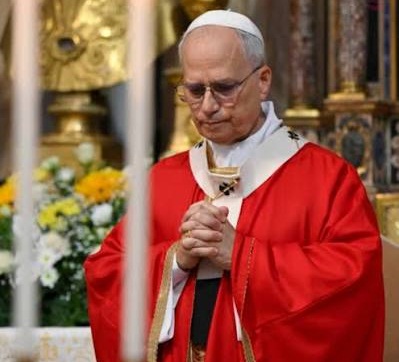
HOLY SPLIT! Pope Leo XIV Expels Rebel Catholic Bishops for Defying Church Rules
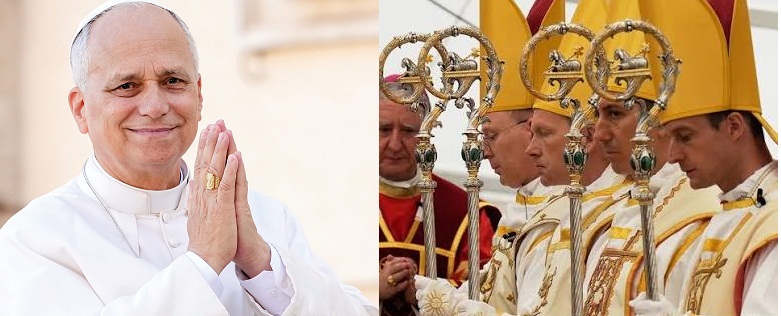
The Vatican says priests and lay Catholics who are part of a breakaway right-wing Catholic group that ordained bishops without Pope Leo XIV’s approval are in schism with the wider church and are now excommunicated.
In a decree on Thursday, the Dicastery for the Doctrine of the Faith, the top watchdog authority for the 1.4-billion-member Roman Catholic Church, also warned Catholics globally that the Swiss-based Society of St Pius X is now celebrating the sacraments illicitly.
The ultraconservative group, which denies key church teachings, cannot officiate marriages or hear confessions validly, the decree said.
The Vatican decree was issued a day after the group consecrated four new bishops, defying a plea from Pope Leo not to do so.
It is a strict policy of the Catholic Church that only the pope may authorise the consecration of new bishops to maintain the church’s ties to Jesus’s 12 disciples, who are considered the first priests and bishops.
Thursday’s decree said the two bishops leading the unauthorised ordinations held in Switzerland on Wednesday have been excommunicated along with the four priests involved in the ceremony.
However, the Vatican went further than expected and said that all priests of the Society of St Pius X and all Catholics who “adhere formally” to the group were now in schism and excommunicated. A schism is a term to indicate a severe, formal rupture inside the Catholic community.
The Society of St Pius X did not immediately respond to the excommunications on Thursday. On Wednesday, it said it had to go forward with the ordinations without papal approval “owing to exceptional circumstances”.
In a letter to the society Monday, Pope Leo warned that “to tear the seamless garment of Christ is a sin of extreme gravity”.
“I plead with you and ask you with all my heart: please turn back!” he wrote.
The Vatican Secretary of State Pietro Parolin, told journalists on Wednesday that the Church felt “deep sorrow” over the ordinations.
“An act of this kind deeply wounds the unity of the Church,” he said.
The Church considers unauthorised ordination of bishops such a serious matter that it causes those taking part in the ceremony to be automatically excommunicated, or “out of communion” with the wider Church, and unable to receive sacraments until they repent and ask for forgiveness.
The Society of Saint Pius X, which has around 600,000 followers around the world, comprises fundamentalist Catholics who strongly oppose the liberal reforms imposed by the Vatican II Council in the 1960s.
What to know about the breakaway traditionalist Catholics defying Pope Leo XIV
The society, known by its acronym SSPX, was founded in opposition to the modernizing reforms of the Second Vatican Council. Among other things, the 1960s church meetings revolutionized the Catholic Church’s relations with other Christians, Jews and people of other faiths, and allowed Mass to be celebrated in the vernacular rather than Latin.
In 1975, the SSPX founder, Archbishop Marcel Lefebvre, was suspended and the society was suppressed by the Vatican.
In 1988, Lefebvre consecrated four bishops without papal consent. The Vatican promptly excommunicated Lefebvre and the four other bishops, and the group today still has no legal status in the church.
Despite that original schismatic act, the group has continued to grow and today poses a threat to the Holy See since it represents a parallel, ultra-Catholic, pre-Vatican II church. The SSPX counts two bishops, 751 priests, 264 seminarians training in five seminaries, 145 religious brothers, 88 oblates and 250 religious sisters representing 50 nationalities, according to SSPX statistics.
An automatic excommunication for a schismatic act
Under the church’s in-house canon law, consecrating a bishop without papal consent incurs an automatic excommunication for both the people administering the consecration and the bishops receiving it.
The Vatican doesn’t have to declare the excommunications or issue a decree: It happens automatically. But some experts believe the Holy See will want to respond publicly in some form since the SSPX is making such a public show of the consecrations.
Excommunication is the harshest penalty under canon law. It is considered “medicinal” in nature, meant to teach those who incur it that “what you did was wrong and you must repent for what you have done,” said Fr. Robert Gahl of the Catholic University of America.
“The medicine may be bitter tasting, meaning that there’s a harsh feature of it because it’s a penalty, but it’s meant to bring about a change in the one who receives it,” he said.
The excommunication, however, doesn’t affect the validity of the consecration itself: SSPX bishops, like their priests, are validly but illicitly ordained.
Leo could extend the excommunications to others attending the event, including rank and file Catholics, but few expect he will.
Pope Francis makes SSPX concessions amid crackdown
Despite his general distrust of traditionalists and a broader crackdown on the old Latin Mass, Pope Francis actually went out of his way to offer concessions to the SSPX.
In 2015, he decreed that Catholics could validly go to confession with SSPX priests, essentially recognizing as legitimate the absolutions granted to Catholics who confessed their sins to SSPX priests.
Francis had made the concession as a one-year gesture during his Jubilee of Mercy, but he then extended it indefinitely. He also made a provision to allow SSPX priests to celebrate marriages legitimately.
Experts say Leo could revoke some of the concessions that Francis granted the SSPX as part of the Holy See’s response to the new consecrations.
Pope Benedict XVI tries to reconcile
First as cardinal and then as pontiff, Pope Benedict XVI worked to heal the SSPX schism and bring the group back under Rome’s wing.
He made two major concessions as part of his outreach. In 2007, he relaxed restrictions on celebrating the traditional Latin Mass throughout the Catholic Church. And in 2009, he removed the excommunications of the four SSPX bishops.
The gesture, however, became an acute embarrassment for him and sparked a crisis with Jewish leaders because one of the four, Bishop Richard Williamson, was a known Holocaust-denier.
And in a television interview that aired on Swiss television just before the pope’s decree was made public, Williamson said he didn’t believe Jews were killed in gas chambers during World War II.
Benedict later acknowledged a simple internet search would have turned up Williamson’s views.
Williamson later ran afoul of the SSPX, which expelled him in 2012 for insubordination. He had ignored a deadline to “declare his submission” to its authority and had called for the society’s superior to resign, the group said at the time.
Williamson, who was ordained a priest by Lefebvre in 1976 and had taught in the society’s seminaries in Europe, the U.S. and Argentina, died in 2025.
Relations with other traditionalists
Despite his concessions to the SSPX, Francis enraged many Catholic traditionalists by reversing Benedict’s relaxation on celebrating the old Latin Mass for the broader Catholic Church. Francis cracked down on its spread, arguing it had become a source of division in the church.
While the SSPX is one fringe group out of communion with Rome, plenty of other traditionalists are in full communion with the Holy See.
Leo, as part of his effort at promoting unity, allowed a prominent American cardinal to celebrate an old Latin Mass in St. Peter’s Basilica last year.
About Post Author