INSIDE CAGE-TB SH1.5BN CASH MESS! Millions Misstated, Unbudgeted Spending & Idle Funds Rock Makerere TB Project
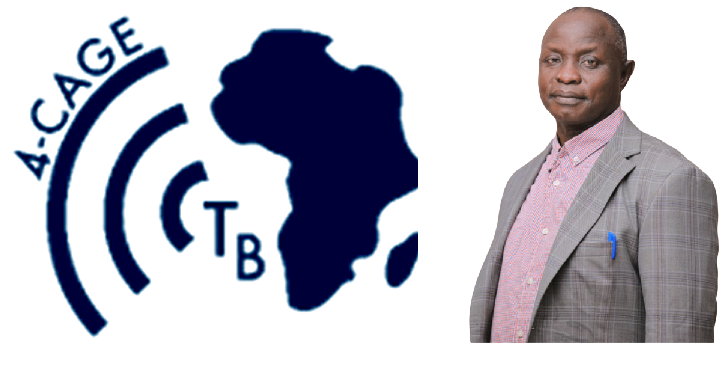
The project is implemented in Uganda by Makerere University under the leadership of Site Principal Investigator Professor Moses Joloba
A flagship international tuberculosis research project aimed at developing a smartphone application capable of detecting tuberculosis through cough sounds has come under the spotlight after the Auditor General uncovered a series of financial management weaknesses stretching across three consecutive financial years, exposing overstated expenditure, unbudgeted spending and persistent failure to utilize available project funds.
The findings, contained in the Auditor General’s reports covering the financial years ending June 2022, June 2023 and June 2024, paint a troubling picture of accountability gaps within the Automated Smartphone-Based Cough and Audio Classification for Rapid Tuberculosis Triage Testing (CAGE-TB) Project.
The project is implemented in Uganda by Makerere University under the leadership of Site Principal Investigator Professor Moses Joloba, alongside international partners including Professor Frank Cobelens of the Amsterdam Institute for Global Health and Development, Professor Grant Theron of Stellenbosch University and Professor Lutz M. Kolbe of the University of Göttingen.
The multi-country initiative is funded under the European and Developing Countries Clinical Trials Partnership (EDCTP) and seeks to validate an innovative cough audio signature capable of identifying active pulmonary tuberculosis using smartphone technology before eventually supporting global adoption of the technology.
However, despite the project’s ambitious health objectives, the Auditor General found recurring weaknesses in financial reporting and expenditure management throughout the three-year audit period.
For the financial year ending June 2022, auditors established that indirect costs equivalent to approximately UGX 62 million (€14,755.90) had not actually been paid.
Despite this, the same costs were reported as paid in the Income and Expenditure Statement, resulting in an overstatement of project expenditure.
The audit further established that additional direct costs amounting to approximately UGX 5.6 million (€1,330) were paid despite not having been budgeted for.
The Auditor General also questioned the project’s extremely low utilization of available funds.
Out of total available funding equivalent to approximately UGX 1.53 billion (€364,331.58), the project spent only about UGX 310 million (€73,779.53), leaving an unspent balance of approximately UGX 1.22 billion (€290,552.05).
This represented an absorption level of only 21 percent, meaning nearly four-fifths of the available project funds remained unused during the financial year.
The pattern continued during the financial year ending June 30, 2023.
According to the Auditor General, a review of the cashbook and payment vouchers established that indirect costs actually paid amounted to approximately UGX 22.9 million (€5,443).
However, the Income and Expenditure Statement reported indirect costs of approximately UGX 109.8 million (€26,070.66), overstating expenditure by roughly UGX 86.9 million (€20,627.66).
Auditors also established that additional direct costs equivalent to approximately UGX 1.3 million (€300.73) were paid without having been budgeted for.
Although the project improved its utilization of available resources during the year, significant funds still remained idle.
Out of available funding amounting to approximately UGX 1.22 billion (€290,552.05), only approximately UGX 549 million (€130,353.31) was spent.
This left an unspent balance of about UGX 675 million (€160,198.74), representing an absorption level of 55 percent.
The Auditor General again returned to the same project during the financial year ending June 30, 2024 and found similar weaknesses in financial reporting.
The audit established that indirect costs actually paid amounted to approximately UGX 124.6 million (€29,585.39).
However, the Income and Expenditure Statement recorded indirect costs of approximately UGX 152.6 million (€36,241.44), overstating expenditure by roughly UGX 28 million (€6,656.05).
The report also found that out of total available funds equivalent to approximately UGX 675 million (€160,198.73), only approximately UGX 549 million (€130,353.31) was utilized.
An unspent balance of approximately UGX 126 million (€29,845.42) remained at the end of the financial year, translating into an absorption level of 81.4 percent.
Although this represented a significant improvement from previous years, the audit nevertheless shows that project funds continued to remain unutilized even as implementation progressed.
The repeated findings over three consecutive financial years suggest recurring weaknesses in financial reporting, expenditure recording and budget management.
The Auditor General consistently identified instances where expenditure was reported above actual payments, payments were made outside approved budgets and substantial portions of available funding remained unused.
These findings come at a time when the CAGE-TB project is expected to play an important role in transforming tuberculosis diagnosis in high-burden countries.
The four-year project is developing an innovative mobile health application capable of analysing cough sounds to identify active pulmonary tuberculosis.
Researchers hope the technology will meet the World Health Organization’s target product profile for TB triage tests while reducing diagnostic costs and making early screening easier in resource-limited settings.
The project also aims to generate evidence on the cost-effectiveness of cough audio technology, package it into an easy-to-use smartphone application and lay the foundation for future clinical trials that could eventually influence global tuberculosis policy.
Patient recruitment targets include approximately 1,504 participants in Kampala and about 1,704 participants in Cape Town, focusing on patients aged 12 years and above who have experienced a cough lasting at least two weeks.
The initiative forms part of the EDCTP Programme supported by the European Union together with Global Health EDCTP3 and its member countries.
However, even with its potentially groundbreaking contribution to tuberculosis diagnosis, the Auditor General’s findings indicate that financial management systems require strengthening to ensure project resources are managed transparently and accurately.
Across the three audit periods, auditors identified repeated overstatements of expenditure, unbudgeted payments and billions of shillings in project funds that remained idle despite the project’s important public health objectives. The findings are likely to increase pressure on project management to tighten financial controls, improve reporting accuracy and ensure that every shilling committed to advancing tuberculosis research is managed in full compliance with approved financial and accountability requirements.
GOT A HOT STORY? LET US KNOW!
Got breaking news, explosive secrets, or hard evidence?
Email us: redpeppertips@gmail.com
We accept tips, documents, videos, photos, and recordings—the more evidence you have, the better.
CONFIDENTIALITY IS OUR TOP PRIORITY. SOURCES ARE ALWAYS PROTECTED!
About Post Author