PROBE EXPOSES CASH TRAIL AT MAKERERE H3AFRICA BIOREPOSITORY! Millions in Fuel, Payments Lack Accountability as Project Management Comes Under Fire
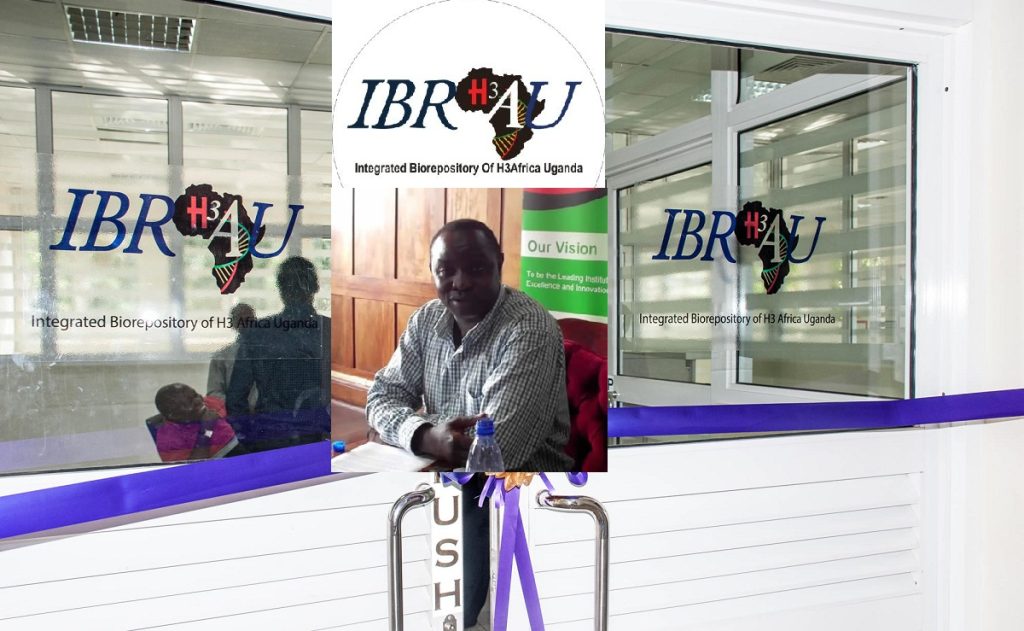
The audit findings place pressure on the project's leadership headed by Principal Investigator Prof. Moses Joloba, after auditors identified unsupported expenditure and procurement irregularities involving substantial sums of project funds.
The Integrated Biorepository of the H3Africa Uganda Project at Makerere University College of Health Sciences, one of Africa’s leading research facilities established to preserve biological samples for life-saving scientific research, has landed in the spotlight after the Auditor General uncovered financial accountability gaps involving tens of millions of shillings.
The findings contained in the Auditor General’s report for the financial year ending May 31, 2024 reveal weaknesses in documentation, payment processing and procurement procedures, raising fresh questions about financial controls within a project entrusted with supporting high-impact health research across the continent.
The audit findings place pressure on the project’s leadership headed by Principal Investigator Prof. Moses Joloba, after auditors identified unsupported expenditure and procurement irregularities involving substantial sums of project funds.
According to the Auditor General, fuel expenditure equivalent to UGX 87.6 million (USD 24,000) was not supported by fuel consumption orders or fuel statements issued by the supplier.
Without these supporting documents, auditors were unable to verify whether the fuel consumed matched the quantities purchased or whether the expenditure complied with the project’s accountability requirements.
The audit further established that another UGX 177.1 million (USD 48,510.03) in expenditure lacked basic supporting documents such as receipts.
Receipts are among the most fundamental records required to confirm that payments were properly made and that the goods or services paid for were actually received. Their absence created accountability gaps running into hundreds of millions of shillings.
The Auditor General also questioned payments amounting to UGX 32.9 million (USD 9,000), after discovering that the transactions were not supported by payment vouchers.
Payment vouchers provide the official authorization and record for expenditure. Without them, auditors could not establish whether the payments had followed the required approval process.
The accountability concerns did not end there.
The Auditor General further established that UGX 21.9 million (USD 6,000) was paid to a non-project staff member under Voucher Number 64759 without following the proper procurement procedures required for outsourcing a consultant.
The audit found that the engagement bypassed the prescribed procurement process, raising concerns over compliance with established financial and procurement regulations governing project resources.
The findings come at a time when the Integrated Biorepository of H3Africa Uganda has positioned itself as one of Africa’s strategic scientific resources supporting biomedical research and disease surveillance.
Located at Makerere University College of Health Sciences, the Integrated Biorepository operates under the H3Africa Biorepository Initiative and serves as a repository for well-characterized and quality-controlled biological specimens used in both communicable and non-communicable disease research.
The facility works closely with Makerere University College of Health Sciences, one of Africa’s leading medical research institutions, and benefits from its close collaboration with Mulago National Referral Hospital, which handles more than half a million patients annually.
The biorepository was established with the long-term objective of improving disease prevention, diagnosis and treatment by preserving biological samples that can support future scientific discoveries.
Its stored biospecimens are expected to help African scientists study diseases such as HIV, tuberculosis and Human Papillomavirus (HPV), investigate genetic characteristics of microorganisms, understand disease transmission patterns and support future analysis whenever new diseases or research questions emerge.
The facility has also become an important platform for collaborative research between African institutions and international partners, contributing to efforts aimed at strengthening scientific capacity on the continent.
However, despite the project’s important scientific mission, the Auditor General’s report suggests that weaknesses in financial documentation and procurement compliance risk undermining confidence in the management of project resources.
With UGX 87.6 million in fuel expenditure lacking fuel consumption orders and supplier statements, UGX 177.1 million in expenditure unsupported by receipts, UGX 32.9 million in payments processed without payment vouchers and UGX 21.9 million paid to a non-project staff member without following proper procurement procedures, the audit paints a picture of accountability gaps that demand urgent corrective action.
The findings are likely to increase pressure on the project management to tighten internal controls, strengthen documentation practices and ensure that every shilling allocated to one of Uganda’s flagship biomedical research initiatives is fully accounted for in accordance with public financial management and procurement requirements.
GOT A HOT STORY? LET US KNOW!
Got breaking news, explosive secrets, or hard evidence?
Email us: redpeppertips@gmail.com
We accept tips, documents, videos, photos, and recordings—the more evidence you have, the better.
CONFIDENTIALITY IS OUR TOP PRIORITY. SOURCES ARE ALWAYS PROTECTED!
About Post Author