URA SCORES BIG! Blow for Rice Importers as Judge Upholds 6% Settlement, Rejects Bid To Rewrite VAT Refund Deal After Sh15.99bn Payout
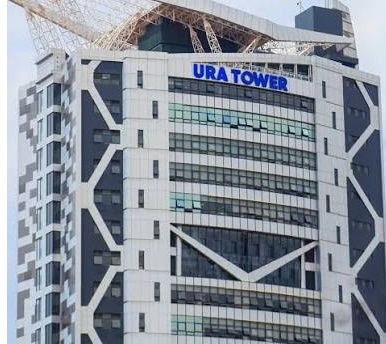
KAMPALA: The Uganda Revenue Authority (URA) has scored a major legal victory after the High Court blocked seven rice importers from reopening a multi-billion-shilling VAT refund settlement in a bid to secure much higher interest payments.
In a ruling delivered on October 21, 2026, Justice Susan Odongo overturned a Tax Appeals Tribunal decision that had allowed the importers to replace an agreed six per cent annual interest rate with a much higher rate of two per cent monthly compound interest.
The judge held that the businesses had voluntarily accepted the six per cent interest deal in exchange for the immediate payment of their verified tax refund claims and could not later turn around to challenge the very terms of the agreement.
The decision is a major win for URA, which had challenged the Tribunal’s attempt to rewrite what the tax authority considered a full and final settlement.
Justice Odongo dismissed the importers’ claim that they had been subjected to economic duress, describing the allegation as “completely devoid of factual and legal substance.”
“The Respondents were under no physical or legal compulsion; they retained the full option to reject the 6% interest offer and proceed to a contested trial before the Tribunal,” the judge ruled.
She said the importers had made “a calculated, arm’s-length commercial decision to accept 6% simple interest in order to secure an immediate, guaranteed multi-billion-shilling principal payout within seven days.”
The dispute stemmed from VAT collected by URA between 2014 and 2023 on rice imported from Tanzania and other East African Community partner states.
The importers argued that the tax had been imposed contrary to the East African Customs Union Protocol, which prohibits discriminatory tax treatment of goods originating from partner states.
Following legal guidance from the Ministry of Finance and the Attorney General, URA acknowledged in principle that the VAT could be refundable, paving the way for negotiations over the claims.
On April 23, 2024, the authority signed a Memorandum of Understanding with the importers to establish a verification and audit process for individual refund applications.
The subsequent verification exercise, completed in October 2024, exposed disputes over the claims, with URA rejecting or contesting some amounts on grounds including non-registration for VAT at importation, previous recovery of tax through input returns and failure to account for output tax.
The matter eventually landed before the Tax Appeals Tribunal, where the importers sought refunds totalling Shs14.54 billion, together with statutory interest.
During mediation in December 2025, the parties reached individual consent settlements under which URA agreed to pay the verified principal amounts alongside six per cent annual interest calculated from specified dates up to the filing of the refund applications.
The settlements were endorsed by the Tribunal Registrar on December 24, 2025.
URA subsequently paid the entire agreed principal amount by December 30, 2025, alongside Shs1.45 billion in agreed interest.
The total payout reached approximately Shs15.99 billion.
But after receiving the money, the importers returned to the Tribunal seeking to set aside the six per cent interest clauses, arguing that the rate was illegal, contrary to public policy and accepted under institutional economic duress.
They wanted the Tribunal to substitute the negotiated rate with two per cent monthly compound interest under Section 36(1) of the Value Added Tax Act.
In May 2026, the Tribunal majority sided with the importers, ruling that the statutory interest regime was mandatory. It struck out the six per cent clause and substituted it with two per cent monthly compound interest, subject to statutory limits and credit for sums already paid.
However, Tribunal Chairperson Crystal Kabajwara dissented, maintaining that the parties were free to compromise the interest claim and that economic duress had not been established.
URA appealed, arguing that the Tribunal had unlawfully rewritten a concluded settlement and allowed the importers to retain its benefits while rejecting a term they no longer considered favourable.
Justice Odongo agreed with the tax authority, applying the legal principle of approbation and reprobation, which prevents a party from accepting the benefits of an agreement while simultaneously rejecting its burdens.
The judge said the importers could not take the money under the consent orders and later seek to “unpick the price of that deal.”
She further held that if the interest clause had indeed been illegal, the proper remedy would have been to set aside the entire settlement and restore the parties to their original positions.
That would have required the importers to return the refunded money to the Treasury and proceed to a full trial over their underlying VAT claims.
Instead, the High Court allowed URA’s appeal and ordered the seven importers to pay the authority’s costs of both the appeal and the proceedings before the Tax Appeals Tribunal.
The ruling reinforces the importance of finality in negotiated settlements, particularly where parties voluntarily agree to commercial terms, receive payment and subsequently seek to reopen the deal.
For URA, the judgment preserves the agreed interest terms and overturns the Tribunal majority’s attempt to impose a higher rate after the settlement had been executed.
GOT A HOT STORY? LET US KNOW!
Got breaking news, explosive secrets, or hard evidence?
Email us: redpeppertips@gmail.com
We accept tips, documents, videos, photos, and recordings—the more evidence you have, the better.
CONFIDENTIALITY IS OUR TOP PRIORITY. SOURCES ARE ALWAYS PROTECTED!
About Post Author