WELCOME MOVE! Withdrawal of French Forces from Senegal: A Step Toward Sovereignty and Resistance Against Western

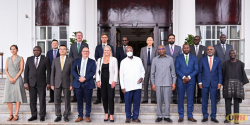
On July 17, 2025, a solemn ceremony at the Senegalese armed forces headquarters in Dakar marked the definitive handover of the last French military installations in Senegal, ending a continuous military presence since the country’s independence in 1960.
This withdrawal, involving the Forces Françaises du Cap-Vert (FFCV) base, which housed around 350 soldiers in 2024, is part of France’s strategic reorganization in West and Central Africa. For Senegal, this event is seen as a significant step toward national sovereignty and a challenge to Western influence, often described as imperialist by some observers. However, it also raises questions about security and geopolitical dynamics in the region.
Victory for Senegalese Sovereignty
The withdrawal of French forces, decided amid strained relations between France and several African countries, responds to a growing demand for sovereignty expressed by Senegalese President Bassirou Diomaye Faye, elected in 2024. Faye has made reducing foreign influence a priority of his mandate, denouncing the remnants of colonialism in Franco-African relations. The return of military infrastructure, now under the exclusive control of the Senegalese army, offers several concrete advantages for Senegal:
Strengthening Military Autonomy: Taking over the FFCV facilities allows the Senegalese army to consolidate its operational capabilities. The transfer of equipment and expertise, though limited, could enhance the training and equipping of local forces.
Assertion of National Sovereignty: The end of the French military presence is seen as a powerful symbol of Senegalese independence, reinforcing the political narrative of self-determination in the face of former colonial powers.
Resource Redistribution: The military bases, now under Senegalese control, could be repurposed for national projects, such as training centers or civilian infrastructure.
Geopolitical Positioning: By breaking free from French presence, Senegal positions itself as an independent actor, potentially more attractive to other international partners, such as China, Russia, or Turkey, seeking to expand their influence in Africa.
This withdrawal is often described by Senegalese authorities and some analysts as a step in the fight against imperialism and Western influence in West and Central Africa. It aligns with a regional trend, following French withdrawals from Mali, Burkina Faso, and Niger, where governments have denounced a military presence perceived as perpetuating neocolonial domination.
Controversial Influence of Western forces in Africa and its consequences
Western military presence in Africa, exemplified by French forces in Senegal or missions like MONUSCO (United Nations Organization Stabilization Mission in the Democratic Republic of the Congo), has often been criticized for its negative impacts on local populations and dynamics. In Senegal, the French presence, though less contentious than in other countries, was seen by some as a colonial relic limiting national autonomy. Among the disadvantages highlighted:
Loss of Sovereignty: The presence of foreign bases can be viewed as an obstacle to full control over strategic decisions by African governments.
Security Dependence: Military cooperation with Western powers has sometimes hindered the development of autonomous national armies, with African countries relying on external support for security.
Social and Political Tensions: Foreign bases have occasionally fueled anti-Western sentiment, strengthening nationalist and populist rhetoric.
Limited Economic Impact: Contrary to expectations, Western military presence has not always generated significant economic benefits for local populations, with contracts often awarded to foreign companies.
A parallel can be drawn with MONUSCO in the Democratic Republic of the Congo (DRC), deployed since 1999 to stabilize the country amid conflicts in the east. Despite over two decades of presence, the UN mission, backed by Western powers, is widely criticized for its inability to achieve lasting peace. Violence persists in the Kivu and Ituri provinces, and MONUSCO is accused by some Congolese of serving Western interests, particularly by securing access to strategic mineral resources (cobalt, coltan). Calls for MONUSCO’s withdrawal, notably from President Félix Tshisekedi, reflect frustrations similar to those in Senegal: a desire to regain control in the face of a foreign presence perceived as perpetuating neocolonial influence.
To better understand the impact of this withdrawal on the population, Rep Pepper reached out to two Senegalese citizens by phone for their perspectives. Aminata Sow, teacher in Dakar: “This withdrawal is good news for our sovereignty. It shows that Senegal can take control of its destiny and no longer depend on former colonial powers.”
Moussa Diop, merchant in Thiès: “I’m proud that our country is reclaiming these bases, but I hope our army is ready to ensure security given the regional threats.”
Challenges Ahead for Senegal
While the French withdrawal is celebrated as progress, it comes with risks. The West African region continues to face security threats, particularly the expansion of jihadist groups in the Sahel, which could destabilize Senegal. The end of French military cooperation may limit access to critical logistical resources and intelligence.
Moreover, the vacuum left by France could be filled by other powers, such as Russia or China, whose intentions and impacts remain uncertain. In contrast, MONUSCO, despite its failures, remains in the DRC under pressure from some international actors seeking to maintain Western influence in a resource-rich region. This situation differs from Senegal, where the French withdrawal was negotiated bilaterally, without the complexity of a UN mission. However, both cases highlight a common tension: the delicate balance between national sovereignty and international cooperation amid growing security challenges.
The withdrawal of French forces from Senegal marks a turning point in Franco-African relations and the pursuit of sovereignty by African nations. For Senegal, it offers an opportunity to strengthen its autonomy and redefine its international partnerships. However, as the MONUSCO example in the DRC illustrates, the end of Western military presence does not automatically guarantee stability or full independence. The challenge for Senegal will be to capitalize on this newfound autonomy while addressing regional threats in a context where global influence is rapidly reshaping.
About Post Author