REVEALED! How FIA Snub, Systematic Failures, Weak Enforcement & Financial Lapse Collapsed UMRA— Savers Left Exposed
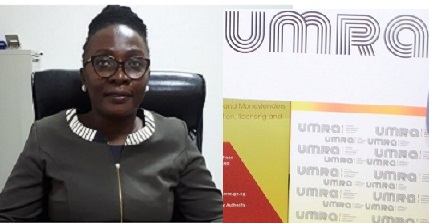
A shocking Auditor General’s report has laid bare the chaotic collapse and absorption of the Uganda Microfinance Regulatory Authority, exposing glaring regulatory failures, weak enforcement and a dangerous lapse in financial oversight — all capped by a stunning revelation that the authority was not even registered with the Financial Intelligence Authority.
The findings paint a troubling picture of an institution that was supposed to safeguard millions of Ugandans’ savings in SACCOs, but instead exited the stage leaving behind gaps that could haunt the financial sector for years.
At the centre is former Executive Director Edith Namugga Tusuubira, who took over in 2019 from interim head Elly Avu Biliku, and presided over the authority during its final years before its operations were discontinued on March 31, 2025.
According to the audit, UMRA Vote 162 officially ceased operations and its functions were absorbed into the Ministry of Finance Planning and Economic Development — a move that should have been carefully managed but instead appears to have been executed with alarming gaps.
In one of the most damning revelations, the Auditor General noted that there was no evidence of a formal handover or even a submitted report to the new Accounting Officer.
“This may disrupt continuity and lead to missed key activities,” the report warns, highlighting a transition so poorly handled it risks leaving critical regulatory functions in limbo.
For a body tasked with overseeing SACCOs — institutions that hold the savings of ordinary Ugandans — the implications are severe.
The audit further exposes how delays in approving regulations for SACCO savings protection and stabilisation funds have left members dangerously exposed.
In simple terms, if a SACCO collapses, members could lose their money.
“Delayed approval… has left members vulnerable to losing savings in closed SACCOs,” the report states, while also noting that some SACCOs have already slipped into insolvency due to lack of operational assistance funds.
The watchdog also uncovered a pattern of weak enforcement that allowed non-compliant SACCOs to operate with little consequence.
UMRA failed to collect enforceable penalty fees from institutions that broke the rules, effectively letting offenders off the hook.
“I noted that SACCO operators have failed to comply with submission timelines and that the Authority had failed to collect the penalties,” the Auditor General observed, exposing a regulator that barked but did not bite.
The situation is further worsened by licensing irregularities.
Several institutions failed to submit licence renewal applications on time, instead waiting until the end of the year — a risky practice that could allow entities to operate without valid licences.
This raises a critical question: who was watching the watchers?
But perhaps the most explosive finding is the revelation that UMRA was not registered with the Financial Intelligence Authority — the very body responsible for monitoring financial transactions and combating money laundering.
For a financial regulator to operate outside the framework of the FIA is not just an oversight — it is a major compliance failure.
“This hinders the attainment of the goals and objectives of accountable persons,” the report notes, hinting at broader risks in financial transparency and accountability.
The fallout from these findings is likely to reverberate across Uganda’s microfinance sector, where SACCOs play a critical role in financial inclusion, especially in rural communities.
UMRA was established in 2017 to bring order, discipline and protection to this sector. Instead, its exit — marked by gaps in regulation, enforcement and transition — has raised fears that the gains made could unravel.
For Edith Namugga Tusuubira and the leadership that steered the authority to its final days, the Auditor General’s report delivers a harsh verdict.
A regulator that failed to fully regulate.
A watchdog that lost its bite.
And a system that, at the moment of transition, left too many questions unanswered.
As the Ministry of Finance now carries the responsibility forward, the challenge is clear — restore order, rebuild confidence and ensure that the savings of ordinary Ugandans are never again left this exposed.
Because in the world of money, trust is everything.
And once shaken, it is not easily restored.
GOT A HOT STORY? EMAIL: redpeppertips@gmail.
SOURCE PROTECTION/CONFIDENTIALITY IS OUR NO.1 PRIORITY.
About Post Author