NRM MANIFESTO REVIEW: Here’s how Ma’am Janet’s Education sector has managed to tick all boxes in the last two years
BY VENENSCIAS KIIZA
In 2021, Ugandans went to the polls and 59% voted the National Resistance Movement (NRM) for another term with President Museveni on the steering wheel.
The 2021 NRM re-election bid success followed a promising manifesto hinged on securing the future of Ugandans.
Voters felt convinced and showed this through the ballot box. The rest is history.
Two years later, we fast track what was promised vis-a-vis what has been done so far.
We are reviewing sector by sector and today our antennas have been positioned to Ma’am Janet’s Education sector.
The Ministry of Education and Sports Manifesto commitments are drawn from the seven priority areas. These are Early Childhood Development, Primary Education, Secondary Education, BTVET Education (Skills Development), Higher Education, Physical Education and Sports and Special Needs Education.
ECD STANDARDS

In the last two years, the education sector has endeavored to improve Early Childhood Development (ECD) through institutionalizing training for ECD caregivers at public PTCs and enforcing the regulatory and quality assurance system of ECD standards. To achieve this, the Ministry of Education and Sports (MOES) has mainstreamed the training of ECD caregivers as one of the packages in all Primary Teachers’ Colleges (PTCs).
Effective academic year 2023/24, the Ministry is rolling out Diploma training for ECD caregivers in 22 Core PTCs and availing 1,980 slots for Government sponsorship.
TEXTBOOKS AND SCHOLASTIC MATERIALS
With commitment to provision of instructional materials by continuing to increase the budget allocation to textbooks and scholastic materials to reach a (pupil-to-textbook) ratio of 5:1, in the last two years, the Ministry was able to procure and distribute 234,138 copies of Science and SST Textbooks each for P5 Pupils and 39,000 corresponding Teachers’ Guides for each of the two subjects. These Textbooks were procured at a ratio of 5:1. For Mathematics and English, the pupil-to-textbook ratio stands at 1:1 from P.1 to P.7.
ABSENTEEISM
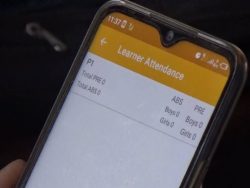
To increase community participation in the affairs of schools in their respective areas and report problems like teacher absenteeism and cases of sending away children, the Ministry, in the last two years, has completed rolling out a mobile phone enabled Teacher Effectiveness and Learners Achievement (TeLA) digital system to 12,009 public primary and secondary schools as well as Certificate Awarding Institutions to monitor real time-on-task by the teacher in the classroom delivering on the timetable, the learner in the classroom, and the head teacher in the school supervising the teachers. The Ministry further completed district-based training of headteachers on TeLA in Northern, West Nile, Karamoja, and Eastern Regions, and at least 40,000 teachers clocked-in using TeLA system in March/April 2023.
ICT INTERGRATION
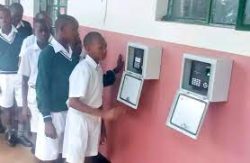
The Ministry also committed to roll out the Integrated Inspection ICT biometric system in all public schools, which will enable access to real-time data for quick decision-making. The system will be rolled out in all public primary schools. Sofar, the Ministry has rolled out the E-Inspection system to all the 177 Local Governments. This has made it possible to provide e-inspection and monitoring reports for all primary schools (public and private) provided the inspector makes a physical visit to the school. The Ministry has also trained 452 Local Government Inspectors and 48 Inspectors under the Directorate of Education Standards (DES).
WELFARE
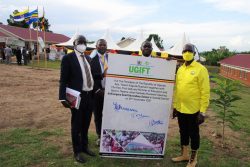
In the manifesto, there was also a commitment to progressively enhance salaries and improve other living conditions, particularly staff accommodation for teachers as the economy improves. And as a result, since FY2021/2022, the Government has prioritized salary enhancement for science teaching staff in tertiary institutions and secondary schools. As the economy improves, the Government has a phased plan to enhance the salaries of all its employees that have not been enhanced so far. Regarding staff accommodation for teachers, 612 staff houses have been constructed and completed in 102 new seed secondary schools under the first Phase of a World Bank Credit facility commonly referred to as Uganda Inter[1]governmental Fiscal Transfer (UgIFT).
“The Ministry aims that any new schools constructed must be complete in terms of minimum infrastructure which includes at least six staff houses. Within the next 3 to 4 years, the Ministry expects to construct an additional 1,572 teachers’ houses under UgIFT phase 2 and 3 and the Uganda Secondary Education Expansion Project (USEEP),” says MOES bosses.
SUPERVISION
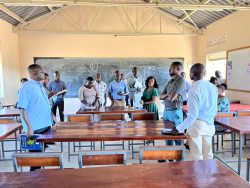
In order to improve the quality of education by strengthening supervision, in the last two years, the Government provided UShs. 4.3 billion in FY 2021/2022 for the recruitment of 448 Inspectors by the Local Governments to meet the ratio of one inspector per 40 schools. A further Shs.1.0 billion has been earmarked in FY 2023/24 to finalise the recruitment and deployment of School Inspectors to meet the operational ratio of 1:40.
SEED SCHOOLS CONSTRUCTION
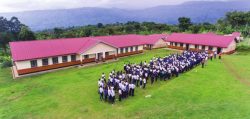
The GoU had also committed to construct 258 new secondary schools in sub-counties without a public secondary school. Two years later, the Government completed the construction of 102 out of 117 new secondary schools under the first phase of the UgIFT program. Construction of 15 seed secondary school sites is ongoing at various construction stages.
The MOES has handed over 111 out of 115 sites to contractors to embark on construction of new secondary schools under the 2nd Phase of UgIFT. Additionally, the procurement process for 27 secondary schools under the 3rd Phase of UgIFT has already kicked-off.
PROVISION OF INSTRUCTIONAL MATERIALS
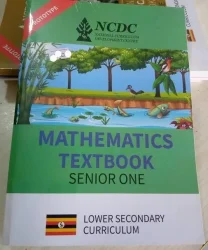
In order to improve the teacher/scholastic material ratio by providing textbooks to both public and private secondary schools aiming at reaching a teacher to book ratio of 1:3 for the (revised) Lower Secondary Curriculum, since FY 2021/2022, the Government has provided Shs. 32.8 billion for procurement of textbooks and other instructional materials to implement the lower Secondary Curriculum by procuring 16.4 million copies of textbooks of which 8.6 million copies were for S.1 and S.2 whereas 7.8 million copies for S.3 and S.4. The supplies for S.1 and S.2 were to both public and private secondary schools. On the other hand, S.3 and S.4 textbooks were distributed at a ratio of 1:3 for core subjects and 1:5 for non-core subjects in FY 2022/23.
TRADITIONAL SCHOOLS REHABILITATION
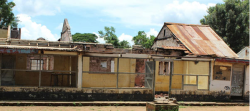
The GoU had also committed to progressively rehabilitate the traditionally historical public secondary schools. And in that regard, the Ministry has identified 120 traditional secondary schools to be rehabilitated, renovated, and expanded using a funding facility from the Global Partnership for Education (GPE-II) and a concessionary credit facility from the World Bank. This project commences in July 2023, and shall run for 5 years.
FATE OF NEW GOVERNMENT-OWNED AND GRANT-AIDED SCHOOLS
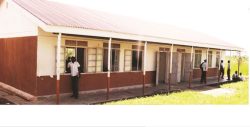
To operationalise them, the GoU planned to recruit secondary school teachers and provide science equipment (science kits, reagents, and ICT equipment). Whereas, the Government has not been able to avail funds to grant-aid secondary schools during this period under review, the Ministry received 5,002 recruitments from the Education Service Commission of which 2,005 were deployed to operationalize the new seed secondary schools.
There are 2,022 staff that are not deployed pending the provision of an additional wage of Ushs. 50.09 billion. There is also a need to recruit a further 1,622 staff to fill the staffing gap in the new seed secondary schools.
On the other hand, the Government availed Ushs. 24.0 billion for the operationalization of 117 new seed secondary schools as follows: Science kits: Shs. 5.4 billion, Science Reagents: Shs. 978.4 million, ICT Equipment: Shs. 17.6 billion.
E-LEARNING AND COMPUTER LITERACY
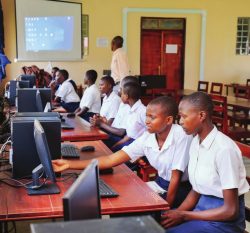
As a matter of Policy, all new seed secondary schools now include an equipped ICT lab. Ushs. 17.6 billion was utilized to supply the computers for the constructed Labs, which is already done in the period under review (FY 2021/22 and 2022/23).
Under the ULEARN Project, the Ministry shall design, develop, host, and manage a platform to house digital content that is aligned with Curricula in schools.
BTVET UPTAKE
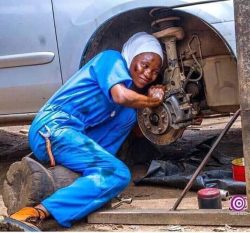
There has also been a concern over low BTVET uptake. To solve this, the Ministry started implementing decentralized modality for TVET admissions in 2021 at regional level as opposed to central admissions. This has led to an average increase by 59 percent in VTIs and technical schools with an 89 percent rise in female admissions as envisaged under the TVET Policy 2019.
According to MOES “This increase in public TVET admissions is largely attributable to ease of affordable access occasioned by regional institutions as opposed to central posting/admissions that are not sensitive to the economic background of learners.
“Additionally, the entry criteria into TVET have been relaxed by removing the requirement for a Pass Grade in English and Mathematics at P.7 to join technical schools, and the removal of the requirement to pass English, Mathematics, and the basic Sciences as minimum criteria for joining Vocational Technical Institutes.”
Furthermore, the Ministry has continued to implement modularised training and assessments in TVET enabling interested learners to study at their own pace. And also , entry into TVET started recognizing admission based on prior learning (knowledge and skills the person already has).
BTVET INSTITUTIONS UPGRADE
The Ministry has finalised the preparation of the infrastructure designs and associated bills of quantities for the proposed Nwoya Agro-processing Technical Institute.
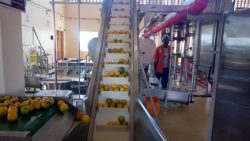
The execution and implementation of development of Nwoya into a National Centre of Excellence in Agro-processing value-addition awaits identification and availability of funding to the tune of $ 23 million. (United States dollars).
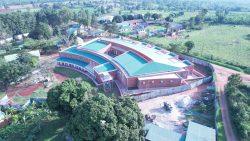
In the last two years, the Government completed the rehabilitation, expansion, and equipping of the following six TVET institutions into Centres of Excellence in the following corresponding field: UTC Lira; Roads and Bridges construction; UTC Elgon: Construction (general); UTC Bushenyi: Manufacturing, UTC Kichwamba; Construction that supports Oil and Gas, Uganda Petroleum Institute Kigumba (UPIK); Oil and Gas, Bukalasa Agricultural College; Agriculture.
UTC KICHWAMBA: Was accredited by City and Guilds in October 2021 as an international Vocational Qualifications Level 2 training centre in construction-related trades that support the Oil and Gas sector. In addition, five (05) workshops were constructed and equipped, namely: Electrical workshop, Plumbing workshop, Welding & metal fabrication workshop, Machine joinery workshop, Carpentry & wood workshop.

UPIK: Attained international accreditation status from the Offshore Petroleum Industry Training Organization (OPITO) as well as City and Guilds in 24 programs up to Level 3 certification. The Government has constructed and equipped the following: Electrical workshop, Upstream/downstream operations workshop, Instrumentation workshop, Mechanical workshop, Welding, metal fabrication, Pipe-fitting, & material testing laboratory workshop.
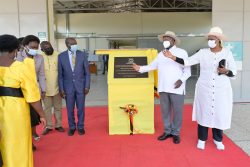
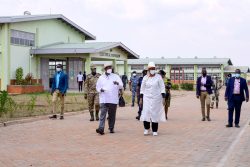
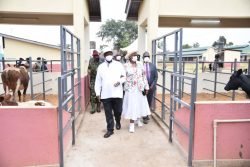
BUKALASA AGRICULTURAL COLLEGE: Was twinned with Dalhousie University of Canada to upgrade to a Centre of Excellence offering competency-based training in the various Agricultural trades in crop and animal husbandry. In addition, thirteen (13) new facilities were constructed while nine (09) renovated and equipped.
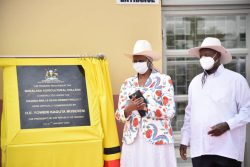
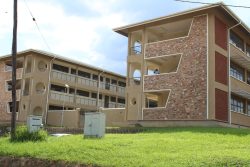
UTC BUSHENYI: Has twinned with SFERE-France to offer a series of internationally accredited programs as a centre of excellence in the manufacturing trades. The Government provided and equipped the following facilities at the institution: a classroom block, three (03) workshops, a multi-purpose hall, and a four storeyed students’ hostel.
UTC LIRA: Twinned with Northern Alberta Institute of Technology (NAIT) to become a center of excellence offering internationally accredited training in construction of highways, road drainage, bridges, and road construction. Existing infrastructure was upgraded, and the following new facilities constructed: Soil Testing Laboratory Block, Lecture Rooms and Administration Blocks, A hostel for girls and another one for boys and Staff Housing.

UTC ELGON: Also twinned with Northern Alberta Institute of Technology (NAIT) to upgrade into a centre of excellence offering programs in general building construction trades. In addition, the Government has provided the following facilities to the institution: Four (04) laboratories and four (04) workshops, one (01) demonstration room, one (01) Administration building and a Girls’ Hostel.
FATE OF OTHER 21 BTVET INSTITUTIONS
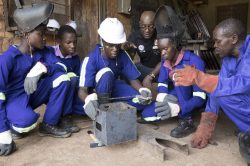
Completion of works at the other 19 TVET institutions is pending availability of requisite funds to undertake all the scope of works at each institution.
For now, the Ministry completed an infrastructure and equipment needs assessment for 81 out of 142 TVET Institutions upon which a Concept Paper for funding support was submitted to MoFPED to source for funds.
However, the findings reveal the need for significant financial investment to put in place pedagogical and non-pedagogical infrastructure as well as equipment to bring these institutions to satisfactory levels for TVET delivery.
STEM COURSES
The GoU OF Uganda had also committed itself in the last two years to provide more scholarships and support students enrolling for and other courses that are marketable in the current local job market.
And thus, the Government new sponsorships for Science, Technology, Engineering, and Mathematics (STEM) Scientific, Technical Engineering and Innovations (STEI) programs in FY 2021/2022 were 6,038 students distributed as follows: Undergraduate degree;1,800 students, Undergraduate diploma; 4,238 students.
New admissions on Government sponsorship into STEM/STEI programs in FY 2022/23 were 3,268 students as follows: Undergraduate diploma; 1,155 students, Undergraduate degree; 2,113 students.
LOAN SCHEME
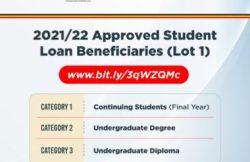
The MOES committed to continue with the student loan scheme for those not directly sponsored by the Government, but these are to be aligned with the scarce skills in the Country.
In FY 2021/2022, a total of UShs. 6.1 billion was disbursed to 1,535 loan beneficiaries of which 1,115 were undergraduate students and 300 pursuing undergraduate Diplomas.
In FY 2022/2023, the loan scheme took on 2,145 beneficiaries of whom 674 were females.
CONSTITUENT COLLEGE OF GULU UNIVERSITY IN KARAMOJA
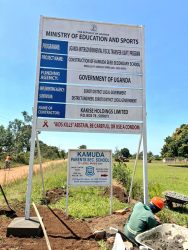
To date, the MOES has, acquired 462.88 acres of land out of the earmarked 786.4 acres, and compensated the Project Affected Persons; developed and submitted a Master Plan for the proposed College and Council to Moroto District Local Government for technical review and approval; and completed 95 percent of the Environmental and Social Impact Assessment and currently conceptual designs are being developed for a multipurpose building.
REVAMPING TWO NEW REGIONAL UNIVERSITIES
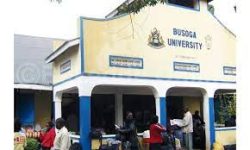
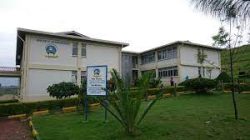
Mountains of the Moon was taken over by the Government and operationalised in FY 2022/2023 with a budget of Ushs. 39.8 billion. The Ministry set up a Taskforce for the establishment of Busoga University during the current FY 2022/23. The Taskforce has made progress on its Terms of Reference but will not be ready to start the University in FY2023/2024 due to budgetary constraints.
RESEARCH AND INNOVATION FUNDING TO UNIVERSITIES
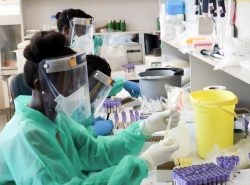
This was a top priority and as such, in FY2021/22, the Government earmarked funding amounting to Ushs. 30.0 billion to Makerere University to support Research and Innovation. For FY 2022/23, in addition to Makerere University which is receiving funding of Ushs. 31.5 billion, five other public universities (Busitema, Gulu, Muni, Kabale, and Mountains of the Moon) each received Ushs. 1.0 billion to support Research and Innovation.
SPORTS & CREATIVE ARTS
In order to support construction of sports facilities like the high-altitude athletics training centre in Teryet, Kapchorwa that is under construction, the Ministry conducted feasibility studies and prepared project designs for the proposed Akii-Bua Olympic and Buhinga Stadia.

The GoU also committed in the last two years to design and implement a program aimed at promoting and protecting creative arts and culture industries (such as music, dance, and drama) for income generation.
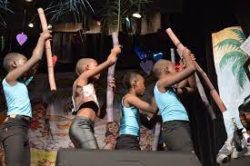
The Ministry now follows an annual calendar for National Music, Dance and Drama activities in primary and secondary schools every academic year. The Uganda Schools Performing Arts (Music, Dance and Drama) festival is a platform that brings together all primary and secondary schools to showcase and develop talent in the performing Arts. The festival events start at school level and proceed through District, Regional and climaxes at National level.
On a sad note, the plan to establish regional sports-focused schools/sports academies to support early talent identification and development, and the training of requisite human resources for the sports sub-sector remains an unfunded commitment in the last two years.
In order to support public private partnerships for funding sports and recreation, the Ministry concluded the drafting process for the National Physical and Sports Policy which is pending Cabinet approval.
The National Sports Bill was passed by Parliament and awaits Presidential assent.
It is on the National Sports Policy and its corresponding Bill that the corresponding framework to govern the establishment of private and public partnerships in the funding of sports and recreation shall be anchored.
To maintain the existing (physical education and sports) facilities and construct appropriate standard recreation and sports infrastructure at national, regional, local government and school level in line with the Country’s niche sports like football, netball, athletics, and boxing,currently, the Government is rehabilitating Mandela National Stadium, Namboole and the progress of works is estimated at 70 percent.
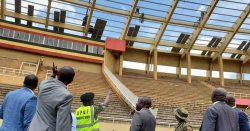
In a bid to construct appropriate standard recreation and sports infrastructure, the Ministry conducted feasibility studies and prepared project designs for the proposed Akii-Bua Olympic and Buhinga Stadia.
The GoU has also committed itself in the last two years to progressively revamp two regional institutions for Persons with Disabilities (PWDs), namely Mbale Senior Secondary School for the Deaf and Wakiso Senior Secondary School for the Deaf.

In FY 2021/22, the following were constructed at Mbale School for the Deaf: A twin Staff House, External Staff Kitchen, 2 Stance VIP Latrine and a perimeter wall.
Additionally, 10 electrical sewing machines, 10 hand sewing machines, 100 Ordinary sewing machines, 10 Flat irons, 100 seam rippers (small sewing tools used for cutting and removing stitches) were procured and delivered.
In FY 2022/23, Bills of Quantities for construction of two workshop blocks for Wakiso School for the Deaf were submitted to UPDF for costing while procurement of tables for the carpentry workshop was at the evaluation stage.
CHARGES IN U.P.E. AND U.S.E. SCHOOLS
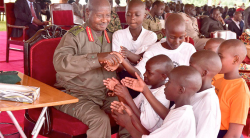
The MOES wants the Ministry of Local Government to get to every village assembly in all the 68,000 villages of Uganda to pass a resolution on this (issue of school charges in U.P.E. and U.S.E. Schools).
With the support of the Norwegian Embassy in Kampala, the Ministry undertook a scientific study to look into the issue of extra charges and fees in public schools. The findings of this study informed the Cabinet Paper that was tabled by the Ministry early this year upon which decisions were made regarding what expenses the Government shall pay for in its Universal Education Programs and the obligations that remain the parents/guardians’ responsibility.
At an appropriate time, the Ministry shall request the Norwegian Embassy and the team of researchers to share this report with the public.
About Post Author