OIL CITY GOLD RUSH! UNOC Launches UGX3Trillion Kabalega Industrial Park Drive… Investors Invited To Uganda’s Biggest Energy Hub
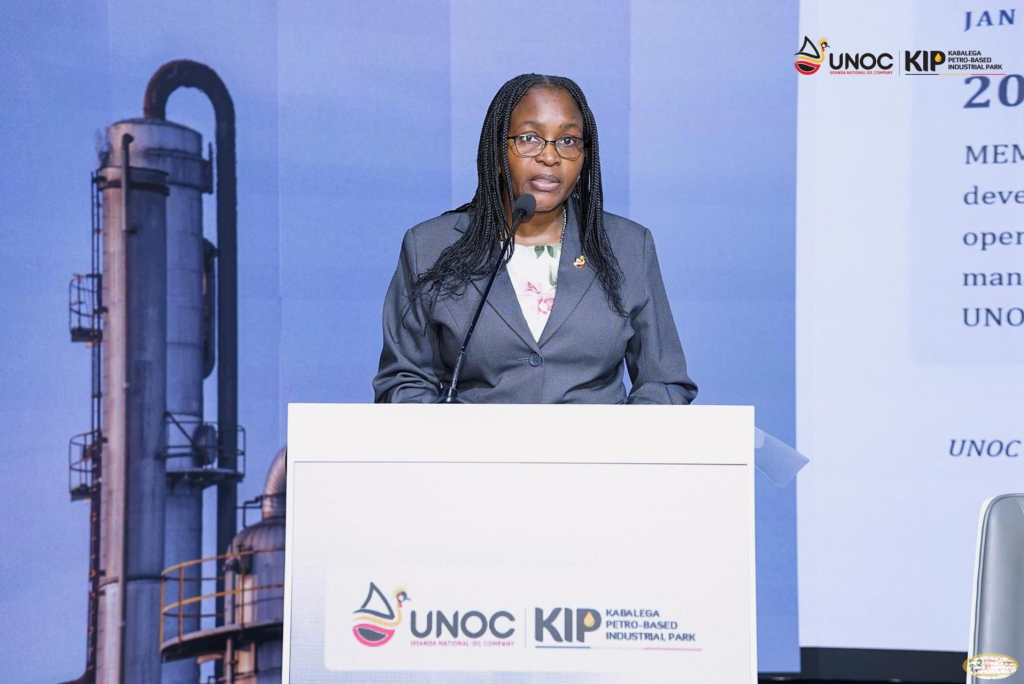
UNOC Chief Executive Officer Proscovia Nabbanja said the industrial park is central to the company's mandate of maximising value from Uganda's petroleum resources
Uganda National Oil Company (UNOC) has launched investment opportunities at the Kabalega Industrial Park (KIP), inviting local and international investors to participate.
The Kabalega Park has been described by the government as a cornerstone of the country’s strategy to transform its petroleum resources into broad-based industrial and economic growth.
The virtual launch showcased the investment potential of the 29.57-square-kilometre petro-based industrial park in Hoima District, which will support Uganda’s refinery project while hosting a wide range of manufacturing, agro-processing, logistics and commercial enterprises.
Speaking during the launch, UNOC Chief Executive Officer Proscovia Nabbanja said the industrial park is central to the company’s mandate of maximising value from Uganda’s petroleum resources across the entire value chain while contributing to the country’s socio-economic transformation.
“The purpose is to create value for generations,” Nabbanja said, noting that the park forms part of UNOC’s expanding midstream portfolio, alongside the refinery, East African Crude Oil Pipeline, Kampala Storage Terminal and other strategic petroleum infrastructure.
She said the Kabalega Industrial Park, located about 50 kilometres west of Hoima City near Lake Albert, was handed over to UNOC by the Ministry of Energy and Mineral Development in 2018 and is managed through its subsidiary, the Uganda Refinery Holding Company.
The park has been planned around six development zones comprising heavy industry, light manufacturing, agro-processing, business and logistics facilities, residential estates and an administrative centre with a one-stop business centre bringing together key government agencies.
According to Nabbanja, the heavy industrial zone will host the refinery, petrochemical complex, fertiliser plant, polymer production facilities, bonded warehousing and a free trade area.
Other zones will accommodate industries such as textiles, automotive parts, biofuels, food processing, hospitality, warehousing and housing developments.
She said all development within the park is guided by a master plan completed in 2017 and approved by the National Physical Planning Board in 2018, providing the project with a clear legal and planning framework.
Nabbanja said environmental and social safeguards have been integrated into the project from the outset, with a strategic environmental and social impact assessment completed during the planning stage and approved by the Ministry of Water and Environment in 2023.
She added that while the overall park has received environmental approval, every individual project established within it will still be required to undertake separate environmental impact assessments before construction begins.
To ensure transparency in investor selection, Nabbanja said UNOC has established a structured stage-gate process that includes technical evaluation, due diligence, governance approvals and lease execution before land is allocated.
She also outlined an infrastructure development programme estimated at about US$814.46 million, to be implemented in three phases.
The first phase, costing approximately US$120 million, includes internal roads, water and wastewater systems, electricity distribution, ICT infrastructure, security installations and a business facilitation centre.
She revealed that Cabinet has already approved financing for the phase, while construction of key facilities has commenced.
Among ongoing works are the construction of UNOC’s site offices, an 86-kilometre internal road network expected to be completed by August 2027 and a 240-megawatt electricity substation that is already about 85 per cent complete.
At full operation, Nabbanja said the industrial park is projected to contribute US$4.9 billion annually to Uganda’s Gross Domestic Product, create more than 35,000 jobs, and host over 31 investors across multiple sectors.
Speaking at the same event, Petroleum Authority of Uganda Director for Legal and Corporate Affairs Ali Ssekatawa described the park as a flagship national project that demonstrates the government’s commitment to using petroleum resources to drive industrialisation and economic diversification.
Ssekatawa said the decision to place the project under UNOC’s management, following discussions held during the sector’s early planning stages, has proved to be the right one.
“This remarkable achievement is a clear demonstration of government’s commitment to leveraging Uganda’s petroleum resources as a catalyst for industrialisation, economic diversification and sustainable national development,” he said.
He described national content as being at the centre of Uganda’s oil and gas strategy, saying UNOC has become the country’s leading vehicle for ensuring Ugandans directly benefit from petroleum sector investments.
According to Ssekatawa, the Kabalega Industrial Park represents a shift beyond crude oil production towards value addition, manufacturing and private sector development.
“It represents the next phase of Uganda’s oil and gas journey, one where investments in petroleum become a foundation for industrial growth, value addition, private sector development and broader economic transformation,” he said.
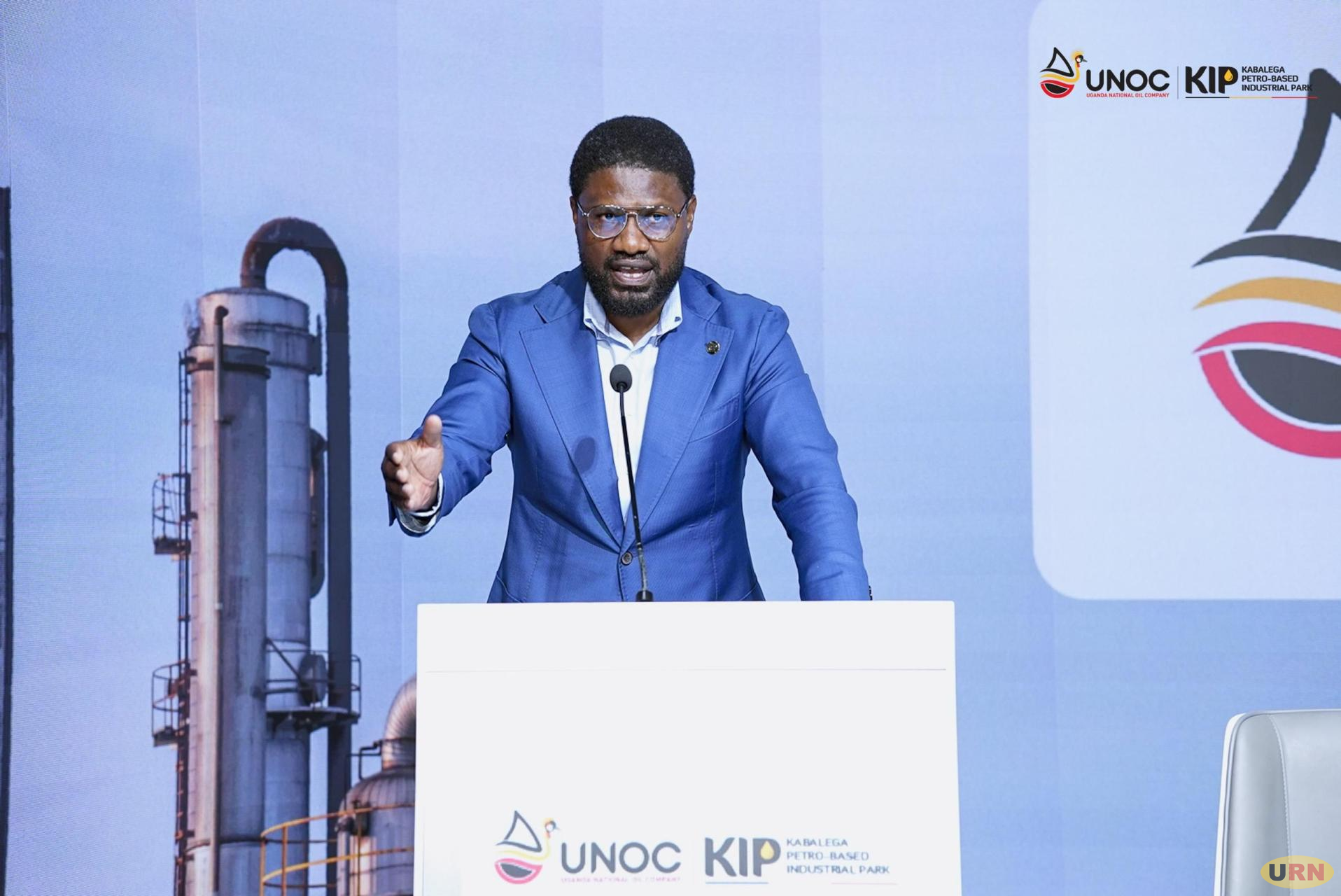
He noted that unlike conventional industrial parks, KIP was specifically designed as Uganda’s premier oil and gas industrial hub, drawing lessons from internationally recognised petroleum industrial parks in countries including Norway, South Africa and Vietnam.
Ssekatawa said the government has already invested heavily in enabling infrastructure around the park, including roads, electricity, water supply, internet connectivity and Kabalega International Airport, creating conditions that position the area to attract both domestic and foreign investment.
Beyond petroleum activities, he said the park is expected to stimulate investment in agriculture, hospitality, logistics and other supporting services, taking advantage of the Bunyoro region’s agricultural potential and improving access to export markets.
He added that as Hoima continues to develop into Uganda’s oil and gas hub, early investors stand to benefit from opportunities that will extend well beyond the petroleum sector for decades to come.
GOT A HOT STORY? LET US KNOW!
Got breaking news, explosive secrets, or hard evidence?
Email us: redpeppertips@gmail.com
We accept tips, documents, videos, photos, and recordings—the more evidence you have, the better.
CONFIDENTIALITY IS OUR TOP PRIORITY. SOURCES ARE ALWAYS PROTECTED!
About Post Author