WHO’S SLEEPING ON THE JOB? Procurement Breaches, Budget Chaos Rock Dr Bruce Kirenga’s Makerere Lung Institute
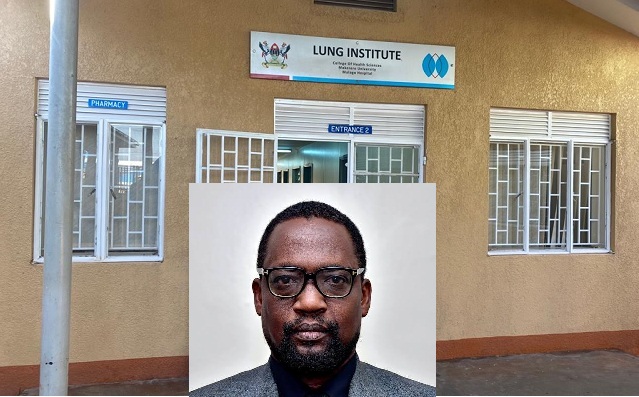
The revelations place renewed scrutiny on the institute headed by Dr. Bruce Kirenga, the Chief Research Scientist and founding Director of the Makerere University Lung Institute, as auditors pointed to failures that cut across procurement planning, budgeting, project expenditure and financial reporting.
The Makerere Lung Institute (MLI), one of Uganda’s flagship health research institutions that rose to prominence during the COVID-19 pandemic and is now preparing to transform into the Uganda Lung Institute, has found itself under the spotlight after the Auditor General uncovered a string of financial management and administrative weaknesses that raise fresh questions about internal controls and compliance under its leadership.
The findings contained in the Auditor General’s report for the financial year ending June 30, 2024 reveal that despite the institute’s growing national profile and ambitious expansion plans, several fundamental financial and procurement procedures were either ignored or not properly implemented.
The revelations place renewed scrutiny on the institute headed by Dr. Bruce Kirenga, the Chief Research Scientist and founding Director of the Makerere University Lung Institute, as auditors pointed to failures that cut across procurement planning, budgeting, project expenditure and financial reporting.
One of the most striking findings is that the institute operated without preparing a procurement plan, contrary to the procurement manual.
A procurement plan is one of the most important accountability tools for any public institution because it guides how goods, services and works are to be acquired throughout the financial year. However, according to the Auditor General, no procurement plan had been prepared, raising concerns about whether procurement activities were undertaken in accordance with established planning and control procedures.
The audit further exposed irregularities in project financing and expenditure.
According to the report, eleven projects received funding that exceeded their individual approved budgets, while another five projects went even further by spending beyond the funds that had actually been released to them.
The findings suggest weaknesses in budget discipline and financial control, with expenditure patterns departing from approved financial plans.
The Auditor General also questioned the manner in which the institute’s Secretariat budget was prepared.
Instead of complying with the Makerere Lung Institute Finance Policy and Procedures Manual of 2020, the Secretariat budget was prepared in United States dollars, an arrangement the Auditor General found to be in direct contravention of the institute’s own financial policy.
The report further revealed that even the Secretariat itself did not receive all the money that had been budgeted.
Out of a planned budget of USD 605,842, the Secretariat received only USD 477,920, representing 79 percent of the approved allocation and leaving a funding variance of USD 127,922.
While the audit does not attribute the shortfall to any specific cause, the variance highlights another area where planned financial resources did not match actual funding.
Auditors also raised concerns about financial accountability after discovering that no signed copies of quarterly financial reports were made available for audit.
The absence of signed reports was found to be contrary to the Makerere Lung Institute Finance Policy and Procedures Manual, denying auditors an important assurance that the financial reports had been formally reviewed and approved by the responsible officials.
The findings emerge at a time when the Makerere Lung Institute is pursuing an ambitious transformation into the Uganda Lung Institute, a move intended to expand its mandate from a university-based research institute into Uganda’s national tertiary centre for lung disease research, treatment and specialist training.
Dr. Bruce Kirenga has previously said the institute has already secured key approvals from both the Government and Makerere University to take on a national role in responding to Uganda’s growing burden of respiratory diseases.
The expansion is expected to bring specialist lung services closer to patients across the country, especially at a time when Uganda continues to face an acute shortage of pulmonologists.
According to statistics from the Uganda Medical and Dental Practitioners’ Council, only eight lung specialists were registered in the country in 2024, with the number remaining below ten.
Dr. Kirenga has indicated that the institute plans to train about three pulmonologists every year under a fellowship programme already approved by Makerere University, while also relying on virtual consultations and task shifting to extend specialist services to regional hospitals.
The institute earned national recognition during the COVID-19 pandemic after leading several studies on treatment interventions, establishing post-COVID monitoring programmes and creating lung rehabilitation services for both COVID-19 survivors and tuberculosis patients.
It has also reported a dramatic rise in patient numbers over recent years, with attendance increasing by almost 400 percent as respiratory illnesses continue to place increasing pressure on Uganda’s health system.
Research conducted by the London School of Hygiene and Tropical Medicine in 2020 estimated that about 20 percent of Ugandans suffer from chronic respiratory conditions, with Chronic Obstructive Pulmonary Disease (COPD) and asthma among the most common illnesses.
However, even as the institute positions itself to become the country’s leading centre for lung research and care, the Auditor General’s findings suggest that significant improvements in financial management, procurement planning and internal accountability will be necessary if the institution is to match its expanding national responsibilities.
The audit paints the picture of an institution with growing ambitions but facing weaknesses in governance and financial compliance that require urgent attention. With procurement plans missing, projects receiving funding beyond approved budgets, expenditure exceeding released funds, financial policies not being followed, funding variances emerging and unsigned financial reports being presented for audit, the report is likely to increase pressure on the institute’s leadership to strengthen internal controls and ensure that future operations fully comply with the rules governing the management of public resources.
GOT A HOT STORY? LET US KNOW!
Got breaking news, explosive secrets, or hard evidence?
Email us: redpeppertips@gmail.com
We accept tips, documents, videos, photos, and recordings—the more evidence you have, the better.
CONFIDENTIALITY IS OUR TOP PRIORITY. SOURCES ARE ALWAYS PROTECTED!
About Post Author